 -by
-by A beautiful beach is not automatically a good family beach. Parents usually need more than soft sand and clear water. They may need shallow swimming areas, gentle waves, lifeguards, toilets, shade, easy access, nearby food, parking, and activities that keep children interested for several hours.
The best family beaches balance these practical details with the type of experience your family wants. A toddler may need calm, shallow water and a short walk from the car, while teenagers may prefer snorkeling, paddleboarding, surfing lessons, or a lively seaside town.
This guide explains what makes a beach family-friendly and highlights beach destinations around the world that offer different combinations of safety, convenience, scenery, and activities. It also explains how to check water conditions, choose a beach for different ages, avoid common mistakes, and plan a comfortable beach day without carrying half the house.
The goal is not to identify one universal “best” beach. Instead, use the information below to match a destination with your family’s ages, swimming ability, travel style, budget, and expectations.
What Makes a Beach Family-Friendly?

A family-friendly beach is a coastal area where the physical conditions, facilities, access, and surrounding services make it reasonably practical for adults traveling with children.
In simple terms, family-friendly beaches combine manageable water conditions with useful facilities and activities for different ages. Calm or shallow water can help, but families should still check local warnings, lifeguard advice, tides, currents, and weather before entering the sea.
The most useful characteristics include:
- Gentle or predictable waves
- Shallow water near the shoreline
- Lifeguard coverage when available
- Clearly posted safety information
- Easy beach access
- Toilets and changing facilities
- Showers or freshwater facilities
- Food and drinking-water options nearby
- Shade or places to escape the sun
- Clean and maintained public areas
- Activities for different age groups
- Accessible paths where available
- Accommodation within a reasonable distance
- Nearby attractions for days when swimming is not practical
A beach doesn’t need every feature to suit families. A quiet natural beach may have fewer facilities but still work beautifully for an experienced family that brings everything it needs.
How to Choose the Best Family Beaches
Before booking flights or accommodation, think about your family’s actual needs.
01. Start With the Children’s Ages
Different ages require different beach conditions.
Babies and toddlers generally benefit from:
- Short walking distances
- Shade
- Calm water
- Gentle sandy entrances
- Nearby toilets
- Easy access to accommodation
- Places to eat without a long journey
Young children may enjoy:
- Shallow swimming
- Sandcastle-friendly beaches
- Rock pools
- Small playgrounds
- Gentle snorkeling
- Simple beach games
Older children and teenagers often want more activity:
- Snorkeling
- Kayaking
- Paddleboarding
- Bodyboarding
- Surfing lessons
- Beach volleyball
- Boat trips
- Wildlife experiences
A destination can therefore be excellent for families while still being unsuitable for a particular age group.
02. Look Beyond the Photograph
Travel photographs rarely show the details parents care about most.
Before choosing a beach, investigate:
- How far is the parking area?
- Is the route stroller-friendly?
- Are there public toilets?
- Is there a lifeguard service?
- Are there warning flags?
- How exposed is the beach to wind?
- Does the shoreline become deep quickly?
- Are there strong currents?
- Is shade available?
- Are restaurants or shops nearby?
- How crowded does it become during your travel dates?
These details can make a bigger difference to your day than the color of the water. Spain’s official tourism site, for example, highlights practical family facilities, such as showers, toilets, accessible walkways, play areas, promenades, and lifeguard services, when discussing family seaside destinations.
03. Check the Water, Not Just the Weather
A sunny day does not automatically mean safe swimming. Rip currents can occur even when the weather looks pleasant. The U.S. National Weather Service recommends checking local beach conditions, looking for warning signs and flags, asking lifeguards about conditions, and swimming near lifeguarded areas. For families, this is particularly important because children may not recognize a dangerous current.
Before entering the water:
- Check the local beach forecast.
- Read warning signs.
- Identify the lifeguard station.
- Ask the lifeguard about current conditions.
- Watch the water for a few minutes.
- Keep young children within close reach.
- Follow local flag and swimming rules.
Never assume that calm-looking water is automatically safe.
Best Family Beach Destinations Around the World
There is no single worldwide list that can accurately determine which beach is best for every family. Instead, the destinations below represent different types of family beach experiences.
01. Algarve, Portugal
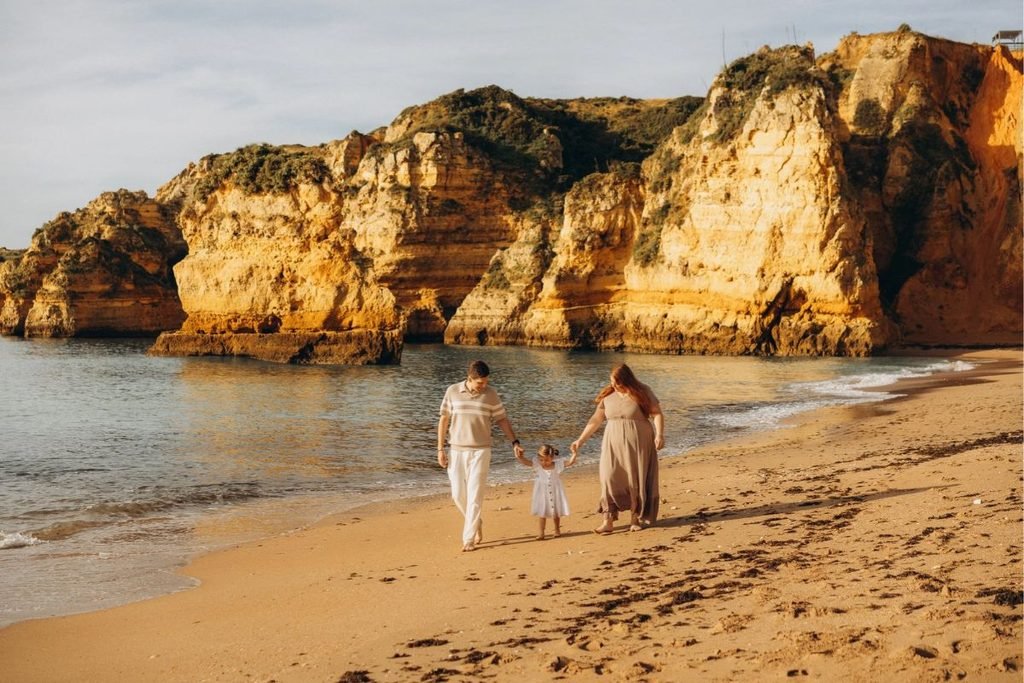
The Algarve is one of Europe’s most versatile beach regions for families. Its coastline includes long sandy beaches, sheltered bays, cliffs, seaside towns, and beaches with different levels of development. Portugal’s official tourism information describes Algarve beaches as ranging from long sandy beach stretches protected by cliffs to smaller rocky coves.
It also notes the region’s extensive beach network and the presence of many beaches with Blue Flag recognition. For families, the attraction is variety. You can choose a developed beach with nearby restaurants and services or look for a quieter cove. That makes the region useful for families with different expectations.
Good for:
- Families wanting variety
- Beach-and-town vacations
- Older children
- Multi-generational trips
- Families who want restaurants and attractions nearby
Watch for:
- Cliffs and uneven coastal terrain at some beaches
- Seasonal crowds
- Water conditions that vary between beaches
Don’t assume that every Algarve beach has identical swimming conditions. Research the individual beach rather than judging the entire region by one photograph.
02. Mallorca, Spain
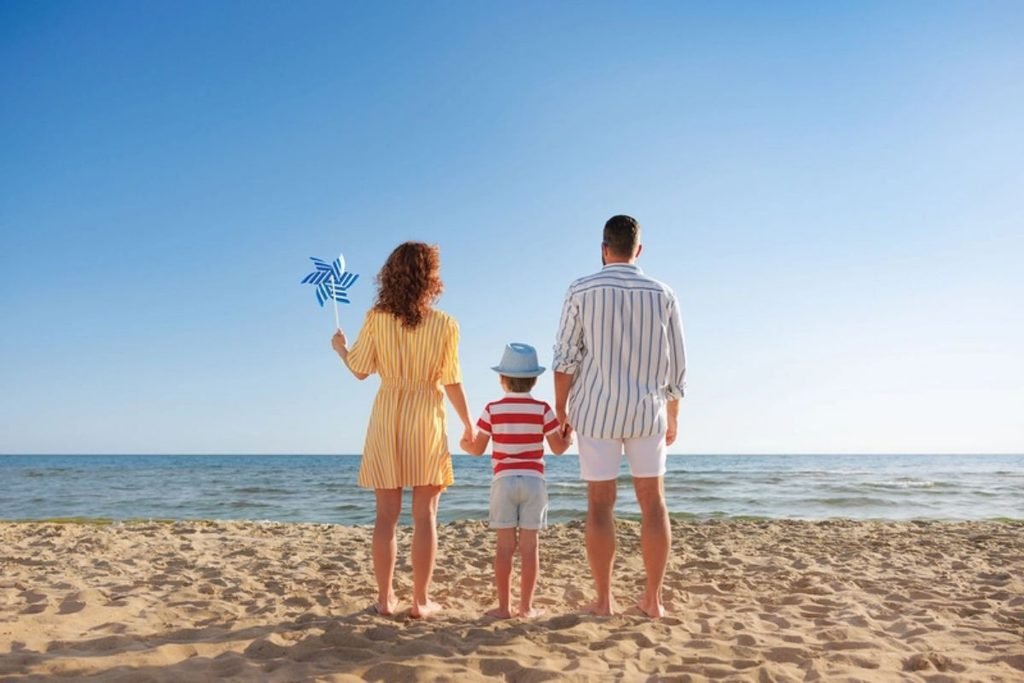
Mallorca offers a wide range of beaches, from long urban shores to smaller coves. Cala Millor is specifically highlighted by Spain’s official tourism website as a family beach, with shallow water, relatively gentle waves, and extensive facilities. Mallorca can work particularly well for families who want more than beach time.
A typical day might include:
- Morning swimming
- Lunch near the coast
- A quiet afternoon at the hotel
- Evening walk along the waterfront
Good for:
- Families with younger children
- Resort-style holidays
- First European beach trips
- Families wanting restaurants and activities nearby
The key is to select the right area. A busy nightlife district may feel very different from a quieter family-oriented resort.
03. Naxos, Greece
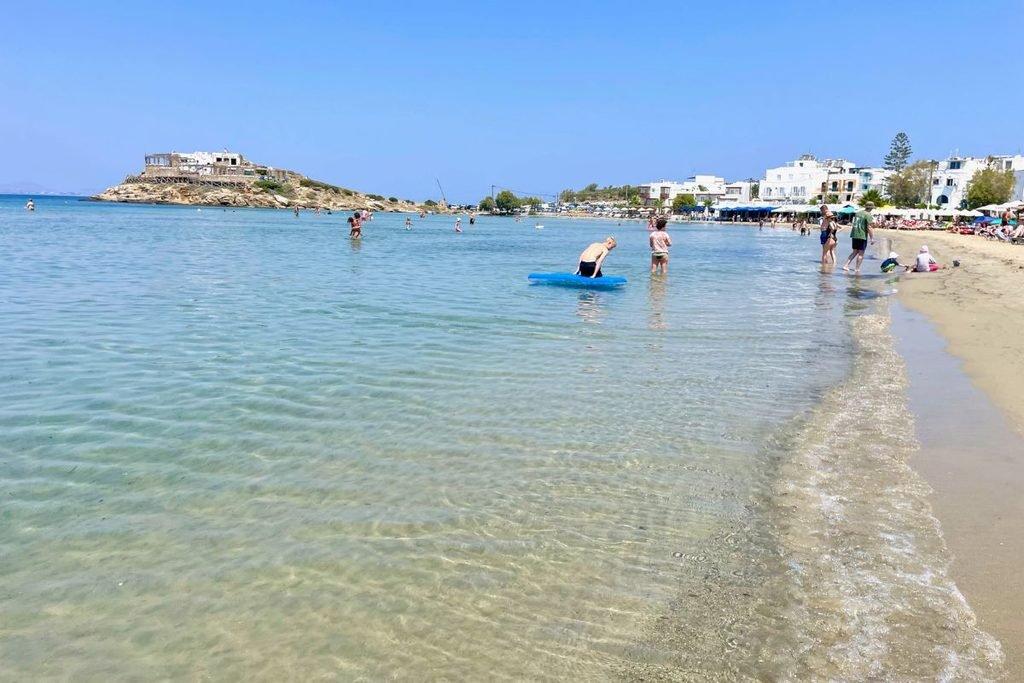
Naxos combines sandy beaches with a traditional island setting. Agios Georgios is described by Greece’s official tourism organization as suitable for families because of its shallow, calm waters and nearby activities. The island also has other sandy beaches such as Agios Prokopios, Agia Anna, and Plaka. Naxos is especially appealing when parents want a beach holiday that includes culture and local food.
Good for:
- Families wanting a Greek island experience
- Beach and food trips
- Older children
- Families interested in exploring beyond the sand
Wind can affect conditions around Greek islands, so check the local forecast instead of assuming every beach will remain calm.
04. Rhodes, Greece
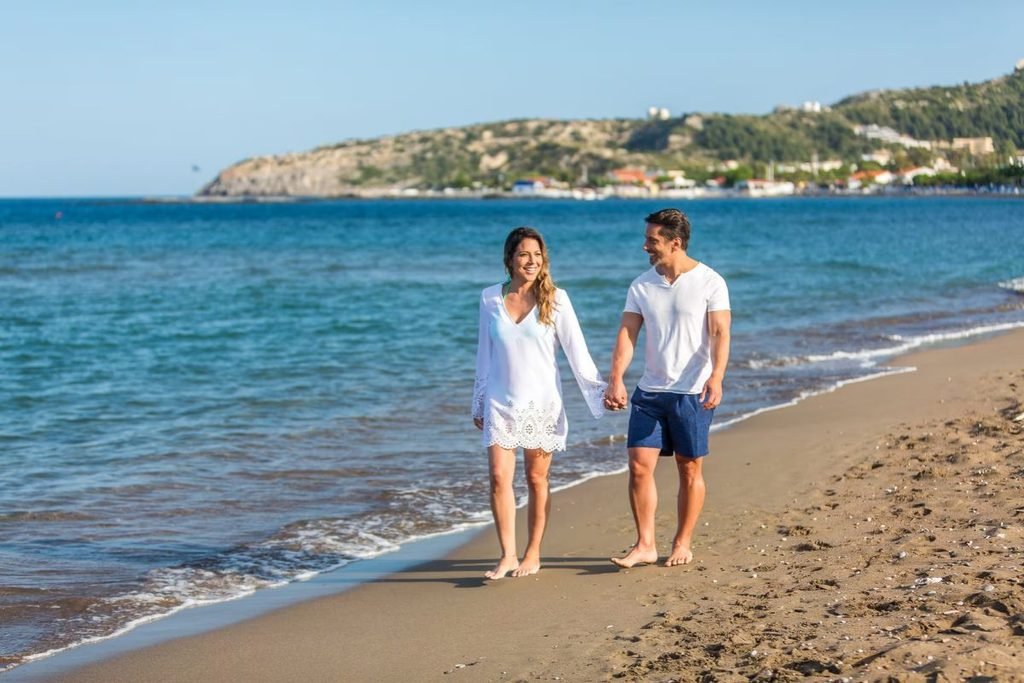
Rhodes offers a mixture of sheltered beaches, developed resorts, historic sites, and water activities. The official Greek tourism organization identifies Agathi as a sheltered beach in the Sand suitable for children and describes Glystra as a quieter beach surrounded by trees.
This variety is valuable for families who have different interests. Parents might spend the morning swimming while older children try water activities, followed by an afternoon visiting historical attractions.
Good for:
- Mixed-age families
- Beach-and-history vacations
- Families who want several types of activities
- Longer holidays
05. Koh Lanta, Thailand

Koh Lanta offers a more relaxed island experience than some of Thailand’s beach destinations. Thailand’s official tourism authority describes Koh Lanta as a destination for families, couples, backpackers, and divers.
The island has multiple beaches and a paved road running along much of Koh Lanta Yai, making it easier to explore different areas. For families, that variety can be useful because you are not dependent on one beach.
Good for:
- Families seeking a slower island atmosphere
- Longer stays
- Beach-and-nature holidays
- Families who want several beaches to explore
Remember that beach conditions change with weather and season. Check local swimming conditions before entering the sea & enjoy Thai street food.
06. Phuket, Thailand
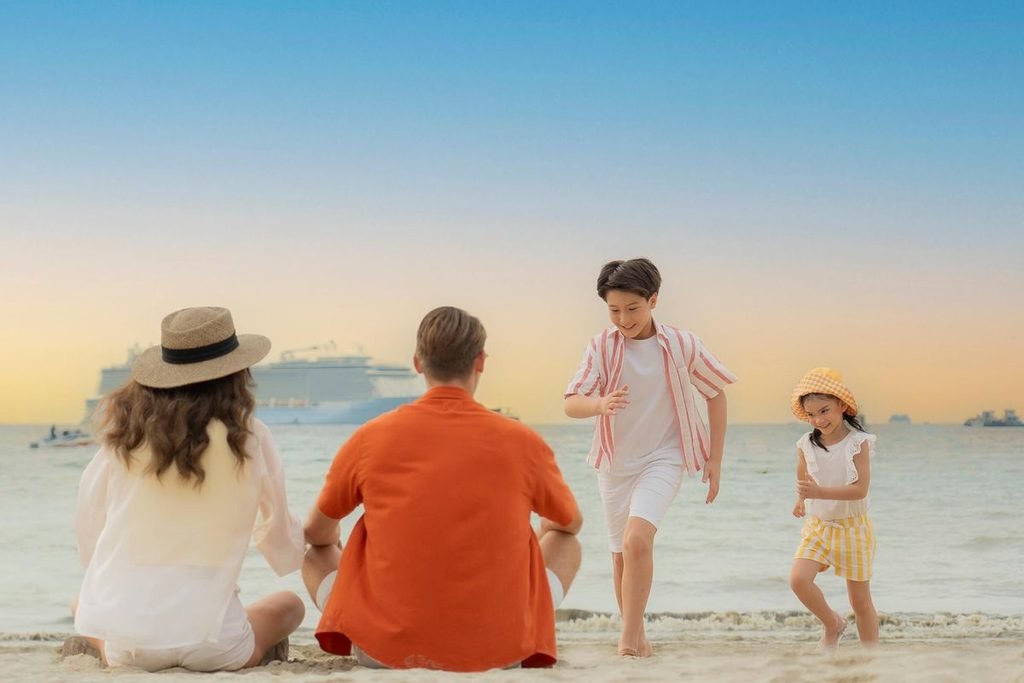
Phuket provides more infrastructure and activity options than many smaller islands. Best Beach Thailand’s tourism authority lists numerous beaches around Phuket, including Kata, Kata Noi, Karon, Kamala, Nai Harn, and Mai Khao.
It also specifically warns visitors to pay attention to red flags before swimming. For families, Phuket can be useful because accommodation, restaurants, transportation, attractions, and activities are widely available.
Good for:
- First-time Thailand visitors
- Families wanting convenience
- Teenagers
- Families combining beach time with attractions
However, do not assume that every Phuket beach has the same conditions. A beach suitable for one type of swimming may not be appropriate during another weather or surf condition.
07. La Jolla Shores, California, USA
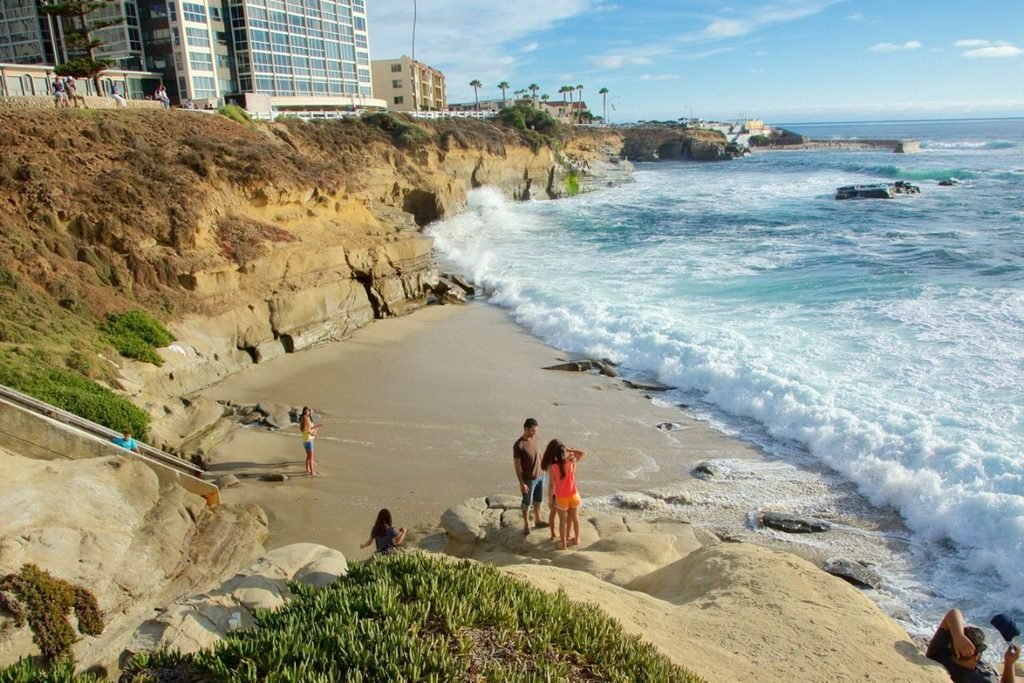
La Jolla Shores is a useful example of a family beach within a major destination. San Diego’s official tourism organization describes the beach as having a gently sloping sandy shoreline and relatively small, slow waves, while also noting a nearby grassy park and opportunities for older children to learn surfing and bodyboarding.
That combination is important: younger children can enjoy the shoreline while older family members have additional activities.
Good for:
- Mixed-age families
- Families visiting San Diego
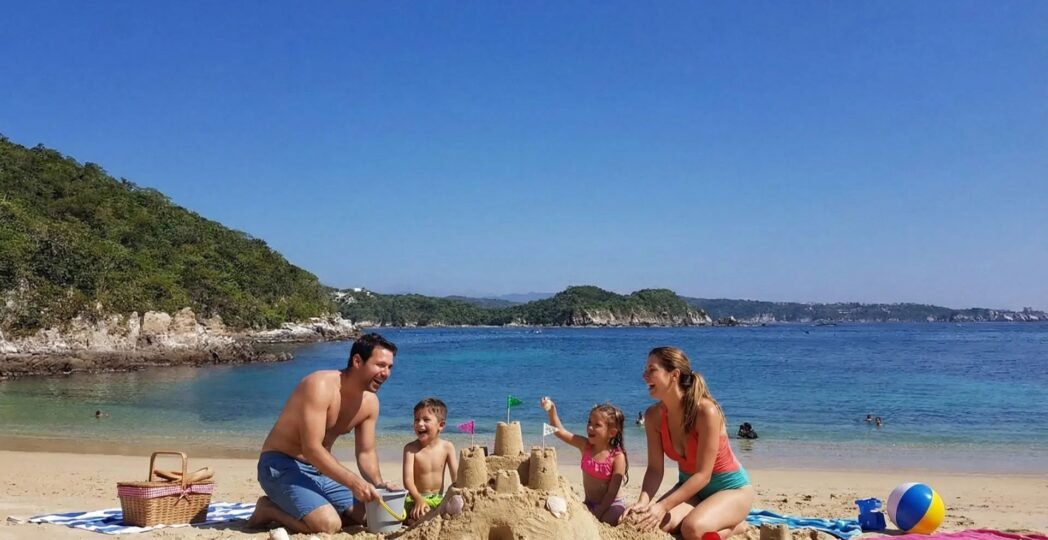
- Sandcastle building
- Learning water sports
- Combining beach time with city attractions
08. Family Beaches on Australia’s East Coast
Australia has many beaches suitable for different family needs. Tourism Australia highlights The Pass Beach for small children because of calm, shallow paddling opportunities.
It also identifies Whiting Beach in Yamba as a sheltered family location and Kings Beach on the Sunshine Coast for its protected swimming area and family facilities. For older children, destinations such as the Gold Coast and Noosa offer more active possibilities, including surfing and paddleboarding.
Good for:
- Families with different age groups
- Outdoor-focused vacations
- Water sports
- Families wanting beaches plus nature
Australia also requires careful attention to local beach warnings and swimming conditions. Never treat a famous surf destination as automatically suitable for young swimmers.
09. Spanish Mediterranean Family Beaches
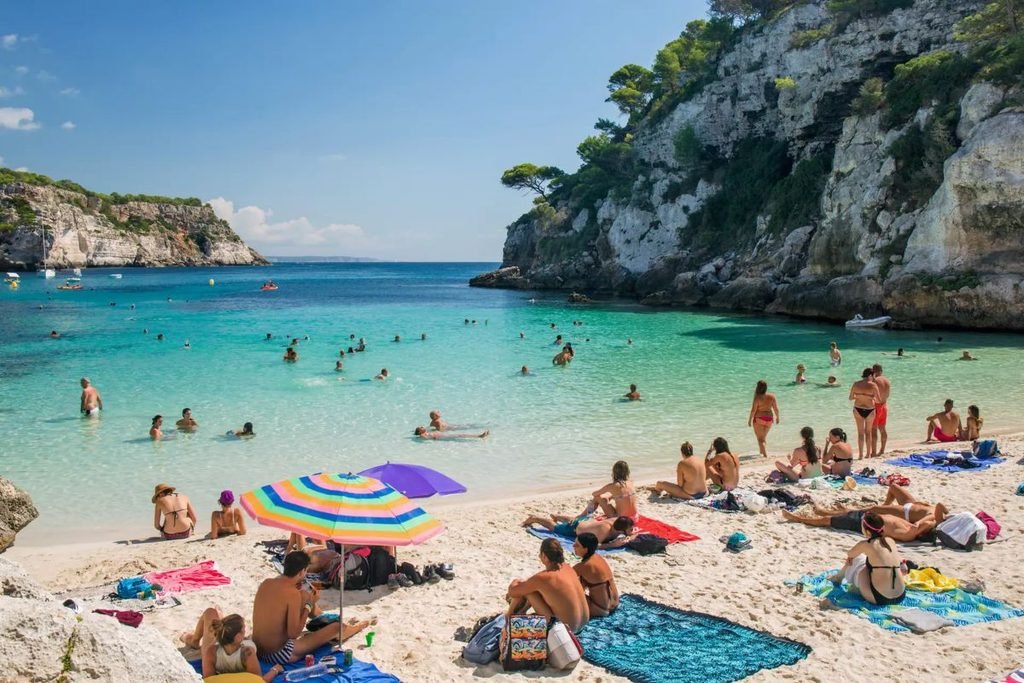
Spain offers many examples of beaches designed around practical family needs. North Beach in Peñíscola, for example, is described by Spain’s official tourism site as having surveillance and access walkways suitable for pushchairs and people with reduced mobility.
La Piedra Villazar Beach in Mojácar is described as having calm, clear water and a nearby children’s playground. Other Spanish beaches highlighted for families include El Sardinero, La Roqueta, El Castellar, La Misericordia, and Las Canteras.
Good for:
- Families prioritizing convenience
- Stroller users
- Beach-and-city holidays
- Families wanting restaurants and promenades
Quick Comparison of Family Beach Destinations
| Destination | Best suited to | Family advantage | Things to check |
| Algarve, Portugal | Mixed-age families | Variety of beaches and services | Surf, cliffs, crowds |
| Mallorca, Spain | Younger children | Shallow-water options and facilities | Busy areas, seasonal conditions |
| Naxos, Greece | Relaxed family trips | Sandy beaches and calm-water options | Wind and transport |
| Rhodes, Greece | Mixed interests | Beaches plus history and activities | Individual beach conditions |
| Koh Lanta, Thailand | Relaxed island holidays | Multiple beaches and slower pace | Seasonal sea conditions |
| Phuket, Thailand | Convenience-focused families | Infrastructure and activities | Red flags and surf |
| La Jolla Shores, USA | Mixed-age families | Gentle shoreline and activities | Surf and local conditions |
| Australia’s east coast | Active families | Water sports and outdoor activities | Surf, currents and local warnings |
| Spanish Mediterranean | Convenience | Access, facilities and promenades | Crowds and seasonal availability |
The table is a planning aid, not a safety ranking. Conditions can change from beach to beach and from one day to another.
Family Beaches for Different Ages

Choosing based on age is often more useful than choosing based on destination popularity.
Best Beach Features for Babies and Toddlers
Look for:
- Shallow entry
- Calm conditions
- Nearby shade
- Short access routes
- Toilets
- Changing facilities
- Easy accommodation access
- Food and water nearby
Avoid making a toddler’s first beach experience depend on a long hike, rough surf, or isolated coastline.
Best Beach Features for School-Age Children
Children in this age group often need variety.
Look for:
- Sand for games
- Gentle swimming areas
- Tide pools
- Snorkeling
- Safe kayaking
- Beach playgrounds
- Ice cream or food nearby
- Short excursions
A beach that offers several small activities can be more enjoyable than a spectacular but empty shoreline.
Best Beach Features for Teenagers
Teenagers may want independence and activity.
Consider beaches with:
- Surf schools
- Paddleboarding
- Kayaking
- Snorkeling
- Volleyball
- Cycling routes
- Waterfront restaurants
- Nearby towns
However, more activities can also mean more hazards. Make sure teenagers understand local swimming rules and conditions before participating in water sports.
How to Evaluate Beach Safety
Safety should be part of beach selection, not an afterthought.
Look for Lifeguards
When possible, choose a beach with lifeguard coverage. The National Weather Service recommends swimming at lifeguarded Beaches and bonfires, checking conditions with lifeguards before entering the water. A lifeguard cannot replace parental supervision, particularly for young children.
Understand Rip Currents
A rip current is a strong channel of water moving away from the shoreline. One common mistake is assuming the calm-looking area between breaking waves is necessarily the safest place to swim. The National Weather Service specifically warns that rip currents can appear as deceptively calm areas.
If someone is caught in a rip current:
- Stay calm.
- Do not fight directly against the current.
- Signal for help.
- If able and instructed by local guidance, swim parallel to the shoreline to escape the current.
- Alert a lifeguard.
- Do not enter dangerous water to attempt a rescue yourself.
The safest response is prevention: check conditions and follow lifeguard instructions before anyone enters the water.
Pay Attention to Flags
Beach warning systems vary by country and location. Do not assume that a green flag means identical conditions everywhere. Learn the local flag system and obey closure warnings. If you cannot determine what a flag means, ask a lifeguard or beach official.
Is a Blue Flag Beach Better for Families?
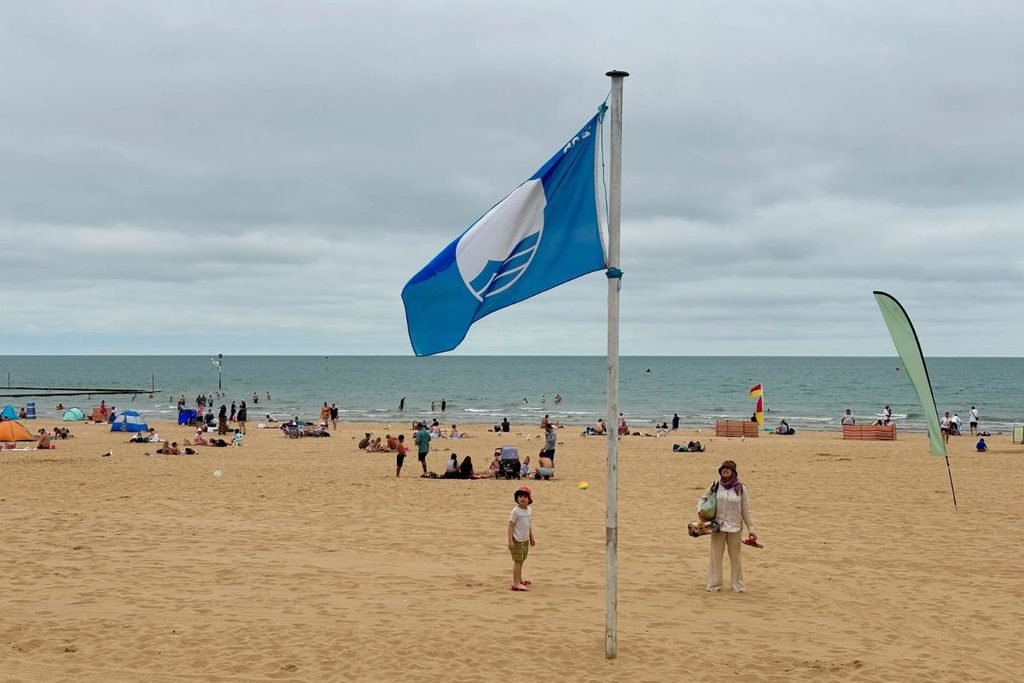
Blue Flag can be a useful additional signal, but it should not be treated as a universal guarantee of a perfect family beach. The international Blue Flag programme evaluates beaches across areas including bathing-water quality, environmental management, safety, services, and accessibility. Participating beaches must maintain applicable requirements during their award period.
For families, this makes the programme worth checking when comparing unfamiliar beaches.
However, Blue Flag status does not mean parents can ignore:
- Weather
- Rip currents
- Local warnings
- Tides
- Water temperature
- Surf conditions
- Children’s swimming ability
Think of certification as one information source, not the final decision.
How to Plan a Stress-Free Family Beach Day
A successful beach day usually depends more on preparation than expensive equipment.
Step 01: Check Conditions Before Leaving
Look at:
- Weather
- Wind
- Tide information
- Surf conditions
- Beach warnings
- Water-quality notices where available
- Lifeguard operating hours
Conditions can change during the day.
Step 02: Choose the Right Arrival Time
Very young children may struggle during the hottest part of the day. An early morning or later afternoon visit can make the experience more comfortable, depending on local weather and beach operating conditions.
Step 03: Pack for Practical Needs
A simple family beach kit may include:
- Drinking water
- Food or snacks
- Sun protection
- Hats
- Swimwear
- Towels
- Dry clothes
- Waterproof bags
- Basic first-aid supplies
- Any required medications
- Sand toys
- Reusable bags for rubbish
You do not need every piece of specialized beach equipment sold online.
Step 04: Establish a Meeting Point
At a busy beach, choose an obvious landmark as a meeting point. Explain it to older children before anyone separates. For younger children, keep them within your supervision rather than relying on a meeting point.
Step 05: Set Water Rules
Before swimming, establish simple rules such as:
- Stay inside the designated swimming area.
- Follow lifeguard instructions.
- Do not swim alone.
- Tell an adult before entering deeper water.
- Do not enter closed areas.
- Stop immediately when conditions become unsafe.
Simple rules are easier for children to remember.
Accessibility Matters for Family Beach Trips
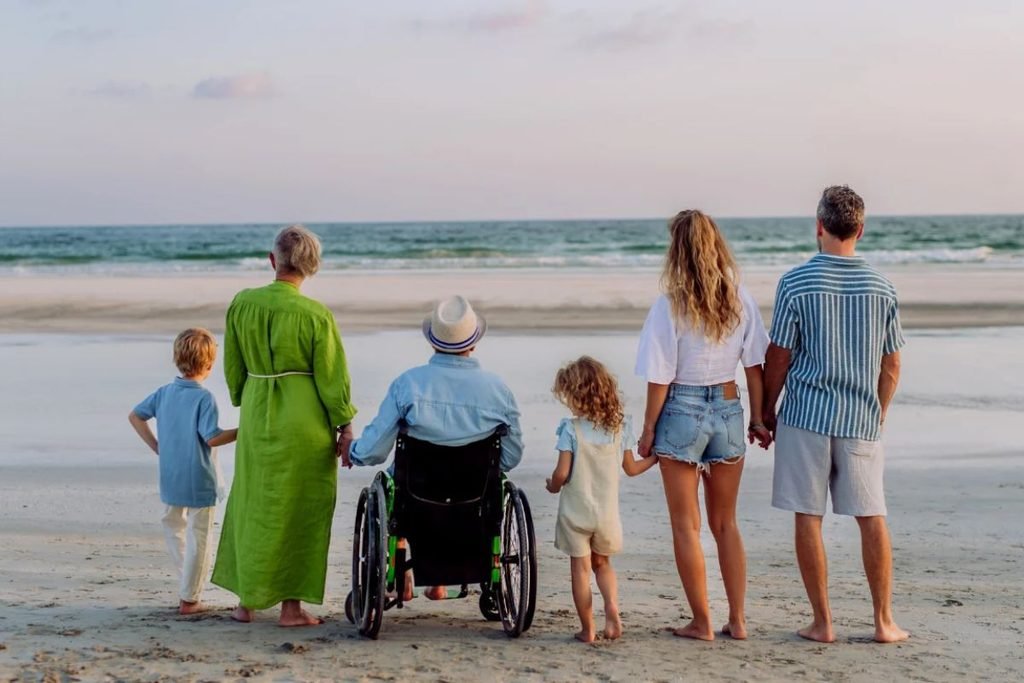
Accessibility is not only relevant to wheelchair users. Parents with strollers, grandparents with limited mobility, and families carrying toddlers can all benefit from better beach access.
Look for:
- Paved access paths
- Beach ramps
- Accessible toilets
- Boardwalks
- Nearby parking
- Accessible showers
- Beach wheelchairs where available
- Short distances between facilities
Blue Flag criteria include accessibility information and facilities where applicable. Spain’s tourism information also provides examples of beaches with access walkways for pushchairs and people with reduced mobility. Before traveling, verify current accessibility details with the local beach authority because facilities can change.
What to Do When the Beach Is Too Busy
Crowds can transform a relaxing family beach into a difficult environment.
If the main beach is packed:
- Check whether another nearby beach has similar conditions.
- Visit earlier or later if local rules and conditions allow.
- Look for beaches outside the main tourist center.
- Consider a waterfront park as an alternative.
- Keep expectations flexible.
Do not move to an isolated beach simply because it is less crowded. A quieter beach may also lack lifeguards, toilets, emergency access, or reliable transport.
For more destination ideas, explore our guide to Beaches and our guide to hidden beach paradises in Thailand.
Common Mistakes Families Make
Choosing a Beach Only Because It Looks Beautiful
A dramatic cliffside beach may be spectacular but unsuitable for toddlers. Prioritize practical conditions before scenery.
Assuming “Calm” Means Safe
Calm-looking water can still contain dangerous currents. Check local conditions before swimming.
Ignoring the Tide
Tides can change the usable beach area, access routes, rock pools, and water conditions. Check tide information when planning activities that depend on exposed sand or rocks.
Staying Too Long in the Sun
Children can become uncomfortable quickly in strong sun and heat. Plan breaks in shade or indoors and use appropriate sun-protection measures.
Forgetting Food and Water
A family may tolerate a missing beach toy. Thirst and hunger are much harder to manage.
Choosing a Remote Beach Without Checking Access
A secluded beach can be wonderful, but confirm the route, parking, facilities, emergency access, and return journey before taking young children.
Trying to Do Everything
A family beach vacation does not need a packed itinerary. Children may be happiest spending two hours building sandcastles, swimming, eating lunch, and going back to the hotel.
Family Beach Activities Beyond Swimming
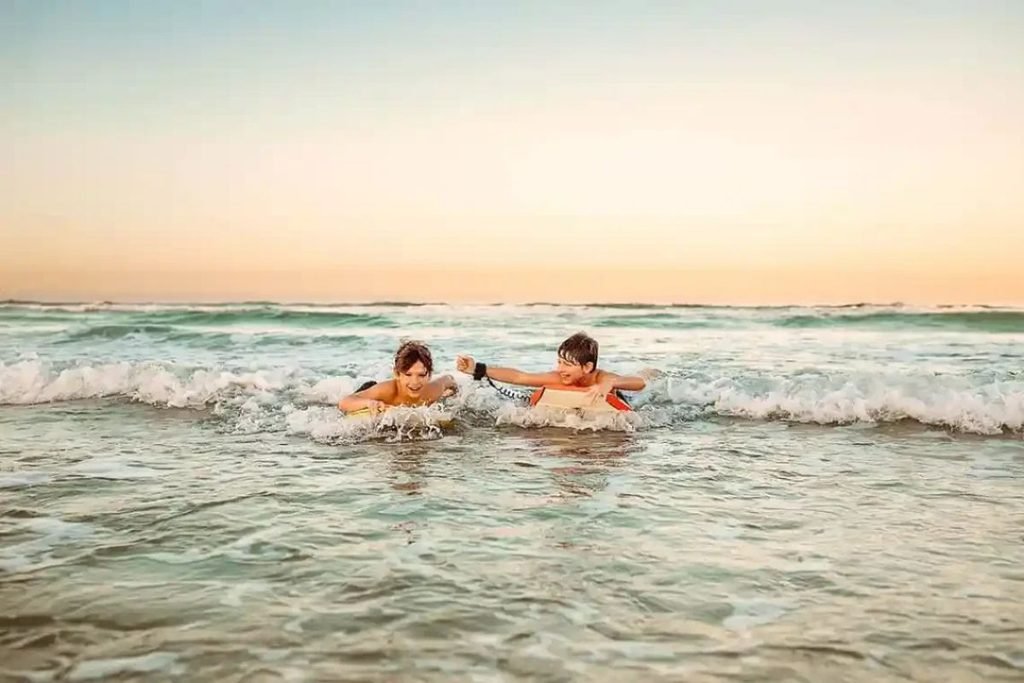
A good family beach does not need to revolve around swimming.
Try:
- Sandcastle competitions
- Beach scavenger hunts
- Shell observation without collecting protected wildlife
- Tide-pool observation where permitted
- Nature photography
- Beach volleyball
- Frisbee
- Paddleboarding with appropriate supervision
- Snorkeling in designated areas
- Sunrise or sunset walks
- Drawing in the sand
- Reading in the shade
- Local seafood or family dining
For food-focused trips, you can also explore coastal restaurants in the USA or related food guides on Restaurent.net.
If your family enjoys combining beach trips with outdoor dining, our guide to outdoor restaurants in the USA can help with the food-planning side of a coastal trip.
How to Choose a Family Beach Hotel
The best beach is less useful if your accommodation creates daily problems.
Before booking, check:
- Distance to the actual beach
- Walking route
- Room size
- Family room availability
- Kitchen or refrigerator facilities
- Laundry options
- Pool availability
- Breakfast
- Children’s facilities
- Nearby supermarkets
- Restaurants
- Transportation
- Noise levels
A hotel advertised as “near the beach” may still require a long walk, road crossing, or steep route. Use a map to inspect the actual walking route rather than relying only on the stated distance. For more beach-trip planning, see our guide to beach vacations for Christmas if you are planning a winter family escape.
How to Build a Family Beach Budget
Your beach budget includes much more than accommodation.
Consider:
| Expense | What to consider |
| Flights or transport | Family size and baggage |
| Accommodation | Room type and location |
| Beach access | Free, paid, or parking-based |
| Food | Restaurants versus self-catering |
| Activities | Boat trips, snorkeling, lessons |
| Transport | Rental car, taxis, public transport |
| Equipment | Rentals versus buying |
| Sun protection | Hats, clothing, sunscreen |
| Emergency costs | Travel insurance and unexpected needs |
One useful strategy is to choose accommodation within walking distance of the beach. A slightly more expensive hotel can sometimes reduce daily transport costs and make returning to the room for naps or forgotten items much easier. For a wider planning perspective, see our guide to cheap travel in the USA if your trip is domestic.
How to Choose Between a Resort Beach and a Natural Beach
Neither type is automatically better.
Resort Beaches
Advantages:
- Convenient accommodation
- Restaurants nearby
- Organized activities
- Easy transport
- More facilities
Limitations:
- Higher prices in some destinations
- Crowds
- Less sense of isolation
- More commercial activity
Natural or Less-Developed Beaches
Advantages:
- Quieter atmosphere
- Natural scenery
- More space
- Stronger connection with nature
Limitations:
- Fewer toilets
- Less shade
- Limited food options
- More difficult access
- Possible lack of lifeguards
Families with toddlers often value convenience more than they expect. Families with older children may be comfortable sacrificing facilities for exploration.
A Simple Family Beach Decision Checklist

Before choosing a destination, ask these questions:
Water
- Is the water usually suitable for the family’s swimming ability?
- Are there known currents or surf hazards?
- Is there a lifeguard?
- Are warning flags clearly displayed?
Access
- Can everyone reach the beach comfortably?
- Is it stroller-friendly?
- Is parking nearby?
- Are toilets available?
Comfort
- Is shade available?
- Can you buy water and food?
- Are showers available?
- Is accommodation nearby?
Activities
- What can younger children do?
- What can teenagers do?
- Are there activities beyond swimming?
- What happens if the weather changes?
Practical Planning
- What is the best season for your trip?
- How crowded will it be?
- How will you get there?
- What are the local swimming rules?
- What are the emergency procedures?
If you can answer these questions before traveling, you are much less likely to discover an important problem after arriving.
Conclusion
The best family beaches are not necessarily the most famous, most photographed, or most luxurious. They are the beaches that match your family’s real needs. For toddlers, that may mean shallow water, shade, toilets, easy access, and a short journey from the hotel. Families with teenagers may prefer snorkeling, surfing, paddleboarding, or nearby attractions.
Multi-generational groups may prioritize accessibility, restaurants, promenades, and comfortable transport. Safety should remain the foundation of every choice. Check local water conditions, understand warning flags, use lifeguarded areas when possible, and never assume that beautiful weather means safe swimming.
When comparing destinations, look at the entire experience—not just the shoreline. Consider access, accommodation, food, activities, facilities, weather, and what your family can realistically enjoy in one day. A successful family beach vacation is rarely about finding a perfect beach. It is about finding a beach that makes the whole family comfortable, interested, and prepared.
Frequently Asked Questions
Q: What are the best family beaches?
Ans: The best family beach depends on your children’s ages, swimming ability, travel style, and need for facilities. Destinations such as the Algarve, Mallorca, Naxos, Rhodes, Koh Lanta, Phuket, La Jolla Shores, and family-friendly Australian beaches offer different combinations of calm water, activities, access, and services.
Q: What should I look for in a family beach?
Ans: Look for manageable water conditions, lifeguard coverage where available, shallow entry, clear safety information, easy access, toilets, shade, food options, and activities suitable for your children’s ages. Also check current weather, surf, tides, and local warnings.
Q: Are calm beaches always safer for children?
Ans: No. Calm-looking water can still contain rip currents or other hazards. The National Weather Service specifically warns that rip currents can occur on sunny days and may appear in areas that look deceptively calm. Check local conditions and follow lifeguard instructions.
Q: Are Blue Flag beaches good for families?
Ans: Blue Flag status can provide useful information because its criteria cover areas such as bathing-water quality, environmental management, safety, services, and accessibility. However, certification does not replace checking the day’s weather, currents, warnings, and local swimming conditions.
Q: Which beaches are ideal for families with young children?
Ans: For toddlers, prioritize shallow water, gentle conditions, easy beach access, shade, toilets, nearby food, and short distances to accommodation. A highly developed beach with convenient facilities may be more practical than a remote scenic beach.
Q: What should children wear to the beach?
Ans: Children should have suitable swimwear and sun-protective clothing appropriate for the conditions. Hats, shade, and other sun-protection measures are also useful. The exact needs depend on the climate, season, age of the child, and length of time outdoors.
Q: How can I keep children safe from rip currents?
Ans: Choose lifeguarded beaches when possible, check local warnings, and ask lifeguards about current conditions. Teach children to follow beach rules and never swim alone. If someone is caught in a rip current, seek lifeguard assistance and avoid entering dangerous water for an untrained rescue.
Q: What is the finest beach destination?
Ans: Look for destinations offering several activities rather than swimming alone. Surfing, snorkeling, kayaking, paddleboarding, cycling, boat trips, and nearby attractions can keep teenagers interested. Australia’s east coast, Phuket, La Jolla Shores, and several Greek islands offer combinations of beach and active experiences.
Q: Are family beaches only suitable for young children?
Ans: No. A family beach can work for toddlers, teenagers, parents, and grandparents when it offers different activities and convenient facilities. The most flexible destinations provide both gentle areas and activities for stronger swimmers or older children.
Q: What should I bring for a family?
Ans: Start with essentials rather than buying excessive equipment. Pack drinking water, food, towels, suitable sun protection, swimwear, dry clothing, waterproof bags, basic first-aid supplies, and age-appropriate beach activities. Add specialized equipment only if your planned activities require it.
Q: Is staying right on the beach preferable?
Ans: Not necessarily. A hotel a short, easy walk from the beach can provide better value while still offering excellent convenience. Check the actual walking route, road crossings, hills, and access before booking.
Q: How can I find quieter family beaches?
Ans: Research beaches outside the main tourist centers, visit during less crowded periods, and check local tourism information for smaller coastal communities. However, do not choose a remote beach solely because it is quiet. Always investigate access, facilities, emergency arrangements, and water conditions first.