

 -by
-by Planning an international trip is exciting, but the details can become overwhelming quickly. A passport that expires too soon, a missing visa, an overlooked transit requirement, or medication that is restricted at your destination can turn a smooth vacation into a stressful experience. That is why a reliable travel checklist should do more than remind you to pack clothes.
It should help you work through your trip in the right order, from checking entry requirements and passport validity to arranging travel insurance, preparing money, downloading essential documents, and completing your final airport checks. This guide is designed for first-time international travelers as well as experienced travelers who want a dependable system for 2026.
Because entry rules, health requirements, and electronic travel authorizations can change, always confirm destination-specific requirements with official government sources and your airline shortly before departure. The U.S. Department of State, for example, recommends checking destination requirements, organizing travel documents, reviewing personal safety needs, and considering travel insurance before going abroad. Use this checklist from the moment you book your trip until you board the aircraft.
What Is an International Travel Checklist?
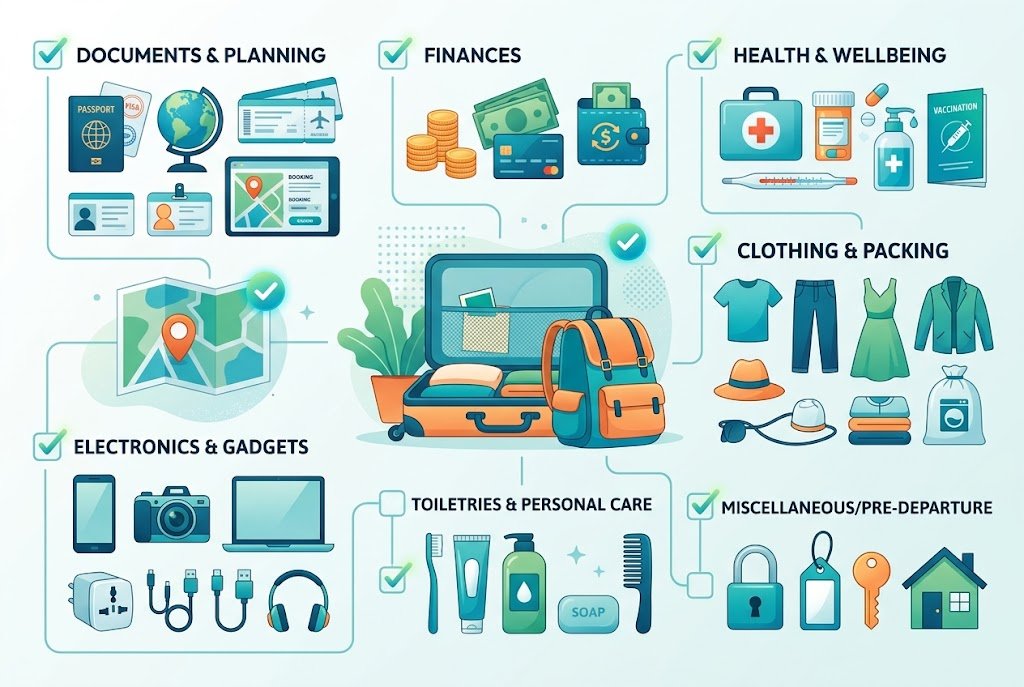
An international travel checklist is a step-by-step planning system that covers the documents, health preparations, finances, transportation, accommodation, packing, technology, safety arrangements, and final checks required for traveling to another country.
Unlike a simple packing list, it covers the entire journey. A good checklist answers questions such as: Can I legally enter the country? Is my passport valid long enough? Do I need a visa or electronic authorization? Are my medicines permitted? What happens if my luggage is delayed? How will I access money if my card fails?
The most useful approach is to complete the checklist in time order, because some tasks—such as visa applications, passport renewal, and certain vaccinations—cannot safely be left until the last few days.
01. Start With Your Destination and Itinerary
Before worrying about clothes or luggage, confirm exactly where you are going.
Your requirements can change depending on:
- Your nationality and passport
- Destination country
- Transit countries
- Length of stay
- Purpose of travel
- Age of the traveler
- Whether you are traveling alone or with children
- Whether you are studying, working, visiting family, or traveling for tourism
- Activities such as driving, hiking, diving, or cruising
This is particularly important for multi-country trips. A traveler may be permitted to enter Country A without a visa but still need a transit visa or electronic authorization for Country B. Before finalizing your itinerary, take some time to explore these beautiful places in the world for destination inspiration and ideas for your next international adventure.
Build a simple trip information sheet.
Write down:
| Information | Example |
| Departure country | Bangladesh |
| Destination | Italy |
| Transit country | Qatar |
| Departure date | October 15, 2026 |
| Return date | October 28, 2026 |
| Purpose | Tourism |
| Accommodation | Hotel in Rome |
| Emergency contact | Family member |
| Airline | Your airline |
| Booking reference | Your confirmation number |
Keep this information in your phone and offline. The U.S. Department of State’s international travel guidance similarly recommends reviewing destination-specific entry and exit requirements, passport validity, visa information, local laws, health information, and embassy contacts before departure.
Check every country in your itinerary.
Do not check only your final destination.
For example:
Home → Istanbul → Rome
You should check:
- Requirements for leaving your home country.
- Transit requirements in Türkiye.
- Entry requirements for Italy.
- Requirements for returning home.
If you have a long layover and plan to leave the airport, your transit requirements may differ from those for an airside connection.
Before finalizing your itinerary, explore our guide to the Top 10 Tourist Places in the World for destination ideas, planning tips, and inspiration for your next international trip.
02. Check Your Passport First
Your passport is the foundation of international travel. Check it as soon as you start planning.
Passport checklist
- Is it valid for the entire trip?
- Does your destination require additional validity after your arrival or departure?
- Does it have enough blank pages if required?
- Is it damaged?
- Does your name match your airline reservation?
- Is the passport number entered correctly in applications?
- If you have dual citizenship, which passport will you use for each border crossing?
Do not assume that a passport valid until the end of your trip is automatically sufficient. Some countries require additional validity beyond the planned stay. The U.S. Department of State notes that some destinations, particularly in Europe, require passports to remain valid for at least six months after travel dates, although the actual requirement depends on the country.
Why passport damage matters
A passport can be technically unexpired but still cause problems if it is significantly damaged. Torn pages, severe water damage, or damage to the identity page may lead to questions from carriers or border officials. If you are uncertain about your passport’s condition, check with your passport-issuing authority before traveling.
03. Determine Whether You Need a Visa
Visa requirements are one of the most important parts of your international travel checklist.
There are several common categories:
- Visa-free entry
- Visa on arrival
- Traditional visa
- Electronic visa (eVisa)
- Electronic travel authorization
- Transit visa
- Residence or work authorization
These are not interchangeable.
Do not confuse a visa with travel authorization.
An electronic travel authorization is generally a permission to travel under a particular visa-exempt system. It is not necessarily the same thing as a visa and does not automatically guarantee admission at the border.
For example, the United Kingdom requires many visitors who do not need a visa to obtain an Electronic Travel Authorisation (ETA). GOV.UK states that an ETA is linked to the passport used for the application and that travelers should check whether they need an ETA or visa based on their nationality and circumstances.
Check requirements using reliable sources.
Use this order:
- Destination country’s official immigration or embassy website.
- Your country’s foreign affairs ministry.
- Official airline guidance.
- IATA Travel Centre as an additional cross-check.
The IATA Travel Centre provides passport, visa, and health requirement information using data gathered from official sources around the world. Do not rely solely on a random blog post or an old social media comment. Entry rules can change.
Before finalizing your itinerary, research the best tourist attractions at your destination so you can prioritize the places and experiences that match your interests and available time.
04. Pay Attention to 2026 Electronic Travel Changes
International travel in 2026 includes several important digital border developments. One major example is Europe’s ETIAS, the European Travel Information and Authorisation System. As of the current 2026 information published by the European Union, ETIAS is scheduled to begin operations in the last quarter of 2026. The EU says the exact launch date will be announced separately and that travelers do not need to take action before the system becomes operational.
ETIAS is intended for visa-exempt travelers visiting participating European countries for short stays. It should not be treated as a replacement for a visa where a visa is required. Because the system is being introduced in 2026, travelers planning a late-2026 European trip should check the official EU website again shortly before departure. Similarly, the UK’s ETA system is already relevant to many travelers. GOV.UK states that most visitors need either an ETA or a visa, depending on nationality and purpose.
Practical rule: Whenever you travel internationally in 2026, perform a final entry-requirement check shortly before your flight.
05. Organize Your Travel Documents
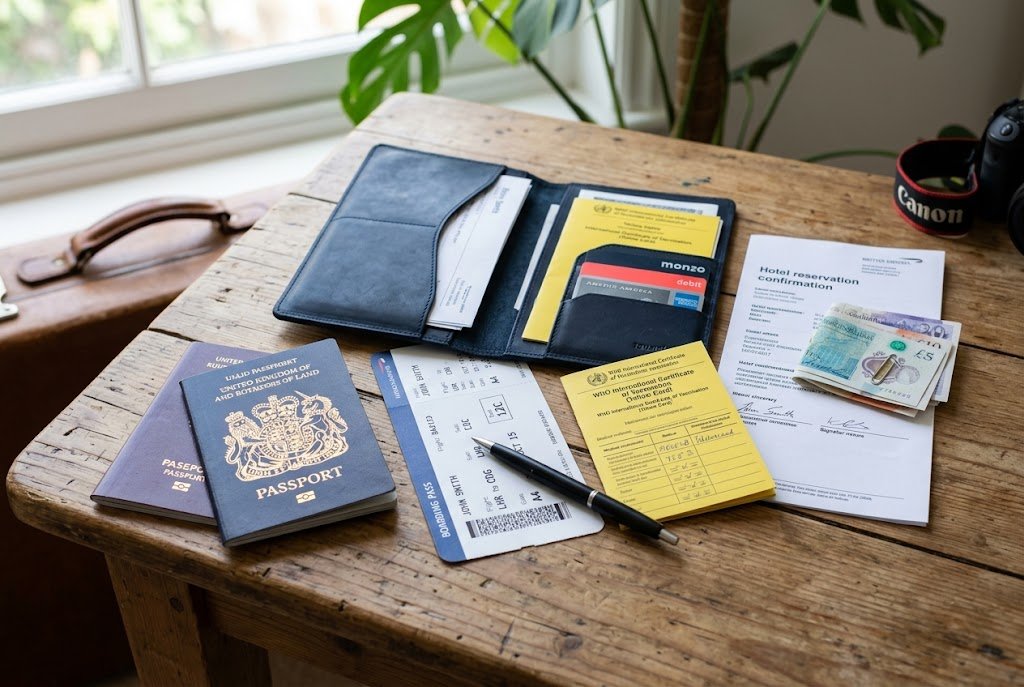
Once your passport and entry requirements are confirmed, organize the documents you may need.
Essential document checklist
Depending on your trip, you may need:
- Passport
- Visa
- eVisa approval
- Electronic travel authorization
- Flight confirmation
- Hotel confirmation
- Travel insurance certificate
- Return or onward ticket
- Proof of funds
- Invitation letter
- Vaccination certificate
- Prescription documentation
- International Driving Permit
- Student or work documents
- Child travel consent documents
- Cruise documents
- Car rental confirmation
Not every traveler needs every document.
Create three copies
A useful document system is:
Original:
Keep the actual passport and required originals secure.
Digital:
Store encrypted or password-protected copies in a secure cloud account and on your phone.
Backup:
Keep a separate physical copy or another secure backup.
The U.S. Department of State recommends making multiple copies of important travel documents, leaving a copy with someone trusted, keeping another copy separately from the originals, and photographing documents with a mobile phone. Avoid keeping your only copy in checked luggage.
06. Check Your Airline Booking Carefully
Your ticket confirmation is not the same as proof that you meet immigration requirements.
Review:
- Passenger name
- Date
- Departure airport
- Arrival airport
- Transit airports
- Baggage allowance
- Cabin baggage restrictions
- Seat assignment
- Special assistance requests
- Meal requests if relevant
- Connection times
- Terminal information
- Airline loyalty details
Pay special attention to airport codes
Large cities sometimes have multiple airports. A ticket to a city does not necessarily mean you will arrive at the airport you expected. Check the airport code on every segment.
For example, an itinerary may involve:
JFK → DOH → BKK
That is very different from assuming you are flying directly from New York to Bangkok.
07. Check Transit and Connection Requirements
One of the most overlooked parts of international travel planning is the transit country.
A connection can involve:
- Staying airside
- Passing immigration
- Collecting and rechecking baggage
- Changing airports
- Changing terminals
- Entering the country temporarily
Your nationality, passport, airline, airport, and length of connection can all matter.
Ask these questions
- Do I need a transit visa?
- Do I need to pass immigration?
- Does my checked bag go through to the final destination?
- Do I need to collect baggage?
- Do I have to change airports?
- Is my connection protected under one booking?
- What happens if the first flight is delayed?
If the answer to any of these is unclear, confirm it with the airline and relevant immigration authority before departure.
08. Schedule Your Travel Health Check

Health preparation should not be a last-minute task. The CDC recommends checking destination-specific health information and speaking with a healthcare professional or travel-health specialist roughly 4–6 weeks before departure, because some vaccines and medications require advance planning.
Your health checklist
Check:
- Routine vaccinations
- Destination-specific vaccines
- Malaria recommendations where applicable
- Mosquito-borne diseases
- Food and water risks
- Altitude concerns
- Heat or cold exposure
- Travel-related medications
- Existing prescriptions
- Medical insurance coverage
- Emergency medical arrangements
The correct preparation depends heavily on the destination and your planned activities.
Do not self-prescribe travel medicine.
Travel medicine is destination-specific. For example, the health preparation for a city vacation may be very different from preparation for a multi-week hiking trip in a remote region. Ask a qualified healthcare professional about your individual situation.
Before your trip, it can also be helpful to explore local dining options and learn more about Thai street food, especially if you enjoy discovering new flavors while traveling. If you follow a plant-based diet, it’s also helpful to explore this vegan food list for easy meal ideas and options to look for while traveling.
09. Check Medication Rules Before Flying
One of the most important and overlooked international travel tips is to verify whether your medication is legal in the destination country. A medication that is legal where you live may be controlled or restricted elsewhere.
The U.S. Department of State warns that some prescription and over-the-counter medicines can be illegal in foreign countries. It recommends checking destination-specific requirements and carrying prescriptions and appropriately labeled medication containers.
Medication checklist
- Keep medicine in appropriate original packaging.
- Carry enough for the trip, subject to destination rules.
- Carry documentation or prescriptions when appropriate.
- Check controlled-drug restrictions.
- Check rules for syringes or medical equipment.
- Keep essential medicine in your carry-on.
- Do not assume airport security rules are identical worldwide.
For longer trips, plan your supply well in advance. CDC guidance also recommends discussing medication needs with a healthcare professional before extended travel.
10. Buy the Right Travel Insurance
Travel insurance is not simply about recovering the price of a hotel.
Depending on the policy, it may provide coverage for:
- Emergency medical expenses
- Medical evacuation
- Trip cancellation
- Trip interruption
- Delayed travel
- Lost or delayed baggage
- Certain emergency assistance services
Coverage varies significantly between policies. The U.S. Department of State recommends considering travel insurance and specifically highlights medical care and medical evacuation as important considerations.
Compare insurance policies by coverage, not price alone
| Feature | Why it matters |
| Emergency medical | Helps with unexpected treatment costs |
| Medical evacuation | Important when suitable treatment is unavailable locally |
| Trip cancellation | May help with covered cancellation reasons |
| Trip interruption | Can help after certain covered disruptions |
| Baggage | Useful if luggage is lost or delayed |
| Exclusions | Shows what the policy will not cover |
| Deductible | Amount you may pay before coverage applies |
| Assistance service | Important during emergencies abroad |
Read exclusions carefully. For example, a policy may have special rules for pre-existing conditions, adventure sports, alcohol-related incidents, or destinations subject to government travel warnings.
11. Prepare Your Money and Banking Setup

You do not want to discover that your card is blocked after landing.
Before departure:
- Tell your bank about international travel if required.
- Check foreign transaction fees.
- Confirm your cards are active.
- Verify your PIN.
- Check daily withdrawal limits.
- Carry more than one payment method.
- Keep emergency cash separately.
- Know the local currency.
- Download your banking app.
- Confirm you can receive security alerts abroad.
Use a two-layer money strategy.
A sensible setup is:
Primary:
Credit or debit card.
Backup:
Second card from a different account or provider.
Emergency:
A small amount of local currency or a widely accepted reserve currency where appropriate. Do not keep all your money, cards, and identification in one wallet.
12. Plan Your Mobile Phone and Internet Access
International connectivity is now part of basic trip planning.
Check whether your mobile provider offers:
- International roaming
- Travel data packages
- International calling
- eSIM service
- Wi-Fi calling
Alternatively, you may use a local SIM or eSIM where legally and technically appropriate.
Before leaving home
Download:
- Offline maps
- Airline app
- Hotel confirmation
- Translation tools
- Banking app
- Travel insurance information
- Important phone numbers
- Transportation information
Make sure you can access critical information without an internet connection. This is especially useful when you first arrive at an airport, and your mobile connection has not yet been activated.
13. Save Emergency Information Offline
Do not rely entirely on your phone’s internet connection.
Create a simple emergency note containing:
- Emergency contact
- Travel insurance provider
- Policy number
- Local emergency number
- Accommodation address
- Embassy or consulate contact
- Airline contact
- Important medical information
- Bank emergency numbers
The U.S. Department of State recommends destination research that includes embassy and consulate information, as well as safety and emergency resources. If you are a U.S. citizen, the State Department also offers the Smart Traveler Enrollment Program (STEP), which provides destination alerts and can help an embassy or consulate contact you or your emergency contact during an emergency. Other nationalities should check whether their own government offers a comparable traveler-registration or alert service.
14. Research Local Laws and Customs

A rule that feels minor at home may be important abroad.
Research:
- Dress expectations
- Photography restrictions
- Alcohol laws
- Drug laws
- Public behavior
- Religious-site etiquette
- Driving regulations
- Identification requirements
- Customs restrictions
- Drone regulations
- Import restrictions
This is particularly important for travelers who plan to visit religious sites, drive, work remotely, photograph sensitive locations, or travel with unusual equipment. Travel advice from government sources can include local laws and special circumstances that travelers may not encounter in ordinary tourism guides.
15. Make a Realistic Itinerary
A common beginner mistake is trying to see everything.
Instead, organize your itinerary around:
- Must-see activities
- Flexible activities
- Rest time
- Transportation time
- Meal breaks
- Unexpected delays
Example
Instead of:
8:00 — Museum
10:00 — Old Town
11:00 — Market
12:00 — Lunch
1:00 — Palace
3:00 — Beach
5:00 — Shopping
Try:
Morning: Major attraction
Lunch: Nearby neighborhood
Afternoon: Flexible exploration
Evening: Dinner and rest
International travel often involves delays that cannot be controlled. A flexible itinerary can make the trip more enjoyable. Before finalizing your itinerary, take some time to compare destinations based on your budget, interests, travel style, and the experiences you want most—our guide to the best countries to visit can help you narrow down your options.
If you’re planning to explore memorable dining experiences during your international trip, you can also discover the most expensive food in the world and see what makes these extraordinary dishes so valuable.
16. Confirm Accommodation
Before departure, verify:
- Hotel name
- Address
- Check-in date
- Check-out date
- Check-in time
- Reservation number
- Payment status
- Cancellation terms
- Airport transfer details
- Late-arrival procedure
Save the address in the local language if possible. This can help when communicating with a taxi driver or navigating a destination where English is not widely spoken. For your first night, avoid creating unnecessary uncertainty. Know exactly how you will get from the airport to your accommodation.
17. Plan Airport Transportation Before Arrival
Research transportation from the airport before you leave home.
Options may include:
- Official taxi
- Airport train
- Public bus
- Hotel transfer
- Ride-hailing service
- Rental car
- Private transfer
Check:
- Operating hours
- Approximate travel time
- Payment methods
- Pick-up location
- Whether reservations are required
If you arrive late at night, confirm that your chosen transport option is available at that time.
18. Build Your International Packing List
Only after documents, health, money, and transportation are organized should you finalize your luggage.
Essential carry-on items
Keep important items with you rather than checking them:
- Passport
- Visa or travel authorization
- Wallet
- Phone
- Charging cable
- Power bank where permitted
- Essential medication
- Glasses or contact-lens supplies
- Travel insurance information
- Important documents
- One change of basic clothing
- Valuable electronics
Airline and airport rules vary, especially for batteries and power banks, so check your airline’s current baggage guidance.
Checked luggage
Depending on the trip:
- Clothing
- Shoes
- Toiletries permitted in checked baggage
- Beachwear
- Weather-specific layers
- Laundry supplies
- Larger personal-care items
- Non-essential equipment
The goal is not to pack everything you own. Pack according to your actual itinerary.
19. Prepare for Weather and Activities

Check the forecast close to departure rather than relying only on seasonal averages.
Your clothing should match:
- Destination climate
- Season
- Rain probability
- Expected temperatures
- Cultural expectations
- Planned activities
A beach holiday may require completely different equipment from a winter city trip or mountain trek.
If your itinerary includes beaches, you may also find useful destination inspiration and planning information in the Beach Near travel guides.
20. Check Electrical and Charging Needs
Different countries use different electrical standards and plug types.
Before departure, determine whether you need:
- Plug adapter
- Voltage converter
- Universal travel adapter
- USB charger
- Multi-port charger
- Device-specific cable
A plug adapter changes the physical plug shape. It does not automatically convert voltage. Check the input range printed on your electronics before using them with a different electrical system.
21. Prepare for Airport Security
Your carry-on should be organized so that you can quickly access items that may need separate inspection.
Before leaving:
- Check liquid restrictions for your departure airport.
- Review airline baggage dimensions.
- Remove unnecessary items from your bag.
- Keep documents easy to reach.
- Separate electronics if required.
- Keep medication accessible.
- Follow current airport security instructions.
Do not assume security rules are identical at every airport. Your airline and departure airport are the best places to confirm current requirements.
22. Complete a 7-Day Pre-Departure Check
One week before your flight, perform a complete review.
7-day international travel checklist
Documents
- Passport checked
- Visa confirmed
- Travel authorization confirmed
- Transit requirements checked
- Return/onward ticket saved
- Hotel confirmation saved
- Insurance documents saved
Health
- Vaccination requirements checked
- Medication prepared
- Prescription documentation prepared
- Health information reviewed
Money
- Cards active
- Bank access confirmed
- Emergency payment method ready
- Local currency planned
Technology
- Phone unlocked if necessary
- Roaming/eSIM arranged
- Maps downloaded
- Travel apps installed
- Documents available offline
Travel
- Airport transportation planned
- Accommodation confirmed
- Weather checked
- Packing nearly complete
23. Complete the 24-Hour Final Check

The day before departure is not the time to discover that your passport has expired.
Use this short final checklist:
- Check flight status
- Check terminal
- Check baggage allowance
- Complete online check-in if available
- Confirm seat
- Confirm airport transportation
- Charge devices
- Charge power bank according to airline rules
- Download boarding pass
- Download important documents
- Check passport one more time
- Put essential medication in your carry-on
- Secure your home
- Tell your trusted contact your itinerary
- Set an appropriate alarm
Then stop packing. A final calm review is usually more useful than adding another five items to your suitcase.
Before you travel, consider researching local dining options as well—especially if you enjoy coastal destinations and fresh seafood. Exploring the best seafood restaurants can help you plan memorable meals during your trip.
24. What Should You Keep in Your Personal Item?
Your personal item should contain the things that would cause the most trouble if your checked luggage disappeared temporarily.
A practical setup includes:
Documents
Passport, visa, boarding pass, insurance details, hotel confirmation.
Health
Essential medication, prescriptions, glasses, basic health supplies.
Technology
Phone, charger, cables, headphones, permitted power bank.
Comfort
Water bottle after security where permitted, light layer, eye mask, neck pillow, snacks if allowed.
Backup
A change of underwear and basic clothing can be useful on long journeys.
This is particularly valuable when traveling with checked luggage.
25. Common International Travel Mistakes to Avoid

Even experienced travelers can make avoidable mistakes.
Mistake 1: Checking visa requirements too late
Visa processing times vary.
Better approach: Check requirements immediately after deciding where you are going.
Mistake 2: Assuming visa-free means requirement-free
A traveler may still need an electronic authorization, proof of onward travel, accommodation details, or other documentation.
Better approach: Verify the complete entry conditions.
Mistake 3: Ignoring transit countries
A transit airport can create additional immigration or visa requirements.
Better approach: Check every country on the itinerary.
Mistake 4: Putting medication in checked luggage
If the bag is delayed, your essential medicine may be inaccessible.
Better approach: Keep important medication with you.
Mistake 5: Relying on one bank card
A declined card can become a serious problem.
Better approach: Carry a backup payment method.
Mistake 6: Saving everything only online
You may lose internet access.
Better approach: Save critical information offline.
Mistake 7: Overpacking
More luggage means more weight, more movement, and more opportunities for delays or loss.
Better approach: Pack for the actual itinerary.
Mistake 8: Ignoring local laws
Tourist assumptions do not override local law.
Better approach: Research destination-specific rules before arrival.
Mistake 9: Treating old travel information as current
Visa and border systems can change during a year.
Better approach: Recheck official sources shortly before departure.
26. A Simple Timeline for Your Travel Checklist
If you want one system that works for most international trips, use this timeline.
| Time before departure | Main tasks |
| 2–6 months | Passport, destination research, visa planning, major bookings |
| 1–3 months | Visa/authorization, insurance, health planning, accommodation |
| 4–6 weeks | Travel-health consultation and destination-specific vaccines if needed |
| 2–3 weeks | Banking, connectivity, transportation, document organization |
| 7 days | Weather, flight, baggage, documents, packing |
| 24 hours | Online check-in, boarding pass, final documents, devices |
| Airport day | Passport, boarding pass, baggage, security, gate |
| Arrival | Immigration, baggage, customs, transportation |
Not every traveler needs to begin six months ahead. However, starting early gives you more options if a passport, visa, appointment, or booking requires extra time.
27. What to Do If Something Goes Wrong
Good preparation does not eliminate problems. It makes them easier to solve.
Lost passport
Contact the nearest embassy or consulate of your nationality and follow its emergency passport procedures. Your backup copies can help establish your identity and travel details, although they do not replace the original passport.
Lost wallet
Immediately secure your payment cards through your bank or card provider. Then report theft where appropriate and contact your embassy or consulate if your travel documents were also lost.
Delayed luggage
Report the missing bag to the airline before leaving the airport if possible. Keep the baggage claim information and reference number. Your travel insurance may provide additional benefits depending on the policy.
Missed connection
Contact the airline or follow the instructions associated with your booking. If both flights are on one protected itinerary, the airline’s obligations may differ from a situation where you purchased separate tickets.
Medical emergency
Contact local emergency services when necessary, then contact your travel insurer’s assistance service if your policy provides one. This is one reason to keep insurance details accessible offline.
28. Special Considerations for Families
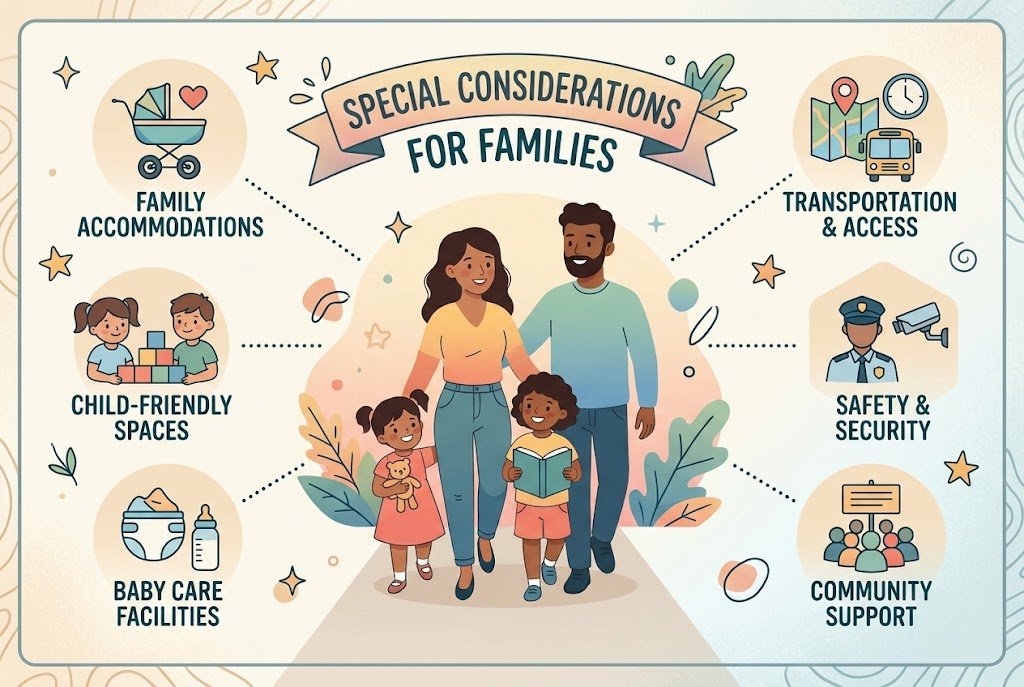
Traveling with children adds another layer to the checklist.
Depending on the circumstances, you may need:
- Child’s passport
- Visa or travel authorization
- Birth certificate or equivalent documentation
- Consent letter when one parent is not traveling
- Custody documentation where relevant
- Child-specific medication
- Car seat arrangements
- Stroller information
- Copies of important documents
The U.S. Department of State notes that children traveling without one or both parents may need additional legal documentation, depending on destination requirements. Because rules vary, families should confirm requirements with the destination’s official authorities.
If you’re traveling with children, it’s also helpful to research dining options in advance, such as a family-friendly pizza restaurant, so everyone has an easy and enjoyable meal after a day of exploring.
29. Special Considerations for Business Travelers
Professionals often have additional requirements beyond ordinary tourists.
Add:
- Work invitation
- Business visa if required
- Employer letter
- Conference registration
- Meeting addresses
- Corporate insurance information
- Laptop and charger
- Secure VPN or company access
- Backup authentication method
- Business cards
- Appropriate clothing
- Copies of important contracts or documents
If you are working while abroad, do not assume that tourist entry permission automatically allows employment or remote work. Immigration and tax rules can differ significantly by country.
30. The Ultimate Printable International Travel Checklist
Use this condensed version after completing the detailed planning above.
Documents
- Passport valid
- Passport condition checked
- Visa confirmed
- Electronic authorization confirmed
- Transit requirements checked
- Return/onward ticket
- Hotel confirmation
- Travel insurance
- Health documents
- Copies/backups
Money
- Primary card
- Backup card
- Emergency cash
- Bank access
- Foreign transaction fees checked
Health
- Routine vaccines reviewed
- Destination health information checked
- Travel-health appointment if needed
- Medication prepared
- Prescriptions/documentation
- Medical insurance reviewed
Technology
- Phone
- Charger
- Power bank according to airline rules
- eSIM/SIM/roaming
- Offline maps
- Translation app
- Banking app
- Important documents offline
Accommodation & Transport
- Hotel confirmed
- Airport transfer planned
- Local transportation researched
- Important addresses saved
Packing
- Weather-appropriate clothes
- Comfortable shoes
- Toiletries
- Essential medication
- Electronics
- Travel adapter
- Personal items
- Carry-on essentials
Safety
- Emergency contacts
- Embassy/consulate details
- Local emergency number
- Local laws researched
- Travel alerts reviewed
- Trusted person has itinerary
Final 24 hours
- Flight status checked
- Online check-in completed
- Boarding pass saved
- Terminal checked
- Passport in carry-on
- Essential medication in carry-on
- Devices charged
- Home secured
Final Thought
International travel becomes much easier when you prepare before you leave rather than trying to solve problems after you arrive. A well-organized international travel checklist helps you confirm the essentials—from passports, visas, travel insurance, and flights to accommodation, money, medications, electronics, and important documents.
The best checklist is not simply a list of things to pack; it is a practical plan for a smoother and safer journey. Before departure, take time to verify your destination’s entry requirements, check your documents’ validity, understand local customs and transportation options, and keep digital and physical copies of important information. A few minutes of preparation can prevent significant stress during your trip.
Ultimately, the goal of an international travel checklist is to give you confidence. When the essential details are taken care of, you can spend less time worrying about what you might have forgotten and more time experiencing the places, people, food, culture, and adventures that make international travel worthwhile. Use this checklist as a starting point, adapt it to your destination and personal needs, and review it before every trip for a more comfortable and memorable journey.
Frequently Asked Questions
Q1. How early should I start preparing for an international trip?
Ans: Start as soon as you know your destination and approximate travel dates. Passport renewal, visas, electronic authorizations, vaccinations, and some bookings may require advance planning. For health preparation, CDC guidance recommends considering a travel-health appointment around 4–6 weeks before departure when appropriate.
Q2. How do I know if I need a visa?
Ans: Check the official immigration or embassy website of your destination using your nationality, passport type, travel purpose, and intended length of stay. Also check every transit country. IATA’s Travel Centre can provide an additional cross-check for passport, visa, and health requirements.
Q3. Is a passport valid for six months enough for every country?
Ans: No. Passport validity rules vary by destination. Some countries require additional validity beyond your planned stay, while others use different calculations. Always check the specific destination requirement rather than relying on a universal six-month rule.
Q4. Do I need travel insurance for international travel?
Ans: Requirements vary, but insurance can provide valuable protection against eligible medical expenses, evacuation, cancellation, interruption, and other covered problems. The most important step is reading the policy’s exclusions and limits rather than choosing based only on price.
Q5. Should I keep my passport in my carry-on?
Ans: Yes. Your passport and other essential travel documents should remain accessible to you rather than being packed in checked luggage.
Q6. Can I bring prescription medicine abroad?
Ans: Often yes, but rules vary by destination and medication. Some medicines that are legal in one country may be restricted in another. Check destination-specific rules and carry appropriate documentation.
Q7. What should I do if I have an international flight with a long layover?
Ans: Check whether you can remain airside, whether you need to pass immigration, whether you must collect your luggage, and whether your nationality requires a transit visa. If you plan to leave the airport, check the entry rules for the transit country.
Q8. What should I keep in my carry-on bag?
Ans: Keep your passport, visa or authorization, money, phone, essential medication, important documents, valuables, chargers, and other items that would be difficult to replace if checked luggage were delayed.
Q9. Do I need an electronic travel authorization in 2026?
Ans: Possibly. Requirements depend on your nationality and destination. For example, the UK requires an ETA for many visitors who do not need a visa, while the EU says ETIAS is scheduled to begin operations in the last quarter of 2026. Always check the current official requirement before travel.
Q10. What is the most important item on an international travel checklist?
Ans: There is no single item for every traveler, but entry eligibility comes first. A traveler who has a perfect suitcase but lacks the required passport validity, visa, or travel authorization may not be able to board or enter the destination.
Q11. Should I make copies of my travel documents?
Ans: Yes. Keep secure digital backups and separate physical copies when practical. The U.S. Department of State recommends making multiple copies and keeping them separately from the originals.
Q12. What should I check the day before an international flight?
Ans: Check your flight status, terminal, baggage allowance, online check-in, boarding pass, passport, travel authorization, transportation to the airport, accommodation details, and essential medication. Also, make sure your phone and necessary devices are charged.





1 Comment