
 -by
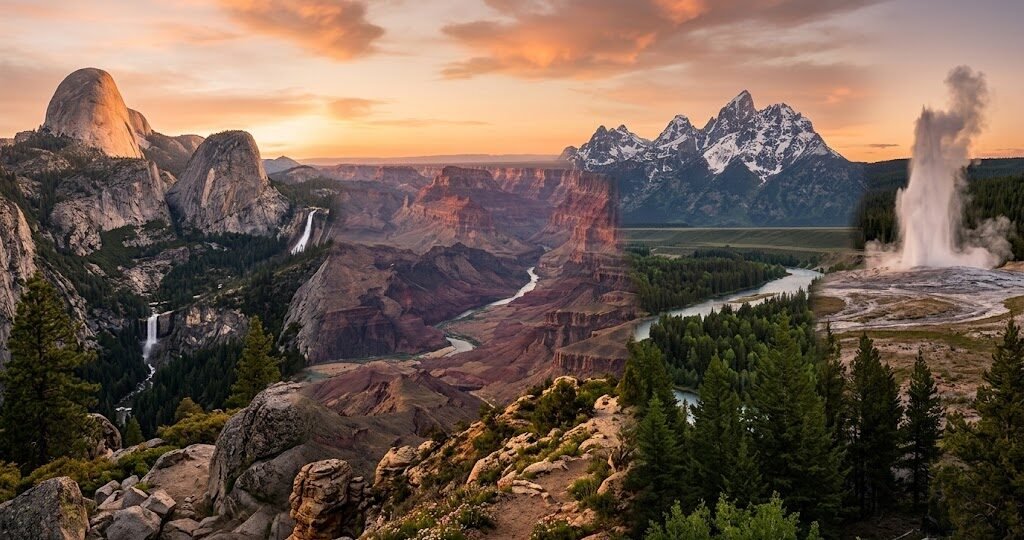
-by The United States has an extraordinary variety of protected landscapes, from geyser-filled volcanic basins and enormous canyon systems to glacier-carved mountains, tropical wetlands, old-growth forests, and remote Alaskan wilderness. Choosing among the country’s national parks can therefore be surprisingly difficult—not because there are too few great options, but because each park offers a very different kind of experience.
As of September 2026, the National Park Service (NPS) lists 63 designated national parks within the broader National Park System. Those parks span mainland states as well as Alaska, Hawaii, American Samoa, and the U.S. Virgin Islands. This guide focuses on 15 standout choices for different travel styles rather than pretending there is one universally “best” park.
You’ll find options for first-time visitors, families, hikers, wildlife enthusiasts, photographers, road-trippers, beach lovers, and travelers looking for something more remote. You’ll also learn when to visit, what makes each park distinctive, what first-time visitors should know, how to handle reservations and entrance fees, and how to choose the right park for your own trip.
What Makes a National Park Worth Visiting?
A national park is not simply a scenic place with hiking trails. The National Park Service manages these areas to conserve natural and cultural resources while allowing people to experience and learn from them. The result is a remarkably diverse collection of landscapes.
Yellowstone, for example, is shaped by geothermal activity, while Everglades protects an enormous wetland ecosystem. Yosemite is famous for granite cliffs and waterfalls; Acadia combines mountains with a rocky Atlantic coastline. That diversity means the “best” choice depends on what you want from your trip.
Consider these questions before choosing:
- Do you want dramatic scenery or wildlife?
- Are you comfortable with strenuous hiking?
- Are you traveling with children or older adults?
- Do you want a road-trip destination or somewhere reached by boat or plane?
- Are you visiting in summer, winter, spring, or fall?
- Do you prefer developed visitor facilities or wilderness?
- Are crowds a major concern?
- Will you need reservations or permits?
- Are you an international visitor who needs to account for current entrance and nonresident fees?
Answering those questions is often more useful than simply following a generic top-10 list.
When planning a full day outdoors, bringing convenient plant-based snacks and meals can make it easier to stay energized while exploring the park; see this vegan food guide for practical food ideas.
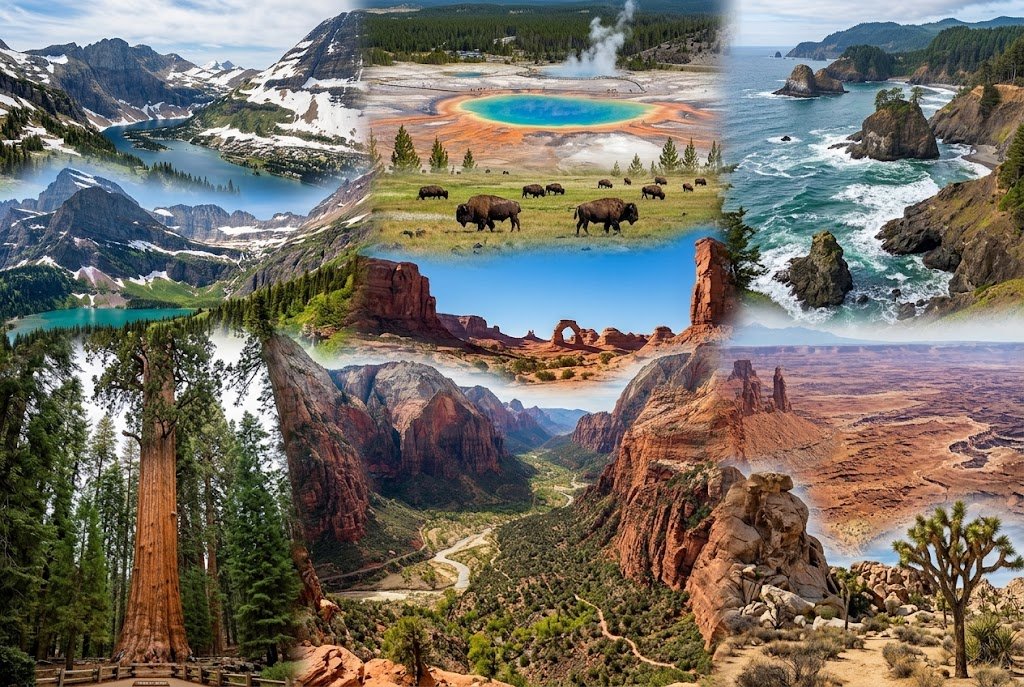
The 15 Best National Parks in the USA for Different Travel Styles
| National Park | State(s) / Territory | Particularly Good For | Ideal Trip Style |
| Yellowstone | Wyoming, Montana, Idaho | Wildlife and geothermal features | Multi-day road trip |
| Grand Canyon | Arizona | Canyon scenery and geology | Scenic trip + hiking |
| Yosemite | California | Waterfalls, granite landscapes | Hiking + sightseeing |
| Zion | Utah | Canyon hiking | Adventure trip |
| Great Smoky Mountains | Tennessee, North Carolina | Forests, wildlife, families | Scenic road trip |
| Grand Teton | Wyoming | Mountain scenery and photography | Road trip + hiking |
| Glacier | Montana | Alpine scenery | Hiking + scenic driving |
| Olympic | Washington | Rainforest, coast, mountains | Diverse nature trip |
| Acadia | Maine | Coastline and accessible hiking | Short getaway |
| Rocky Mountain | Colorado | High-altitude mountains | Hiking + wildlife |
| Arches | Utah | Natural arches and desert scenery | Short adventure |
| Everglades | Florida | Wetlands and wildlife | Wildlife + boating |
| Joshua Tree | California | Desert landscapes and stargazing | Weekend getaway |
| Great Sand Dunes | Colorado | Sand dunes and unusual landscapes | Family + adventure |
| Denali | Alaska | Wilderness and wildlife | Remote adventure |
If you’re heading out early for a sunrise hike or a full day of sightseeing, choosing a balanced breakfast before entering the park can help you start the day prepared.
01. Yellowstone National Park — Best for Geothermal Wonders and Wildlife
Yellowstone is the obvious starting point for understanding the American national park tradition. Established in 1872, it became the world’s first national park and protects an enormous landscape across Wyoming, Montana, and Idaho. Its appeal comes from the combination of geothermal activity and wildlife. The park contains thousands of hydrothermal features, including geysers, hot springs, mudpots, and fumaroles.
Old Faithful is the best-known geyser, while Grand Prismatic Spring is one of the park’s most recognizable sights. Yellowstone also supports large populations of animals, including bison, elk, and other species. The scale is important. Yellowstone covers about 2.2 million acres, so treating it like a collection of attractions that can be ticked off in one afternoon is a mistake.
Don’t miss:
- Old Faithful and the Upper Geyser Basin
- Grand Prismatic Spring
- Grand Canyon of the Yellowstone
- Mammoth Hot Springs
- Yellowstone Lake
- Lamar Valley or Hayden Valley for wildlife viewing
Best for: Wildlife enthusiasts, photographers, families, road-trippers, and first-time national park visitors.
Planning tip: Allow several days if possible. Driving distances inside the park can make a seemingly short itinerary surprisingly time-consuming.
Watch out for: Wildlife is wild. Never approach animals for photographs, and remain on designated boardwalks around thermal areas.
02. Grand Canyon National Park — Best for Immense Geological Scenery
Few landscapes communicate scale as effectively as the Grand Canyon. The Colorado River has carved an immense canyon through northern Arizona, exposing layers of rock that record a long geological history. The South Rim provides the most developed visitor experience and is generally the easiest choice for a first visit.
The important distinction is between seeing the canyon and hiking the canyon. Walking along the rim can be relatively accessible, while descending into the canyon and climbing back out is a substantially more demanding undertaking. That difference matters for inexperienced hikers. A trail that feels manageable while descending may become extremely challenging on the return because of heat, elevation changes, and sustained uphill travel.
Best experiences:
- Sunrise or sunset at a rim viewpoint
- Rim Trail walks
- Desert View
- South Kaibab Trail
- Bright Angel Trail
- A multi-day canyon trip for properly prepared hikers
Best for: First-time visitors, photographers, geology enthusiasts, scenic road trips, and hikers.
Planning tip: Do not underestimate the canyon’s vertical scale. Carry sufficient water, check conditions, and choose a hiking distance appropriate to your fitness and the season. For travelers interested in understanding why certain American landscapes are protected and visited on such a massive scale, the Grand Canyon is an excellent introduction to the National Park System.
03. Yosemite National Park — Best for Waterfalls and Granite Landscapes
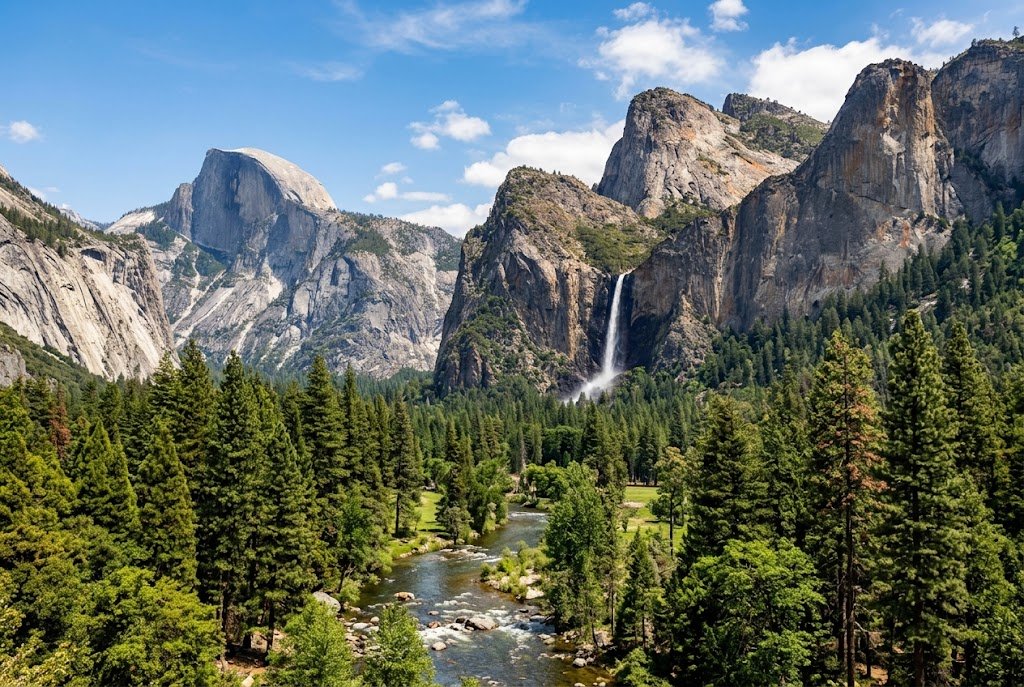
Yosemite combines enormous granite cliffs, waterfalls, forests, meadows, and high-country scenery in one of California’s most recognizable landscapes. The Yosemite Valley is the park’s visual centerpiece. El Capitan and Half Dome dominate the surrounding landscape, while waterfalls provide some of the most dramatic seasonal scenery.
Yosemite is particularly useful for travelers who want flexibility. A visitor can experience major viewpoints with relatively little hiking, while experienced hikers and backpackers can build much more demanding itineraries.
Highlights include:
- Yosemite Valley
- Yosemite Falls
- El Capitan
- Half Dome views
- Glacier Point
- Tuolumne Meadows when accessible
- Giant sequoias in the Mariposa Grove area
Best for: Photographers, hikers, families, climbers, and travelers combining nature with a California road trip.
Planning tip: Roads, trails, and high-elevation areas can have seasonal restrictions. Check the official park website before traveling rather than assuming every attraction is accessible year-round.
04. Zion National Park — Best for Dramatic Canyon Hiking
Zion is one of the strongest choices for travelers who want spectacular scenery without needing to spend a week in the wilderness. The park’s canyon landscape combines towering sandstone cliffs with narrow corridors, river scenery, and a large network of trails.
Two experiences often define a Zion visit: The Narrows, where hikers can travel through the Virgin River between canyon walls, and Angels Landing, an exposed and strenuous route for which a permit is required. Those experiences are not suitable for everyone. Weather, water levels, heat, exposure, and personal fitness all matter.
Best for:
- Canyon hiking
- Photography
- Adventure travelers
- Scenic drives
- Travelers combining several Utah parks
Planning tip: Zion works particularly well as part of a southern Utah itinerary with Bryce Canyon, Capitol Reef, Arches, and Canyonlands. Because popular parks can have seasonal access systems, shuttle operations, road restrictions, or permits, check current NPS conditions before leaving for your hike.
05. Great Smoky Mountains National Park — Best for Forests, Wildlife, and Families
Great Smoky Mountains National Park offers a very different experience from the dramatic deserts of the American Southwest. Located on the Tennessee-North Carolina border, it protects a large section of the southern Appalachian Mountains. Forests, ridges, streams, historic structures, waterfalls, and wildlife create a landscape that changes significantly with elevation and season.
It is also the most visited national park in the United States by annual recreational visits. NPS recorded 11,527,939 visits in 2025, considerably more than any other designated national park that year. Its popularity has a practical consequence: traffic and parking can be serious issues. The NPS specifically notes congestion, crowded parking areas, roadside erosion, and long lines as visitor-management challenges.
Best for:
- Families
- Scenic drives
- Fall foliage
- Wildlife watching
- Waterfalls
- Visitors who prefer forests to deserts
Planning tip: Build extra time into your schedule for traffic, especially during popular weekends and seasonal foliage periods.
06. Grand Teton National Park — Best for Mountain Photography
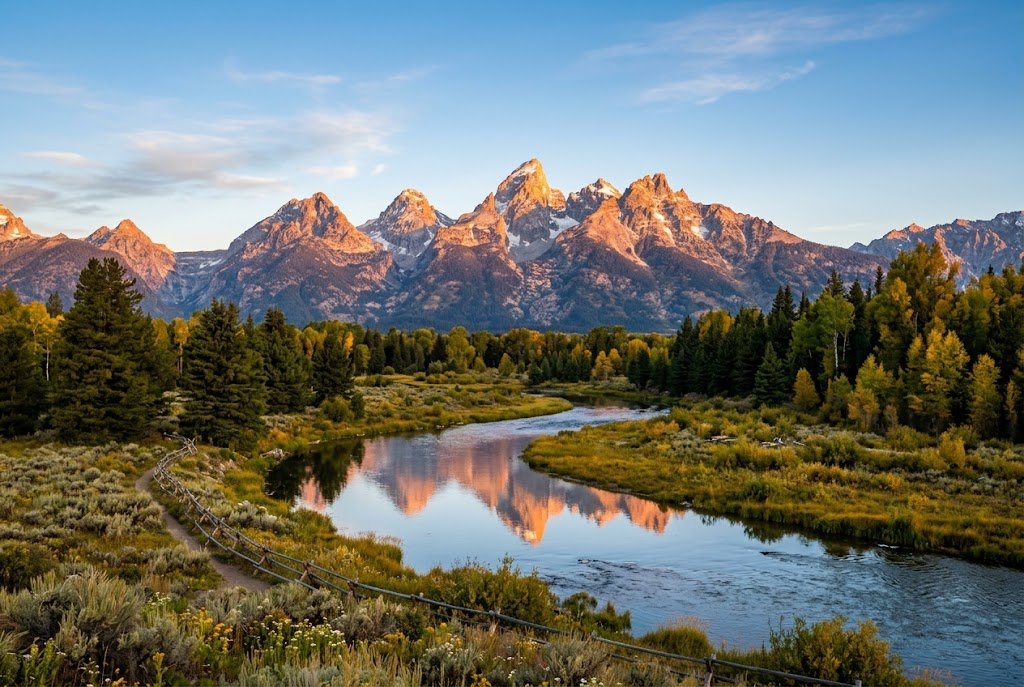
Grand Teton is one of the strongest choices for travelers whose priority is mountain scenery. The sharp Teton Range rises dramatically above lakes, valleys, and wildlife habitat. The contrast between rugged peaks and relatively open foreground landscapes creates excellent conditions for landscape photography. You do not necessarily need to complete a difficult hike to appreciate the park. Several scenic locations offer impressive views close to roads or developed areas.
Highlights:
- Jenny Lake
- Jackson Lake
- Mormon Row
- Schwabacher Landing
- Snake River viewpoints
- Teton mountain trails
Best for: Photographers, couples, families, hikers, and road-trippers.
Planning tip: Pair Grand Teton with Yellowstone for a longer Wyoming-centered national park trip. The two parks are geographically close enough to create a natural combined itinerary.
07. Glacier National Park — Best for Alpine Scenery
Montana’s Glacier National Park is a destination for travelers who want mountains, lakes, forests, and high-elevation scenery. The park is particularly associated with Going-to-the-Sun Road, one of its signature scenic routes. Hiking opportunities range from shorter walks to demanding backcountry routes. Weather can change quickly in mountainous environments, and high-elevation roads and trails have seasonal limitations.
Best for:
- Serious hikers
- Landscape photographers
- Scenic drives
- Wildlife viewing
- Mountain lovers
Planning tip: Do not build your entire trip around one road or trail. Mountain conditions can affect access, so keep alternative plans available. Glacier is also among the parks covered by the 2026 nonresident fee policy described later in this guide.
08. Olympic National Park — Best for Variety in One Destination
Olympic National Park stands out because of the range of environments contained within one park.
Visitors can experience:
- Temperate rainforest
- Pacific coastline
- Mountain landscapes
- Lakes
- Old-growth forest
- Subalpine environments
That diversity makes Olympic particularly valuable for travelers who do not want to choose between mountains and coast. It is also a good reminder that a national park does not necessarily equal one concentrated attraction. Olympic is spread across a large and geographically varied landscape, so transportation planning matters.
Best for: Road-trippers, photographers, hikers, families, and travelers seeking varied ecosystems.
Planning tip: Avoid trying to see everything in one rushed day. A multi-day itinerary is much more practical.
09. Acadia National Park — Best for a Coastal National Park Experience
Acadia provides a different national park experience from the huge western parks. Located in Maine, it combines rocky Atlantic coastline, forest, lakes, mountains, and scenic roads. Because many major attractions are relatively accessible, it can work well for travelers with limited time. Acadia is particularly attractive during the warmer months and fall foliage season, although seasonal conditions vary.
Best for:
- Coastal scenery
- Short hiking trips
- Families
- Photographers
- Northeast road trips
- Travelers who prefer developed destinations
Planning tip: Start early during busy periods. Parking and congestion can affect popular locations.
Acadia is also one of the national parks where the 2026 nonresident fee rules apply to eligible visitors aged 16 and older.
10. Rocky Mountain National Park — Best for High-Elevation Adventures
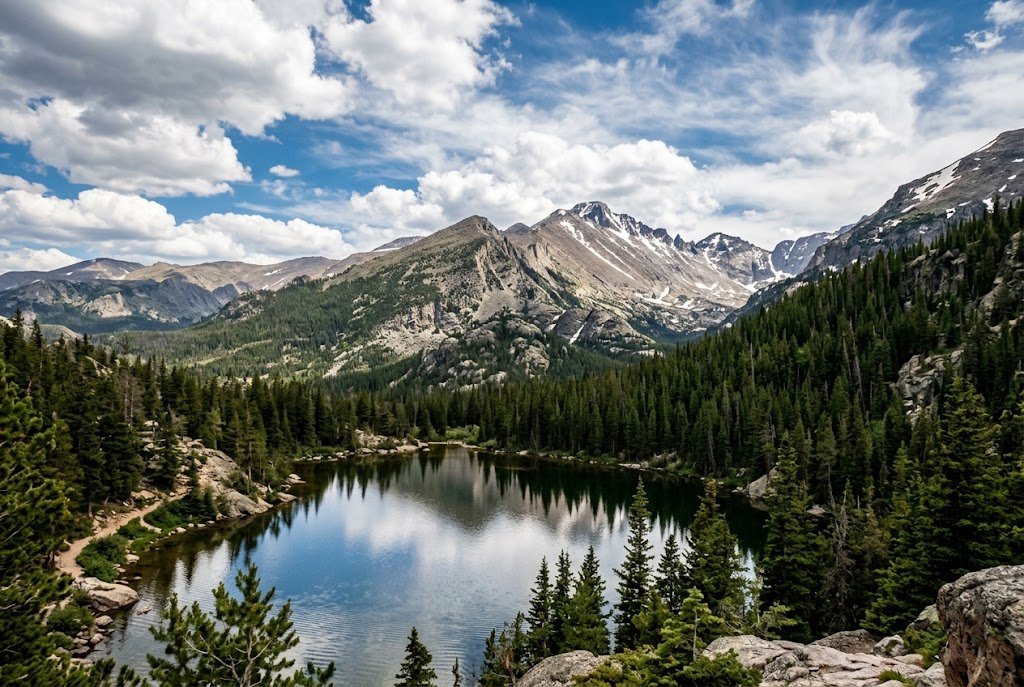
Rocky Mountain National Park in Colorado is ideal for travelers who want dramatic mountain landscapes without traveling to Alaska. The park includes alpine environments, forests, lakes, wildlife, and high-elevation roads and trails. However, altitude changes the hiking equation. A visitor arriving from sea level may find a trail significantly harder than the distance suggests because of elevation.
Best for:
- Mountain hiking
- Wildlife
- Scenic drives
- Photography
- Summer outdoor trips
Rocky Mountain National Park also illustrates why visitors should research access rules before traveling. For 2026, the park implemented a timed-entry reservation system beginning May 22, with different reservation arrangements for the Bear Lake Road Corridor and the remainder of the park.
Planning tip: Check the current reservation system before finalizing your itinerary. Do not assume that having an entrance pass automatically guarantees access to every restricted area.
11. Arches National Park — Best for Iconic Desert Rock Formations
Arches National Park in Utah is famous for its naturally formed sandstone arches and compact collection of dramatic desert landscapes. Compared with enormous parks such as Yellowstone or Denali, Arches can feel more straightforward to explore. That makes it a popular addition to a Utah road trip. However, desert environments present their own challenges. Heat exposure, limited shade, water requirements, and changing trail conditions can turn a short hike into a serious outing.
Best for:
- Photography
- Short hikes
- Families with careful planning
- Desert road trips
- Travelers visiting multiple Utah parks
Planning tip: Carry water, protect yourself from the sun, and consider starting major hikes earlier in the day during hot periods.
12. Everglades National Park — Best for Wetlands and Wildlife
Everglades National Park demonstrates how different the national park concept can look in Florida. Instead of towering mountains, the park protects a vast wetland ecosystem influenced by water movement, seasonal conditions, mangroves, marshes, and coastal environments. Wildlife watching is a major attraction, with opportunities to encounter birds, reptiles, and other species in their natural habitat.
Best for:
- Wildlife enthusiasts
- Birdwatchers
- Boating and paddling
- Families
- Travelers seeking tropical ecosystems
Planning tip: Plan around heat, humidity, insects, and seasonal weather rather than approaching the park like a mountain destination.
The Everglades is also included among the 11 national parks subject to the 2026 $100 nonresident fee for eligible visitors aged 16 and older, unless covered by an applicable annual or America the Beautiful pass.
13. Joshua Tree National Park — Best for Desert Landscapes and Stargazing
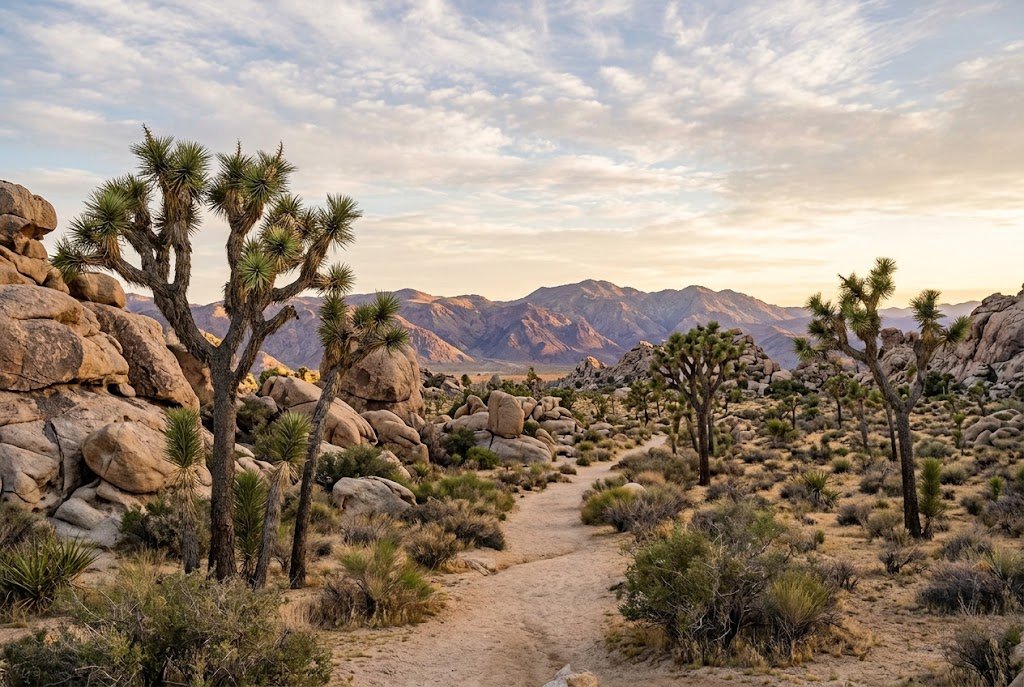
Joshua Tree combines two distinct desert environments with unusual vegetation, giant boulder formations, and wide-open skies. It is particularly attractive to travelers who want a national park experience without committing to a long expedition. Rock formations make it popular with climbers, while open landscapes appeal to photographers and night-sky enthusiasts.
Best for:
- Weekend trips
- Desert photography
- Rock climbing
- Stargazing
- California road trips
Planning tip: Desert temperatures can vary substantially between day and night. Bring adequate water and layers, and avoid assuming that a short-looking trail is automatically easy in extreme heat.
14. Great Sand Dunes National Park — Best for an Unusual Landscape
Colorado’s Great Sand Dunes National Park offers one of the most distinctive landscapes in the U.S. national park system: enormous sand dunes backed by mountains. The scenery is unlike the granite valleys of Yosemite or the forests of Olympic. Visitors can hike on the dunes, explore surrounding areas, and experience a landscape where wind, water, and geology interact.
Best for:
- Families
- Photographers
- Unusual landscapes
- Sandboarding and sledding enthusiasts
- Short adventure trips
Planning tip: Sand conditions and temperatures can make dune hiking more demanding than it appears. Early or later-day visits can be more comfortable during hot periods.
15. Denali National Park — Best for Remote Alaskan Wilderness
Denali is the choice for travelers who want a fundamentally different scale of wilderness. The park’s experience is shaped by Alaska’s vast landscapes, wildlife, mountains, and limited road access. NPS describes the park as a wilderness environment where private vehicles can drive only a short portion of the park road during summer; much of the interior is explored by bus. That makes Denali very different from a conventional driving park.
Best for:
- Wildlife
- Wilderness
- Alaska itineraries
- Experienced travelers
- Landscape photography
Planning tip: Plan transportation before arrival. Do not assume that you can simply drive from attraction to attraction as you might in a smaller roadside park.
Best National Parks by Travel Interest
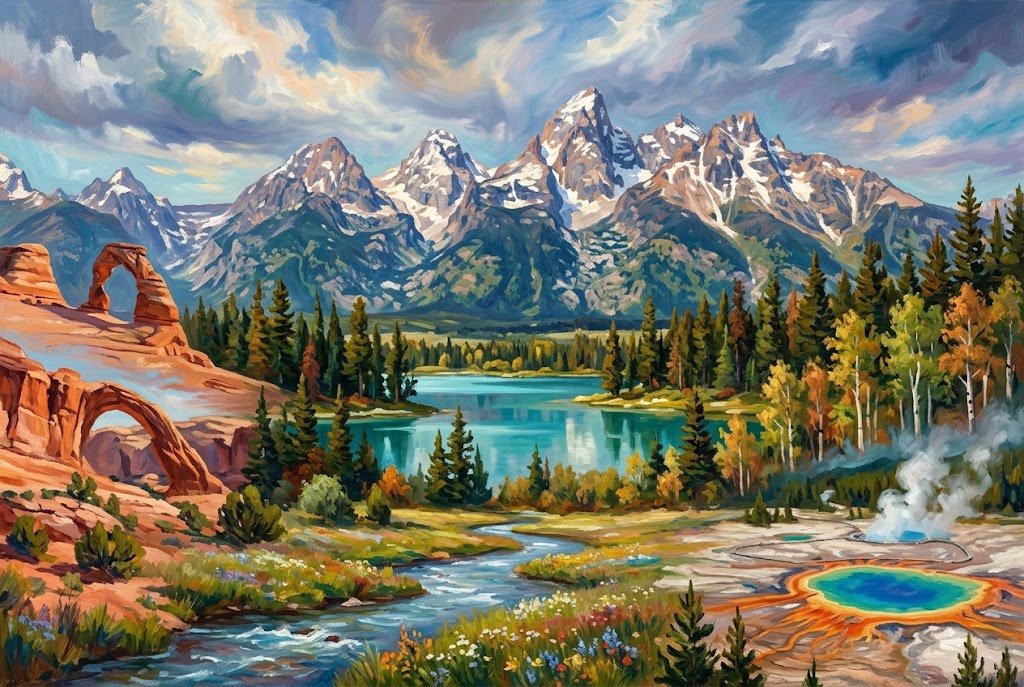
Instead of asking which park is universally number one, match the destination to your priorities.
| Your Priority | Parks to Consider |
| First national park trip | Yellowstone, Grand Canyon, Yosemite |
| Family-friendly variety | Great Smoky Mountains, Acadia, Great Sand Dunes |
| Wildlife | Yellowstone, Denali, Everglades, Grand Teton |
| Hiking | Zion, Yosemite, Glacier, Rocky Mountain |
| Photography | Grand Teton, Yosemite, Glacier, Grand Canyon |
| Beaches/coast | Olympic, Acadia, Channel Islands |
| Desert scenery | Joshua Tree, Arches, Grand Canyon |
| Mountain scenery | Grand Teton, Glacier, Rocky Mountain |
| Fall colors | Great Smoky Mountains, Acadia |
| Geothermal features | Yellowstone |
| Tropical environment | Everglades, Hawaiʻi Volcanoes |
| Remote wilderness | Denali, Gates of the Arctic, Wrangell-St. Elias |
| Short weekend | Joshua Tree, Acadia, Arches |
| Scenic road trip | Yellowstone, Grand Teton, Great Smoky Mountains |
This approach is more useful than a simple ranking because “best” depends heavily on what you want to do.
Travelers with specific dietary needs can also plan breakfast options in advance; this diabetes breakfast foods guide offers ideas for building a more suitable morning meal.
How to Choose the Right National Park
1. Start with the season
Season can completely change the experience. A mountain park may have limited high-country access in winter, while desert parks can become extremely hot in summer. Fall can be spectacular in the Appalachians and New England, while Alaska’s main visitor season is much shorter.
Before booking flights or accommodation, check:
- Road openings
- Trail conditions
- Weather
- Seasonal closures
- Shuttle systems
- Permit requirements
- Campground availability
- Current alerts
The NPS Find a Park directory is a useful starting point for official park information.
2. Decide how much hiking you actually want
You do not need to be an experienced hiker to enjoy national parks.
Some visitors primarily want:
- Scenic overlooks
- Short walks
- Visitor centers
- Wildlife viewing
- Scenic drives
- Ranger programs
Others want:
- Long day hikes
- Backpacking
- Scrambling
- High-altitude routes
- Technical climbing
Choose the park and itinerary accordingly.
3. Consider driving time
A common mistake is confusing geographical distance with travel time. A park may look manageable on a map but contain long roads, mountain passes, seasonal closures, shuttle requirements, or slow-moving traffic. Yellowstone is a classic example. Its enormous size means you should organize your itinerary by geographic areas rather than constantly crossing the park.
4. Check reservations before you commit
Some parks use timed-entry systems, permits, shuttles, or reservations for specific experiences. Importantly, rules can change from year to year. For example, Rocky Mountain National Park has a 2026 timed-entry system, while Mount Rainier announced that it would not require timed-entry reservations in 2026. This illustrates why older travel articles can become unreliable for logistics.
5. Budget for entrance fees
Entrance fees vary by park and visitor circumstances. For 2026, the NPS lists an America the Beautiful Non-Resident Annual Pass at $250. U.S. residents can purchase the Resident Annual Pass for $80. There is another important consideration for international visitors.
In 2026, non-U.S. residents aged 16 and older must pay a $100 nonresident fee at 11 participating national parks unless covered by an applicable annual or America the Beautiful pass. The affected parks include:
- Acadia
- Bryce Canyon
- Everglades
- Glacier
- Grand Canyon
- Grand Teton
- Rocky Mountain
- Sequoia & Kings Canyon
- Yellowstone
- Yosemite
- Zion
The $250 nonresident annual pass can cover the applicable entrance and nonresident fees under the NPS rules. Because fee policies can change, verify the current information on NPS.gov immediately before your trip.
National Parks vs. Other U.S. Protected Areas
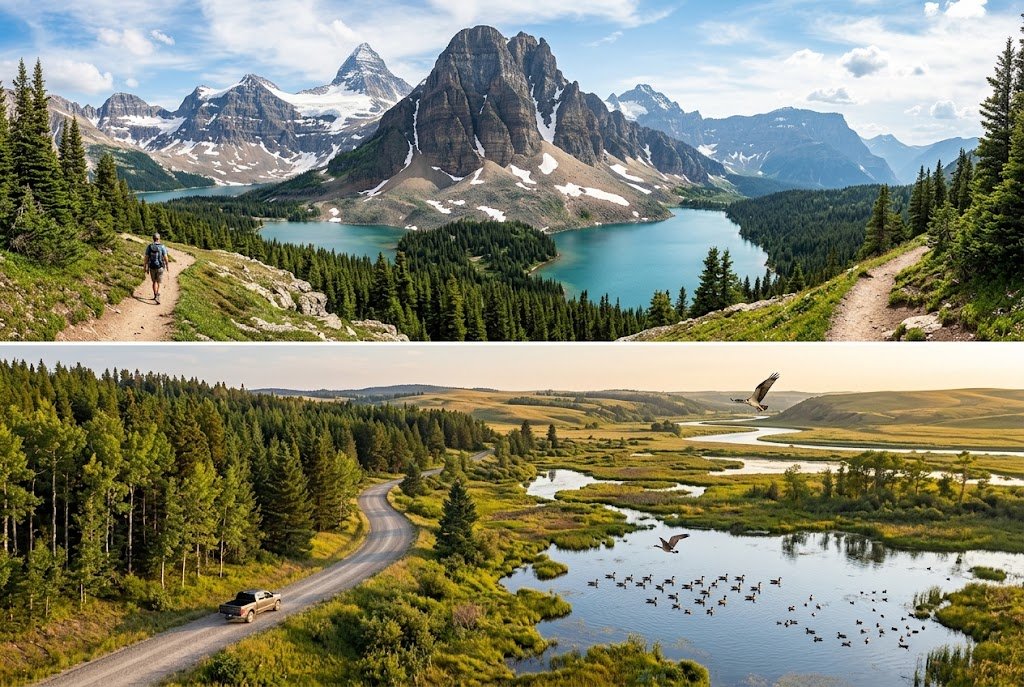
One frequently overlooked point is that the National Park Service manages much more than places officially designated “national parks.” The broader National Park System includes national historical parks, national monuments, national recreation areas, national seashores, national preserves, scenic trails, and other designations.
That matters because an excellent nature itinerary does not need to consist exclusively of designated national parks. For example, travelers interested in coastlines may find national seashores useful additions, while history-focused visitors may prefer national historical parks. If your goal is simply to experience America’s protected landscapes, search beyond the 63 official national parks.
Practical Tips for a Better National Park Trip
Start early when popular areas are involved
Early starts can help with parking, heat, wildlife activity, and trail congestion. But “start early” should not become a substitute for checking actual park conditions. Some attractions have timed access or seasonal restrictions that determine when you can enter.
Bring more water than you think you’ll need
Water requirements depend heavily on temperature, activity, elevation, and duration. Desert parks deserve particular caution. Never rely on a small convenience store or visitor center being open exactly when you need supplies.
Download information before entering remote areas
Cellular service is not guaranteed throughout national parks. Before leaving developed areas, have your route, permits, reservation information, and important park information available offline.
Respect wildlife distances
Wildlife photography can create dangerous situations when visitors focus more on getting a photograph than maintaining a safe distance. Use binoculars or a telephoto lens rather than approaching animals.
Stay on designated trails and boardwalks
This is especially important around geothermal areas, fragile desert landscapes, alpine environments, and wetland ecosystems. At Yellowstone, for example, thermal areas can contain extremely hazardous ground and water. Boardwalks exist for both visitor safety and resource protection.
Do not build an itinerary around every famous attraction
A packed schedule can turn a beautiful national park into a transportation exercise. Instead, choose two or three major experiences per day and leave room for weather, traffic, wildlife sightings, meals, and unexpected discoveries.
Common Mistakes First-Time Visitors Make
Mistake 1: Trying to visit too many parks
A first-time U.S. itinerary sometimes attempts Yellowstone, Grand Canyon, Yosemite, Zion, Bryce Canyon, and several other destinations in a single trip. That may look efficient on paper but can involve enormous driving distances.
Better approach: Choose one geographic region and explore it properly.
Mistake 2: Assuming summer is always best
Summer is convenient for many travelers, but it is not automatically the best season. Depending on the park, spring waterfalls, autumn foliage, winter scenery, or shoulder-season temperatures may provide a better experience.
Mistake 3: Underestimating altitude
Rocky Mountain National Park and other high-elevation destinations can be physically demanding even for fit travelers. Give yourself time to adjust and do not treat elevation as a minor detail.
Mistake 4: Ignoring reservations
A national park entrance pass is not necessarily the same thing as a timed-entry reservation, activity permit, campground reservation, or shuttle reservation. Check each requirement separately.
Mistake 5: Treating wildlife like a zoo
Wild animals can behave unpredictably. Maintain appropriate distances and follow ranger instructions.
Mistake 6: Depending on current information from an old article
Park conditions, fees, reservations, roads, fires, weather impacts, and construction can change.
For a trip in 2026 or later, use third-party travel guides for inspiration but use the individual NPS park website for final logistical checks.
A Simple National Park Planning Checklist
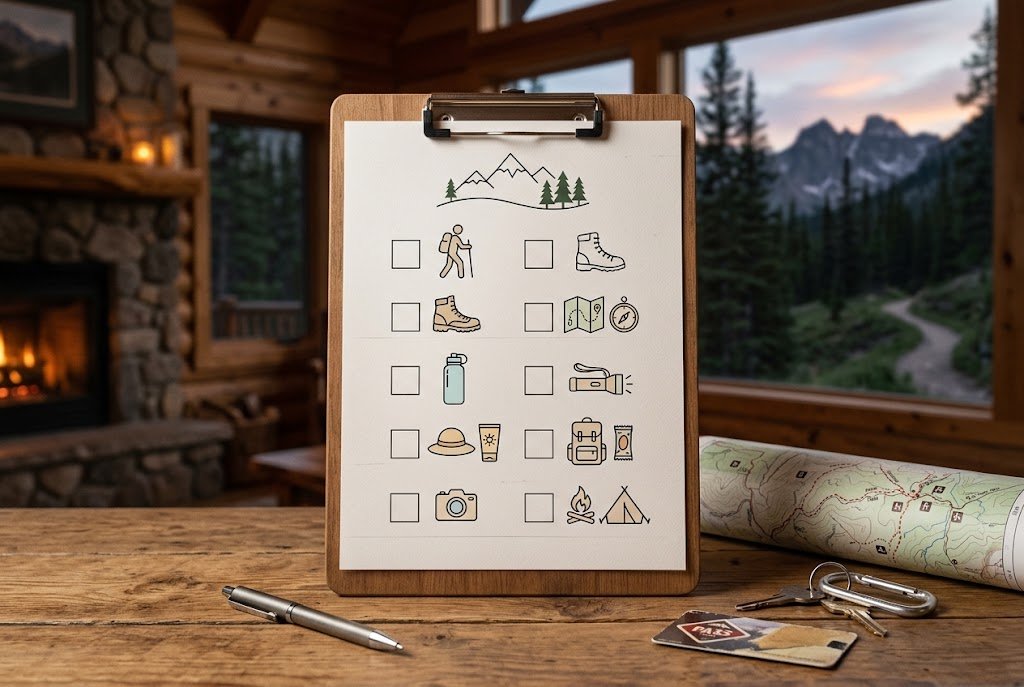
Use this checklist before departure:
- Choose the park based on your travel goal.
- Check the official NPS website.
- Confirm seasonal road and trail access.
- Check entrance fees and reservation requirements.
- Book accommodation or camping early when appropriate.
- Download maps and essential information.
- Check the weather forecast shortly before departure.
- Pack suitable clothing, food, water, and emergency supplies.
- Understand wildlife-safety rules.
- Have an alternative plan for closures or overcrowding.
This approach works for both beginners and experienced travelers because it focuses on the things that can actually change the quality and safety of a trip.
Best National Parks for an International Visitor
For travelers coming to the United States from another country, geography and logistics deserve extra attention. If this is your first U.S. national park trip, Yellowstone, Grand Canyon, Yosemite, or Great Smoky Mountains can provide very different introductions to the country’s landscapes. However, the right choice depends on your broader itinerary.
If you are visiting the West
Consider combining:
- Grand Canyon
- Zion
- Bryce Canyon
- Arches
- Canyonlands
- Yosemite
Do not attempt all of them unless you have enough time. Distances between destinations can be substantial.
If you are visiting the Pacific Northwest
Consider:
- Olympic
- Mount Rainier
- North Cascades
These parks provide a combination of mountains, forests, glaciers, and coastal environments.
If you are visiting Alaska
Denali can be an excellent introduction to Alaska’s national parks, but Alaska’s other parks offer even more remote experiences. The key difference is logistics: access can require significantly more planning.
If you are visiting Florida
Everglades offers a fundamentally different ecosystem from the mountain and desert parks of the West. It can also be combined with Florida’s coastal and island destinations for a broader nature-focused itinerary.
After a day of exploring a national park, food can be part of the experience too—especially for travelers curious about the world’s most expensive and unique foods.
Frequently Asked Questions
Q01: How many national parks are there in the USA?
Ans: As of September 2026, the National Park Service lists 63 national parks. These are part of the much larger National Park System, which includes many other types of protected sites and designations.
Q02: What is the most visited national park in the USA?
Ans: Great Smoky Mountains National Park was the most visited designated national park in 2025, with 11,527,939 recreational visits according to NPS statistics.
Q03: Which national park is best for a first-time visitor?
Ans: There is no universal answer. Yellowstone is particularly strong for visitors who want wildlife and geothermal features, Grand Canyon for dramatic geology, and Yosemite for waterfalls and granite landscapes. The best choice depends on your interests and itinerary.
Q04: What is the best national park for families?
Ans: Great Smoky Mountains, Acadia, and Great Sand Dunes can all work well for families, although the appropriate choice depends on children’s ages, mobility, season, and planned activities.
Q05: Which national parks are best for hiking?
Ans: Zion, Yosemite, Glacier, and Rocky Mountain are strong choices for hikers. However, trail difficulty varies considerably within each park, so choose individual routes based on fitness, experience, weather, and elevation.
Q06: Are national parks free to enter?
Ans: Not always. Some parks have entrance fees, while others may not. Fees can also differ depending on the visitor’s circumstances. In 2026, the NPS introduced a $100 nonresident fee for eligible visitors aged 16 and older at 11 designated national parks unless covered by an applicable pass.
Q07: What is the America the Beautiful Pass?
Ans: It is an interagency pass that can cover entrance and standard amenity fees at participating federal recreation sites. In 2026, the NPS lists an $80 U.S. resident annual pass and a $250 nonresident annual pass.
Q08: Do I need reservations for national parks?
Ans: It depends on the park and the activity. Some parks use timed-entry systems, while others do not. Some individual attractions or areas may have separate permits. For example, Rocky Mountain National Park has a timed-entry system in 2026, while Mount Rainier does not require timed entry in 2026.
Q09: What is the best time of year to visit national parks?
Ans: There is no single best season. Summer provides access to many high-elevation destinations, spring can be excellent for waterfalls and desert wildflowers, autumn is particularly attractive for foliage, and winter can transform certain parks into snowy landscapes. Always check park-specific conditions.
Q10: Which national park is best for wildlife?
Ans: Yellowstone, Denali, Grand Teton, and Everglades are excellent choices for wildlife-focused trips. Wildlife sightings are never guaranteed, however, and visitors should observe animals from safe distances.
Q11: Can I visit a national park without hiking?
Ans: Absolutely. Scenic drives, overlooks, visitor centers, wildlife watching, ranger programs, boat trips, photography, and short walks can provide rewarding experiences without strenuous hiking.
Q12: Are national parks accessible to travelers with limited mobility?
Ans: Accessibility varies significantly between parks, trails, facilities, and individual viewpoints. Check the specific park’s accessibility information before traveling rather than assuming that a park-wide designation guarantees access to every attraction.
Final Thoughts
The best national parks in the USA are not necessarily the parks with the longest lists of attractions or the highest visitor numbers. The right destination is the one that matches what you actually want from your trip.
Choose Yellowstone for geothermal landscapes and wildlife, Grand Canyon for geological scale, Yosemite for waterfalls and granite cliffs, Zion for canyon hiking, Great Smoky Mountains for forests and family-friendly exploration, or Grand Teton for mountain photography. Olympic provides unusual ecosystem variety, Acadia offers an accessible coastal experience, while Denali delivers a much more remote wilderness adventure.
Most importantly, plan around the realities of each park. Check current NPS information, understand seasonal conditions, confirm reservations and fees, prepare for weather and distances, and avoid trying to see everything in one rushed itinerary.
For international travelers, pay particular attention to the 2026 nonresident fee rules and annual-pass options before building a multi-park trip. A thoughtful national park trip is less about collecting destinations and more about giving yourself enough time to experience the landscape responsibly.