

 -by
-by Traveling across the United States can look expensive because the country is huge, popular destinations often have high accommodation costs, and transportation prices can change quickly. But you do not need a luxury budget to enjoy American cities, beaches, national parks, small towns, and road-trip routes.
The key is to travel cheaply by controlling the total cost of the trip, rather than chasing the lowest price for one item. A $90 flight can become expensive if it requires costly airport transportation, checked baggage, an expensive hotel, and a rental car. Meanwhile, a slightly more expensive train or bus may leave you closer to your hotel and eliminate several additional expenses.
This guide explains how to reduce the biggest travel costs in the USA, including flights, transportation, accommodation, food, attractions, road trips, national parks, and international travel requirements. You will also learn how to build a realistic budget, choose cheaper destinations, avoid common money traps, and decide when paying a little more can actually save money.
Whether you are planning your first American vacation, a weekend getaway, a beach trip, a family holiday, or a longer road trip, these strategies can help you spend less without turning your entire vacation into a financial exercise.
What Does It Mean to Travel Cheap in the USA?
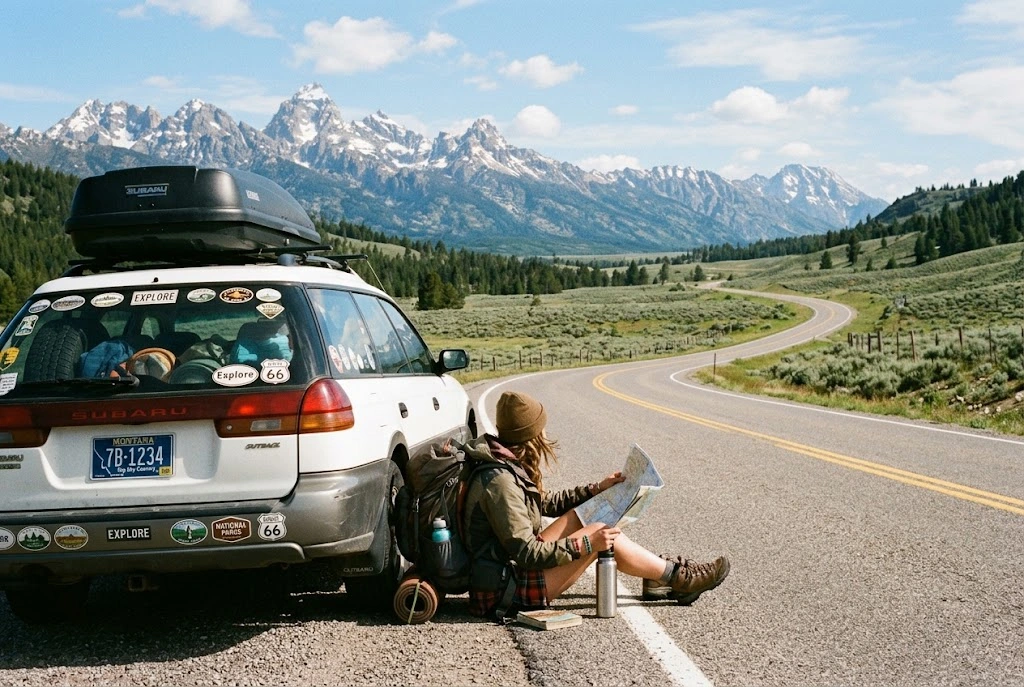
To travel cheap in the USA means reducing unnecessary travel expenses while still protecting comfort, safety, convenience, and the experiences that matter most to you. A low-cost trip does not necessarily mean choosing the cheapest hotel, longest bus journey, or lowest airfare. Instead, it means comparing the full cost of each option.
For example, consider these expenses:
- Transportation to and from the airport
- Airfare or train/bus tickets
- Checked-bag fees
- Hotel or hostel costs
- Rental car and parking
- Fuel
- Public transportation
- Restaurant meals
- Attraction tickets
- Resort or destination fees
- Taxes and service charges
- Travel insurance
- Visa or entry-related expenses for international visitors
A cheap trip is therefore a well-designed trip, not simply a trip with the cheapest headline price.
Start With a Realistic USA Travel Budget
Before searching for flights or hotels, establish the maximum amount you are comfortable spending.
A simple travel budget can be divided into six categories:
| Expense | What to include |
| Transportation | Flights, trains, buses, rental cars, fuel |
| Accommodation | Hotels, hostels, vacation rentals, camping |
| Food | Restaurants, groceries, snacks, and drinks |
| Activities | Attractions, tours, museums, and entertainment |
| Local travel | Public transit, parking, rideshares and taxis |
| Emergency buffer | Unexpected costs and changes |
A useful approach is to create three numbers:
- Ideal budget – what you hope to spend.
- Realistic budget – what the trip will probably cost.
- Maximum budget – the amount you should not exceed.
This prevents a common mistake: booking an inexpensive flight before calculating the rest of the vacation.
Example of a simple budget
Suppose two travelers are planning a four-night city trip.
Instead of saying, “We found cheap flights,” calculate:
- Flights: $300
- Accommodation: $480
- Local transportation: $100
- Food: $240
- Activities: $120
- Miscellaneous: $100
Estimated total: $1,340 for two people, before any additional costs that apply to the travel cheap. The exact numbers will vary greatly by destination and travel dates. The important part is the method.
Choose the Destination Before Chasing the Cheapest Flight
One of the biggest mistakes budget travelers make is choosing a destination only because they found a cheap airfare. The destination determines many other costs.
A low airfare can be offset by:
- Expensive accommodation
- High parking rates
- Long distances between attractions
- Expensive airport transfers
- High restaurant prices
- Resort fees
- Expensive rental cars
- Paid attractions
Instead, compare the total cost of the trip.
Look beyond famous tourist centers.
You can visit large destinations such as New York City, Los Angeles, Miami, San Francisco, Las Vegas, and Honolulu on a budget, but you may need more planning. Consider smaller cities or nearby destinations when they provide similar experiences.
For example:
- A beach vacation does not always require staying at the most expensive oceanfront hotel.
- A national park trip does not always require staying inside the park.
- A city vacation does not require staying directly beside the biggest tourist attraction.
- A road trip does not need to cover thousands of miles.
For beach travelers, researching nearby alternatives can make a substantial difference. A useful starting point is a guide to beaches near when planning a lower-cost coastal escape from New York.
Travel During Less Expensive Periods

Travel demand strongly affects prices.
Instead of automatically traveling during:
- Major holidays
- School vacation periods
- Summer weekends
- Spring break
- Major festivals
- Large sporting events
- Popular long weekends
Check nearby dates. You do not always need to travel cheap in the middle of winter to find better prices.
Use flexible dates
When possible, compare:
- Friday vs. Saturday departure
- Sunday vs. Monday return
- Morning vs. evening flights
- Midweek vs. weekend hotel stays
- Shoulder-season vs. peak-season travel
The best first date depends on the route and destination, so compare actual prices rather than assuming one weekday is always travel cheap.
How to Locate Less Expensive Flights in the United States

Airfare is often one of the first expenses travelers try to reduce, but it should not be the only one.
Compare the total airfare cost
When comparing flights, check:
- Base fare
- Carry-on rules
- Checked-bag charges
- Seat-selection fees
- Airport location
- Change and cancellation conditions
- Ground transportation from the airport
- Arrival time
A flight arriving at midnight may look inexpensive but create a costly hotel transfer or rideshare.
Search multiple nearby airports.
If a destination has multiple airports, compare them. For example, travelers visiting a major metropolitan area may have several airport choices. A cheaper airport is useful only if the savings survive the cost of reaching your final destination.
Calculate:
Flight price + baggage + airport transfer + local transportation
rather than comparing airfare alone.
Pack strategically
Packing light can reduce both cost and hassle.
Before paying for checked baggage, ask:
- Can everything fit in an allowed personal item?
- Does the airline charge for carry-on baggage?
- Can I do laundry during the trip?
- Do I really need extra shoes?
- Can I buy inexpensive toiletries after arrival?
Always check the airline’s current policy before booking.
Consider Trains and Buses
Flying isn’t always the most affordable mode of transportation.
For shorter or medium-distance journeys, compare:
- Train
- Intercity bus
- Car
- Flight
Amtrak offers rail service across many parts of the United States, and its current fare information notes that booking earlier can help travelers find better fares. Prices vary by route, date, time, and fare type. Amtrak also publishes discounts for eligible travelers, including certain students, seniors, military travelers, children, passengers with disabilities, and groups. For a trip where the train arrives close to your accommodation, the real savings can be larger than the ticket price suggests.
When a bus may make sense
Intercity buses can be useful when:
- You are traveling between nearby cities.
- You are comfortable with longer travel times.
- At your location, a car is not necessary.
- The bus station is conveniently located.
- The fare is substantially lower than flying.
Saving $40 may not be worthwhile if the journey adds many hours and requires additional transportation.
Decide Carefully Between Public Transit and a Rental Car
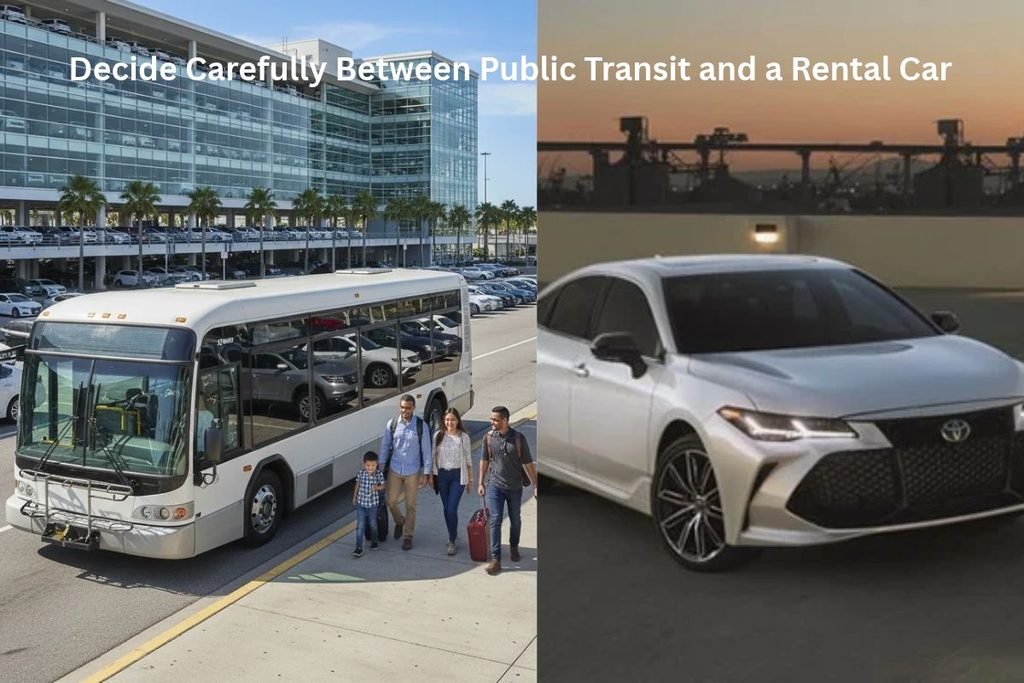
A rental car can provide freedom, but it can also create several extra expenses.
A rental-car budget should include:
- Daily rental price
- Taxes and fees
- Insurance or protection products
- Fuel
- Parking
- Tolls
- Possible airport fees
- Additional-driver charges
- One-way rental charges
For a city vacation, renting a car can sometimes be unnecessary. If your hotel is close to public transportation and your main attractions are within the same urban area, compare the cost of: Rental car + parking + fuel
against:
Public transit + occasional rideshare
When a rental car can be worthwhile
A car may make more sense when:
- Attractions are spread far apart.
- You are visiting national parks.
- You are traveling with several people.
- Public transportation is limited.
- You are staying outside the city center.
- You want to visit several smaller towns.
The important point is to calculate the complete cost rather than assuming one transportation method is universally cheaper.
Make Road Trips Actually Affordable
Road trips can be economical when several people share the vehicle, but long-distance driving is not automatically cheap.
You should also consider:
- Vehicle depreciation
- Maintenance
- Tires
- Parking
- Tolls
- Accommodation
- Food stops
- Unexpected repairs
The IRS publishes mileage rates for tax purposes. These rates are not a vacation price list, but they illustrate why fuel alone does not represent the full operating cost of a vehicle. For personal travel, use the mileage rate only as a reference point when thinking about total vehicle costs, not as an exact calculation of what your vacation will cost.
A better road-trip calculation
Estimate:
Fuel + lodging + parking + tolls + vehicle costs
Then divide shared expenses among travelers where appropriate. A four-person road trip can have a very different per-person cost from the same journey taken alone.
Select Lodging Based on Location Rather Than Price

The cheapest room is not necessarily the cheapest place to stay. Imagine a hotel that costs $75 less per night than another option but sits far outside the city. If you spend $25 each day on transportation and lose significant time commuting, the savings may disappear.
When comparing accommodation, consider:
- Nightly price
- Taxes
- Resort or destination fees
- Parking
- Breakfast
- Wi-Fi
- Public transportation access
- Kitchen facilities
- Cancellation terms
- Distance from your activities
Consider hostels and budget properties
Hostels can be useful for solo travelers or people who do not need a private hotel room.
Other options include:
- Budget hotels
- Motels
- Guesthouses
- Vacation rentals
- Campgrounds
- Cabins
- Staying with friends or family
The best option depends on your group size, destination, comfort requirements, and trip length.
Look for accommodation outside the tourist core.
A property 10–20 minutes from the main attraction can sometimes offer a better overall value. But calculate transportation first. The goal is not simply to find a cheaper room. The goal is to find the lowest reasonable total accommodation-and-transportation cost.
Use Camping Strategically
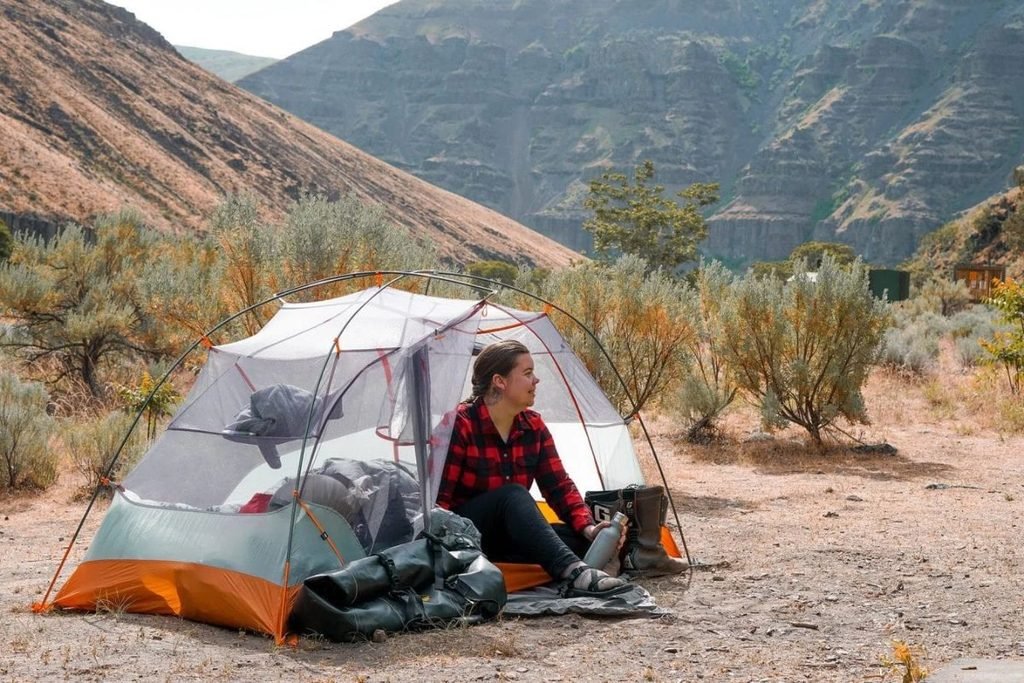
Camping can significantly reduce lodging expenses on outdoor-focused trips, especially when you already own suitable equipment. Federal recreation areas and public lands offer different camping opportunities, but rules, fees, reservations, and facilities vary by location.
Recreation.gov lists many reservable camping opportunities and explains that recreation and reservation fees vary by location and activity. The USDA Forest Service also manages many areas where dispersed camping may be allowed, subject to local rules.
Do not treat public land as “free hotel space”
Before camping, check:
- Local regulations
- Fire restrictions
- Water availability
- Road conditions
- Weather
- Wildlife precautions
- Waste-disposal requirements
- Maximum stay rules
- Whether reservations or permits are required
Cheap travel should never mean ignoring safety or environmental rules.
Save Money on Food Without Eating Poorly
Food can quietly become one of the biggest vacation expenses. You do not need to eat street food for every meal to control your budget.
A better strategy is to mix:
- Grocery-store meals
- Hotel breakfast
- Picnic lunches
- Affordable local restaurants
- Food halls
- Casual neighborhood restaurants
- Occasional special meals
Use accommodation kitchens when practical
If your room has a refrigerator, microwave, or kitchen, you can reduce the number of restaurant meals.
Simple options include:
- Breakfast supplies
- Sandwiches
- Fruit
- Yogurt
- Salads
- Snacks
- Drinks
However, do not buy a large amount of groceries for a one-night stay if you will leave most of them behind.
Eat where locals actually eat.
Tourist districts often concentrate expensive restaurants. Walk a few blocks away and compare menus. You can also research local restaurant guides before your trip. For example, outdoor restaurants in the USA can help beach and city travelers combine a meal with an enjoyable setting without automatically choosing the most expensive attraction-based dining experience.
Build an Attraction Strategy
You do not need to pay for every attraction.
Many U.S. destinations offer:
- Public beaches
- Parks
- Walking trails
- Public art
- Free festivals
- Historic neighborhoods
- Scenic overlooks
- Farmers markets
- Free cultural events
- Free museum days
- Waterfront walks
Chicago, for example, maintains an extensive range of free and low-cost attractions, including parks, lakefront areas, public art, cultural spaces, and selected free museum opportunities.
Use a paid-attraction rule.
Before buying a ticket, ask: Will this experience be one of the main memories of the trip? If yes, budget for it. If no, look for a free or lower-cost alternative. This is more sustainable than trying to eliminate every paid experience.
Use National Parks Carefully
National parks can be excellent destinations for budget-conscious travelers, but entrance fees and reservation requirements vary. The National Park Service publishes park-specific fee information, and some parks have additional rules or reservations.
In 2026, the federal national park fee system also includes a separate nonresident fee at 11 designated national parks for eligible visitors who are not U.S. residents. That makes it especially important for international visitors to check the official park page before planning a low-cost national-park itinerary.
Ways to control park costs
Consider:
- Comparing the cost of individual entry with an annual pass
- Sharing vehicle-based entrance costs with your group where the pass rules allow it
- Camping instead of staying in expensive nearby accommodation
- Staying outside the park
- Visiting nearby public lands and state parks
- Planning around official fee-free dates when eligible
Do not assume every park has the same fee structure.
Think About Beach Trips Differently
Beach travel can be surprisingly budget-friendly because the main attraction may be free or inexpensive.
Instead of paying for a resort package, consider:
- Public beaches
- State parks
- Vacation rentals with kitchens
- Budget hotels a short distance from the coast
- Picnic lunches
- Free walking trails
- Public boardwalks
- Off-peak stays
For example, Miami’s tourism organization highlights free beaches and other no-cost outdoor experiences, showing why a beach destination does not automatically require an expensive attraction budget.
If you are planning a coastal trip, also compare nearby beaches rather than assuming the most famous beach is the best fit for your budget. You can explore hidden beaches near you for ideas about building a coastal itinerary around lower-cost outdoor experiences.
Use Free Activities to Balance Paid Experiences
A practical vacation does not need every day to contain expensive activities. Try a simple pattern: One paid experience + several free experiences.
For example:
Day 1
- Free neighborhood walk
- Public beach
- Affordable local dinner
Day 2
- Paid museum or tour
- Free waterfront walk
- Picnic lunch
Day 3
- Free park
- Local market
- One inexpensive evening activity
Travel Cheap With a Group

Group travel can reduce some expenses, but only when you plan the shared costs carefully.
Potential savings include:
- Shared hotel rooms
- Vacation rentals
- Shared rental cars
- Fuel
- Parking
- Grocery purchases
But group travel can also increase costs when people disagree about spending.
Before booking, agree on:
- Accommodation standard
- Transportation
- Food budget
- Paid activities
- Room arrangements
- Cancellation rules
A group trip becomes much easier when everyone understands the budget before reservations are made.
International Travelers: Budget for Entry Costs Too
Your budget should include more than just flights and lodging if you are coming to the USA from another nation.
Depending on nationality and eligibility, you may need:
- A passport
- A U.S. visitor visa
- ESTA authorization under the Visa Waiver Program
- Visa-related fees
- Travel insurance
- Airport transfers
- Proof or evidence relevant to your application and trip
The U.S. Department of State states that foreign nationals generally need a visitor visa for tourism unless they qualify for visa-free travel under the Visa Waiver Program or another applicable arrangement.
government sources before paying for non-refundable travel. If you are applying from a particular country, use the U.S. embassy or consulate responsible for your location rather than relying on an old travel blog.
Avoid the “Cheap” Travel Traps
Some budget strategies save money upfront but create bigger problems later.
01. Booking the cheapest flight without checking baggage
A low base fare can become much more expensive after baggage and seat charges.
02. Choosing a hotel far away without calculating transport
A cheap room can become expensive when you add daily rides.
03. Renting a car for an urban trip
You may pay for a vehicle that spends most of the day parked.
04. Packing too little
Saving money by underpacking can backfire if you need to buy essentials during the trip.
05. Planning too many destinations
Moving to a different hotel each night can increase local travel expenses and take valuable time away from your trip.
06. Ignoring cancellation policies
A low-cost reservation can end up costing more when unexpected changes force you to modify your plans.
07. Skipping an emergency fund
A budget with no financial buffer is fragile.
08. Choosing an unsafe or unsuitable accommodation
Saving money is not worth compromising basic safety, location, or essential comfort.
Create a Cheap USA Itinerary Around One Region

The United States is too large to experience efficiently in one short trip. Instead of trying to visit New York, Florida, California, Texas, and Arizona in the same vacation, choose one region.
Northeast
Possible combination:
- New York City
- Nearby beaches
- Philadelphia
- Washington, D.C.
Southeast
Possible combination:
- Florida
- Georgia
- South Carolina
- North Carolina
Southwest
Possible combination:
- Arizona
- Utah
- Nevada
West Coast
Possible combination:
- California
- Oregon
- Washington
Regional travel reduces unnecessary long-distance transportation. For example, if your primary interest is beaches, you could build an itinerary around several coastal destinations instead of flying across the country between unrelated locations. For travelers considering North Carolina, comparing coastal destinations can help create a more focused itinerary.
A Practical 07-Day Budget Travel Strategy
Here is a simple framework for a one-week trip.
Step 01: Choose one region
Do not start with ten cities.
Step 02: Select your main destination
Choose the city, beach, park, or town that matters most.
Step 03: Compare transportation
Check flights, trains, buses, and driving.
Step 04: Calculate the complete transportation cost
Include baggage, transfers, fuel, parking, and tolls.
Step 05: Choose accommodation based on total value
Compare location, taxes, fees, breakfast, parking, and transportation access.
Step 06: Select two or three paid experiences
Do not automatically pay for every attraction.
Step 07: Find free activities
Look for parks, beaches, public art, markets, trails, festivals, and free cultural events.
Step 08: Plan your food budget
Mix groceries, casual restaurants, and a few meals you genuinely want to experience.
Step 09: Leave a buffer
Set aside money for unexpected costs.
Step 10: Recheck prices before departure
Transportation schedules, fees, attraction rules, and travel requirements can change.
Budget Travel Comparison
| Travel style | Transportation | Accommodation | Food strategy | Main advantage | Main limitation |
| City break | Public transit/train | Budget hotel/hostel | Groceries + casual meals | Easy without a car | Less useful outside city |
| Road trip | Car | Motel/camping | Groceries + local meals | Flexible | Fuel, parking, and vehicle costs |
| Beach trip | Flight/car/bus | Budget coastal stay | Kitchen + casual dining | Many free activities | Seasonal prices |
| National park trip | Car/shuttle | Camping/hotel | Picnic + groceries | Outdoor experiences | Fees and limited services |
| Backpacking-style trip | Bus/train | Hostel/camping | Low-cost meals | Flexible and social | Longer travel times |
| Family trip | Car/train/flight | Room or rental | Grocery-heavy | Shared costs | More planning required |
How to Travel Cheap Without Making the Trip Miserable

There is a difference between budget travel and extreme cost-cutting. If you save $100 but spend an extra eight hours on transportation, sleep badly, eat poorly, and arrive exhausted, the saving may not feel worthwhile. Use a priority system.
Spend more on what matters.
If sleep matters to you, prioritize accommodation. If you love food, allocate more of the budget to restaurants. If beaches are the reason for the trip, spend money on a good coastal location instead of unnecessary indoor attractions. If you hate driving, use trains or public transportation where practical.
Save on things you do not value
For example:
- Skip the luxury hotel lobby.
- Bring your own snacks.
- Walk when practical.
- Use free attractions.
- Avoid unnecessary car rentals.
- Travel with fewer bags.
- Stay one neighborhood outside the tourist center.
The objective is not to spend the absolute minimum. It is to spend your money where it creates the most value for your trip.
Use Technology to Control Your Travel Budget
Technology can make budget planning easier when used carefully.
Before traveling, use:
- Flight comparison tools
- Hotel comparison sites
- Digital maps
- Public transit apps
- Offline maps
- Restaurant menus
- Attraction reservation websites
- Official park websites
- Currency-conversion tools for international visitors
You can also prepare offline copies of:
- Hotel addresses
- Reservations
- Transportation tickets
- Emergency contacts
- Important travel documents
If you want to improve your phone and digital setup before traveling, your technology research can also include practical technology guides and travel-friendly software and device tips from your technology-focused resources.
What Beginners Should Prioritize
If this is your first budget trip to the USA, do not try every money-saving trick at once.
Start with these five:
- Focus your trip on a single region rather than traveling long distances across the country.
- Compare the full cost of transportation.
- Stay somewhere with convenient transportation.
- Mix free activities with a few paid experiences.
- Keep an emergency buffer.
These decisions usually matter more than saving a few dollars on individual purchases.
What Experienced Travelers Can Optimize
Experienced travelers can go further by comparing:
- Alternative airports
- Multi-city vs. round-trip airfare
- Rail vs. bus vs. rental car
- Accommodation outside tourist centers
- Group-sharing opportunities
- Free museum days
- National park passes
- Shoulder-season dates
- Grocery access
- Public transportation networks
- Open-jaw itineraries
- One-way rental pricing
The most useful advanced technique is to compare complete itineraries, not individual purchases.
For example:
Option A
Cheap flight + expensive airport transfer + rental car + expensive hotel.
Option B
Slightly more expensive flight + train to city + hotel near transit + no rental car.
Option B can cost less overall even though the first flight looks cheaper.
A Simple Formula for Comparing Trips
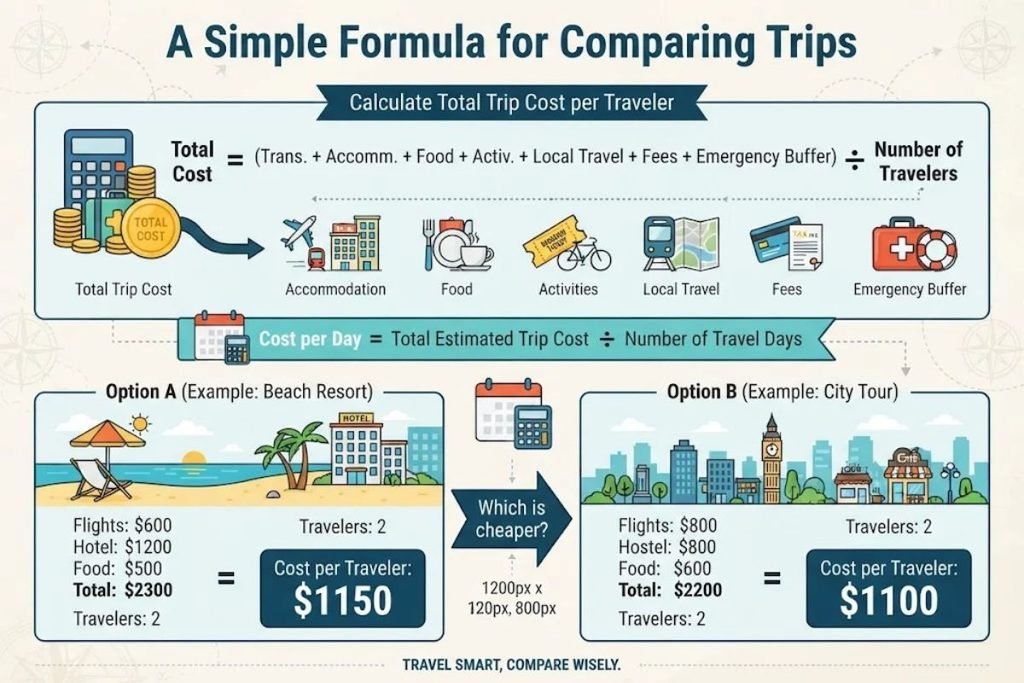
When you are unsure which option is cheaper, calculate: Total trip cost = transportation + accommodation + food + activities + local travel + fees + emergency buffer. Then divide by the number of travelers. You can also calculate: Cost per day = total estimated trip cost ÷ number of travel days. This gives you a more useful comparison than looking at one booking price.
15 Quick Ways to Travel Cheap in the USA
- Travel during less expensive dates when possible.
- Compare multiple airports.
- Pack light.
- Check baggage rules before booking.
- Compare flights with trains and buses.
- Use public transportation in cities where practical.
- Avoid renting a car unless you actually need one.
- Compare hotel location as well as room price.
- Consider hostels, motels, rentals, or camping.
- Cook some meals when accommodation allows it.
- Use grocery stores for breakfast and snacks.
- Search for free local activities.
- Compare national park fees before visiting.
- Build trips around one region.
- Keep an emergency budget.
Final Takeaway
Learning how to travel cheap in the USA is less about finding secret deals and more about making better decisions before spending money. The strongest strategy is to compare the complete cost of your trip, from the moment you leave home until you return.
Choose a manageable region, travel on flexible dates when possible, compare transportation methods, and select accommodation based on both price and location. Use public transportation when practical, avoid unnecessary rental cars, prepare some meals yourself, and mix paid attractions with free outdoor and cultural experiences.
For national parks, beaches, and outdoor destinations, check official rules and fees before you go. International travelers should also verify current visa or Visa Waiver Program requirements through U.S. government sources.
Most importantly, do not confuse “cheap” with “uncomfortable.” Save money on things that do not matter to you and spend deliberately on the experiences that do. A well-planned budget trip can still include beautiful beaches, memorable food, interesting cities, national parks, and meaningful experiences across the United States.
Frequently Asked Questions
Q: What is the cheapest way to travel around the USA?
Ans: There is no single cheapest method for every route. For city-to-city travel, compare buses, trains, flights, and shared driving. For a regional trip, a shared car can sometimes work well. In major cities, public transportation may be cheaper than renting a car and paying for parking.
Q: How can I travel around America without a car?
Ans: Use a combination of trains, intercity buses, local public transportation, walking, and occasional rideshares. Choose destinations where major attractions are concentrated or connected by transit. Large cities are generally easier to visit without a car than rural areas and many national parks.
Q: Is it cheaper to drive or fly in the USA?
Ans: It depends on distance, travelers, vehicle, fuel costs, parking, tolls, and airfare. Driving becomes more attractive when several people share the vehicle, and the itinerary includes multiple stops. Flying may be more practical for long distances, especially when the trip is short.
Q: How can I save money on hotels in the USA?
Ans: Compare the total stay cost rather than the advertised nightly rate. Check taxes, parking, resort fees, breakfast, transportation, and cancellation rules. Staying slightly outside the tourist center can help, provided transportation costs do not eliminate the savings.
Q: Can I travel the USA cheaply as an international visitor?
Ans: Yes, but international visitors should include entry requirements, airfare, insurance, airport transportation, accommodation, and currency-exchange considerations in the budget. Visa and Visa Waiver Program requirements depend on nationality and eligibility, so check official U.S. government information before booking non-refundable travel.
Q: What are the cheapest places to visit in the USA?
Ans: Costs vary by travel dates, accommodation type, transportation, and activities. Instead of searching for one universally cheapest destination, compare places with affordable accommodation, inexpensive transportation, free outdoor attractions, and low-cost food options.
Q: Are national parks expensive to visit?
Ans: Not necessarily, but fees vary by park. Some parks charge entrance fees, while others are free. Some parks also have reservations or additional transportation costs. Check the official National Park Service page for your specific park before traveling.
Q: Is camping a good way to reduce travel costs?
Ans: Camping can reduce accommodation costs on suitable outdoor trips, particularly when you already have the necessary equipment. However, campsite fees, permits, equipment, transportation, and food still cost money. Dispersed camping also requires following local rules and preparing for limited facilities.
Q: How much money should I save for an emergency?
Ans: There is no universal amount because travelers have different trip lengths, destinations, and financial situations. A practical approach is to reserve money separately from your daily budget for unexpected transportation, accommodation changes, medical needs, or other emergencies.
Q: Should I book everything in advance?
Ans: Not necessarily. Transportation and popular accommodation often benefit from early planning, while some activities can remain flexible. The right balance depends on the destination, season, cancellation policies, and how important flexibility is to you.
Q: What is the biggest mistake when trying to travel cheap?
Ans: Focusing on the cheapest individual purchase instead of the cheapest complete trip. A low airfare, hotel, or rental car can become expensive after adding baggage, transfers, parking, food, fees, and other costs.