
 -by
-by Finding the right Travel Backpack can make a huge difference to how comfortably you move through airports, train stations, city streets, hiking trails, and unfamiliar destinations. The challenge is that one backpack rarely does everything equally well. A bag that is excellent for a three-day city break may feel too heavy on a trail, while a lightweight hiking pack may not offer the organization or laptop protection needed for work travel.
This guide compares 15 standout travel backpacks across several real-world needs: carry-on travel, hiking, business trips, digital-nomad work, weekend getaways, and longer adventures. Rather than simply ranking bags by capacity or brand popularity, the goal is to explain why each backpack makes sense, where it falls short, and who should consider it.
You’ll also learn how to choose the right capacity, understand women’s-specific backpack fits, protect a laptop while traveling, check airline compatibility, pack efficiently, and avoid common buying mistakes. Product specifications can change, so treat the measurements below as a practical starting point and confirm them with the manufacturer before purchasing.
What Is a Travel Backpack, and Who Is It Best For?
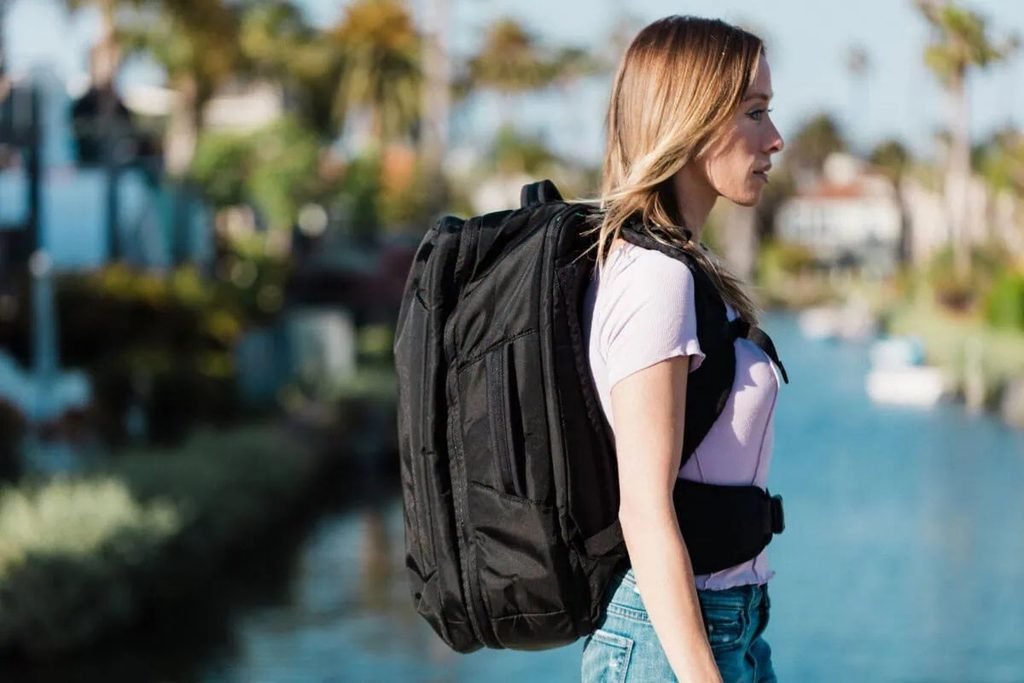
A travel backpack is designed to carry clothing, electronics, toiletries, documents, and other trip essentials while allowing you to move hands-free. Unlike a basic daypack, a dedicated travel model often opens like a suitcase, has compartments for organization, includes luggage pass-throughs, or provides a more supportive harness for heavier loads.
For many travelers, the biggest advantage is mobility. You can walk from an airport to a train station, climb stairs, navigate cobblestone streets, or use public transportation without dragging a suitcase behind you. However, the ideal pack depends on your trip.
A useful starting point is:
- 15–25L: Day trips, commuting, personal-item-style travel, or minimalist packing.
- 25–35L: Weekend trips, business travel, and lightweight one-bag travel.
- 35–45L: Longer trips when you want maximum carry-on packing space.
- 45L+: Extended travel, trekking, or trips where carry-on restrictions are less important.
Capacity is only part of the decision. A 40-liter backpack with excellent suspension can sometimes feel easier to carry than a poorly designed 30-liter bag loaded with dense equipment.
How We Chose These 15 Travel Backpacks
This list focuses on practical differences rather than declaring one bag universally “best.”
The selection considers:
- Carry-on practicality
- Women’s-specific fit where available
- Laptop protection
- Harness and hip-belt design
- Weight and capacity
- Access to the main compartment
- Organization
- Water resistance or rain protection
- Hiking capability
- Suitcase compatibility
- Versatility
- Likely use case
Current manufacturer information was used for product features and dimensions wherever possible. For example, Osprey describes the Fairview 40 as a women’s-fit carry-on travel pack with an adjustable torso and laptop compartment, while REI lists the women’s backpack 40 with a women’s-specific harness and multiple torso/hip sizing options.
Quick Comparison: 15 Travel Backpacks for Women
| Backpack | Capacity | Best For | Laptop | Women’s Fit |
| Osprey Fairview 40 | 40L | Carry-on & one-bag travel | Up to 16″ | Yes |
| Cotopaxi Allpa 35L | 35L | Organized travel | Up to 15″ | Unisex |
| Patagonia Black Hole Mini MLC | 30L | Compact carry-on travel | Yes | Unisex |
| Peak Design Travel Backpack | 30L | Work + short trips | Yes | Unisex |
| Thule Landmark | 40L | Security-conscious travel | Up to 16″ | Unisex |
| NOMATIC Travel Bag | 40L | Organized business travel | Up to 16″ | Unisex |
| Osprey Daylite 44 | 44L | Maximum carry-on capacity | Up to 16″ | Unisex |
| Thule Subterra 2 | 40L | Business & flexible travel | Up to 16″ | Unisex |
| Away Everywhere Zip | 20L | Personal-item-style travel | Up to 16″ | Unisex |
| REI Backpack Women’s | 40L | Travel + hiking | Up to 15″ | Yes |
| Osprey Sojourn Porter 46 | 46L | Longer travel | Up to 16″ | Unisex |
| Patagonia Black Hole Pack | 25L | Active travel & day use | Up to 15″ | Unisex |
| Patagonia Terravia Pack | 28L | Hiking | No dedicated laptop focus | Trail-oriented |
| Osprey Fairview Trek 70 | 70L | Trekking & extended trips | Tablet/laptop sleeve | Yes |
| Patagonia Black Hole MLC 45 | 45L | Maximum travel packing | Yes | Unisex |
Carry-on compatibility is not universal. Dimensions, weight rules, and personal-item requirements differ among airlines.
01. Osprey Fairview 40: Best Overall Women’s Travel Backpack
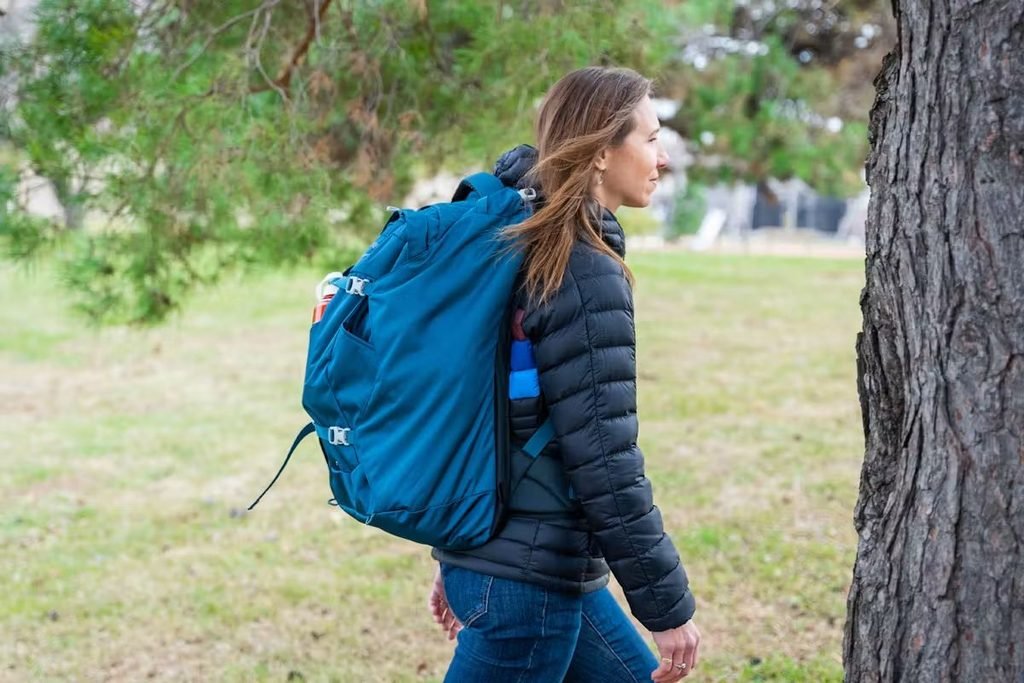
The Osprey Fairview 40 is one of the strongest choices for women who want a purpose-built travel pack rather than a traditional suitcase or hiking backpack. Its biggest advantage is the combination of women’s-specific fit, travel organization, and carry-on dimensions. Osprey lists an adjustable torso, LightWire frame, zip-away harness and hipbelt, large front-panel access, toiletry storage, and a laptop sleeve that accommodates most laptops up to 16 inches.
Why choose it?
The suspension system matters when your backpack becomes heavy. Instead of relying entirely on your shoulders, the frame and hipbelt help transfer some of the load toward your hips.
It is especially useful for:
- International trips
- One-bag travel
- Hostel travel
- Train-heavy itineraries
- Travelers who dislike rolling luggage
- Women who want a more structured fit
Potential limitation
At 40 liters, it encourages you to pack more. That can be helpful, but it can also become uncomfortable if you fill every available space.
Best for: Travelers who want one dependable backpack for flights, hotels, cities, and occasional outdoor adventures.
02. Cotopaxi Allpa 35L: Best for Organized One-Bag Travel
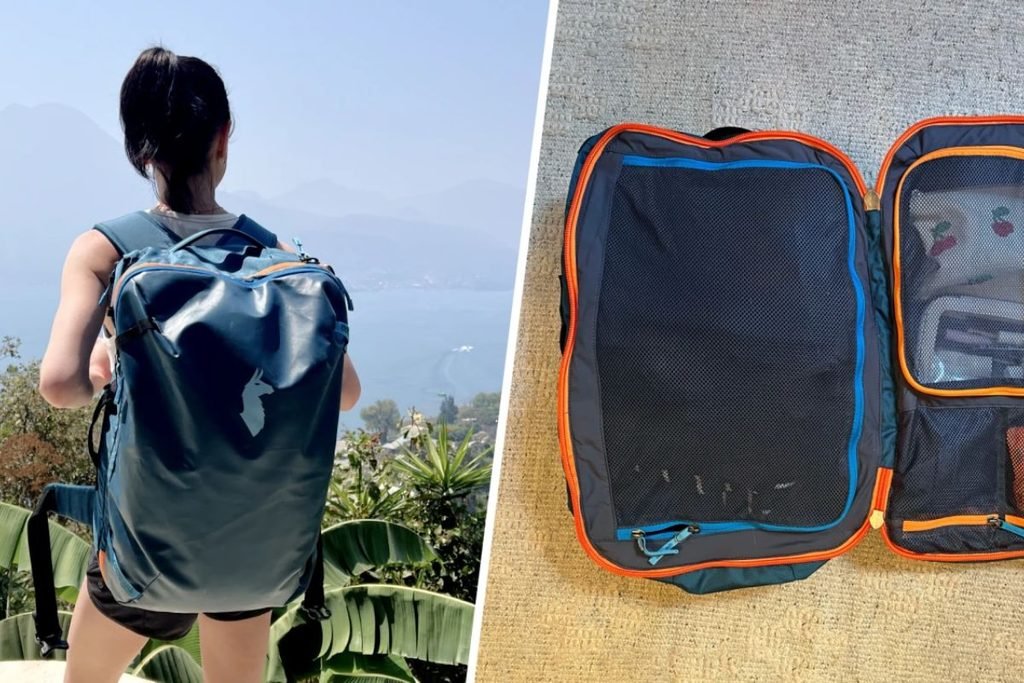
The Cotopaxi Allpa 35L takes a suitcase-style approach to backpack packing. Instead of digging downward through a traditional top-loading pack, you open the main compartment broadly. Cotopaxi lists a full-wrap zipper, multiple internal compartments, a stretch water-bottle pocket, accessory storage, a luggage pass-through, and a padded 15-inch laptop sleeve.
Why choose it?
The clamshell design is excellent for travelers who want to see almost everything at once. It works particularly well with packing cubes because you can divide clothing by category:
- Tops
- Bottoms
- Underwear
- Electronics
- Toiletries
The 35-liter size also sits in a useful middle ground. It is substantial enough for multi-day trips without being as large as a 45- or 46-liter pack.
Potential limitation
It is more travel-oriented than trail-oriented. If your itinerary includes long mountain hikes, a technical hiking backpack may distribute weight and ventilate your back better.
Best for: Organized travelers, weekend trips, hostels, and one-bag journeys.
03. Patagonia Black Hole Mini MLC 30L: Best Compact Carry-On
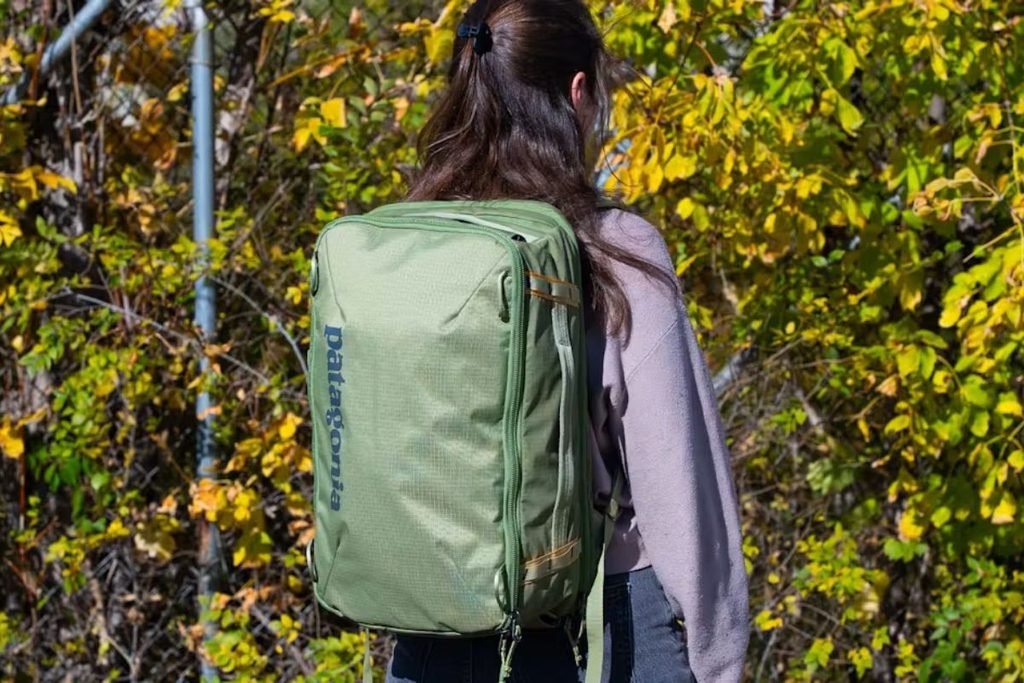
The Patagonia Black Hole Mini MLC 30L is a particularly interesting option because it can be carried as a backpack, duffel, or briefcase. Patagonia says the 30-liter model has tuck-away shoulder straps and a padded hip belt that can also function as a shoulder strap. The company also describes it as meeting strict carry-on requirements.
Why choose it?
This is a strong option if your travel style changes from one day to the next.
You can:
- Wear it through the airport.
- Carry it like a briefcase into a meeting.
- Store the straps when placing it in a suitcase.
- Use it as your main bag on a short trip.
Its compact capacity also encourages more disciplined packing.
Best for: Business travelers, minimalist travelers, and short international trips.
04. Peak Design Travel Backpack 30L: Best for Tech-Focused Travelers
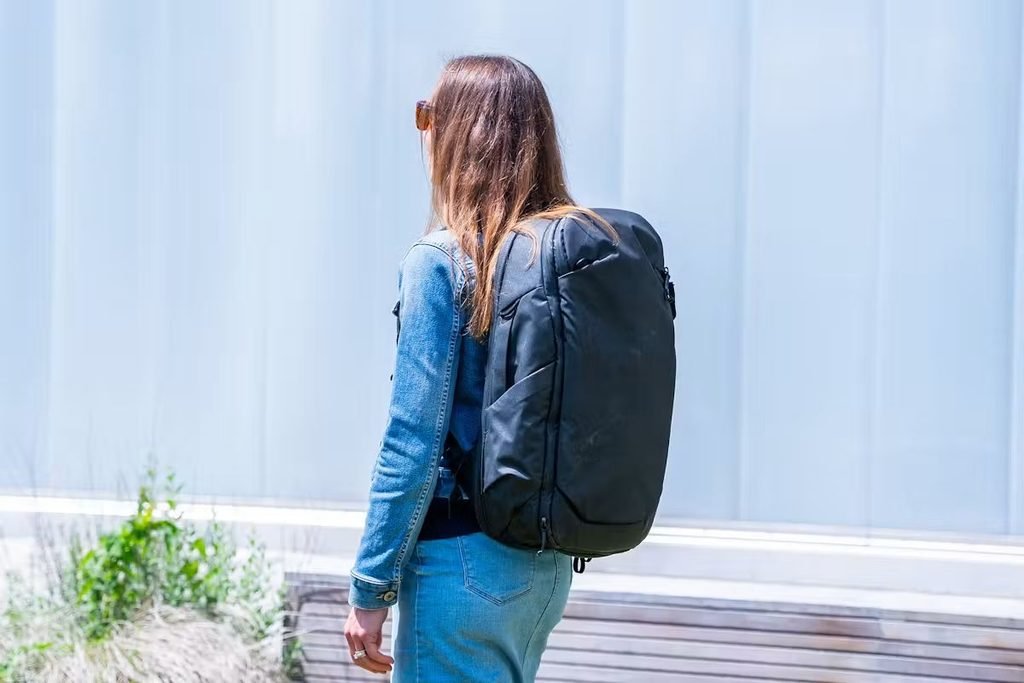
The Peak Design Travel Backpack 30L is especially appealing to photographers, creators, consultants, and remote workers. The current 30L version can expand to 33L and compress to 27L. Peak Design lists padded laptop and tablet sleeves, a weather-resistant shell, tuck-away shoulder straps, water-bottle storage, and an optional hip belt.
Why choose it?
Its strength is adaptability.
A short work trip might require:
- Laptop
- Tablet
- Camera
- Charger
- Headphones
- One change of clothes
Instead of carrying a separate computer bag, the backpack can organize these items in one system.
Potential limitation
A highly structured tech-focused backpack can become heavier and more complicated than a simple daypack.
Best for: Digital professionals, photographers, creators, and travelers carrying expensive electronics.
05. Thule Landmark 40L: Best for Travel Security and Organization
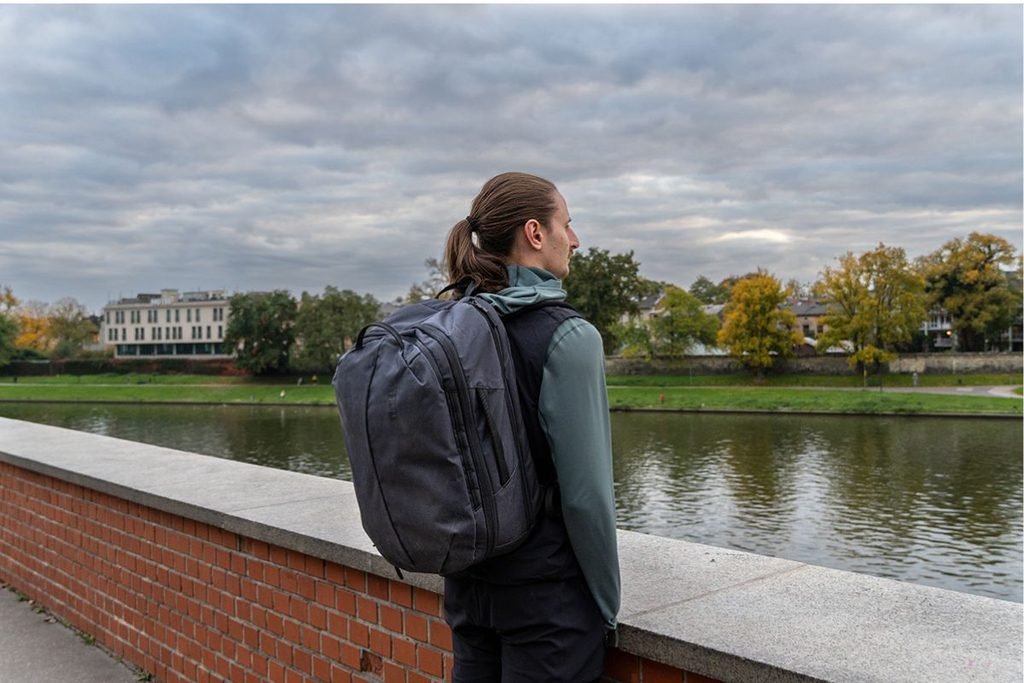
The Thule Landmark 40L is designed around travel organization and security. Thule lists a SafeZone compartment, hidden CashStash storage, tuck-away straps and hipbelt, zipper-security features, a dedicated laptop compartment supporting up to a 16-inch MacBook, and carry-on positioning for most airlines. Its listed dimensions are 21.5 × 13 × 9.8 inches.
Why choose it?
It makes sense for travelers who frequently move through crowded transportation hubs . The hidden storage can be useful for passports, money, and other small valuables. However, no backpack makes theft impossible. Smart travel habits still matter.
Best for: International travelers, city explorers, and travelers who prioritize organization and security features.
06. NOMATIC Travel Bag 40L: Best for Maximum Organization
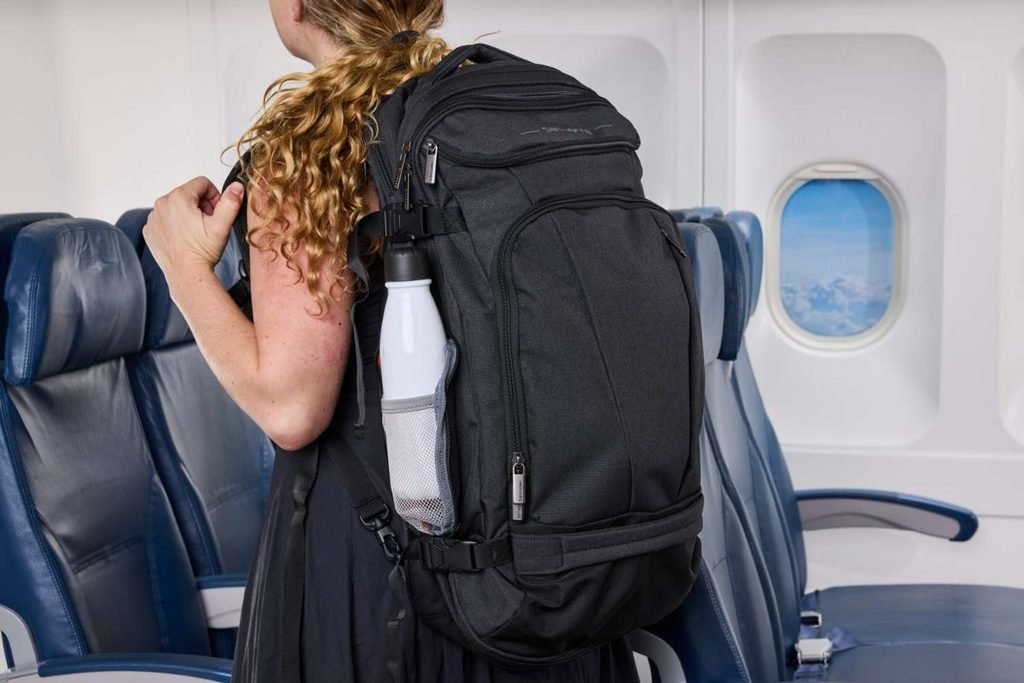
The NOMATIC Travel Duffel Bag 40L is designed around the idea of giving everything its own place.NOMATIC lists 40 liters of capacity, a 16-inch laptop sleeve, 12 internal pockets, a dedicated shoe compartment, water-bottle storage, laundry separation, removable waist straps, and a luggage pass-through. Its listed dimensions are 21 × 14 × 9 inches.
Why choose it?
The wide opening is convenient when you want to pack a complete outfit without unpacking the entire bag.
It is particularly useful for:
- Business trips
- Gym-to-work travel
- Short work assignments
- Travelers who hate loose items
- People who pack shoes separately
Potential limitation
Organization comes with structure. The bag is not as lightweight or trail-focused as a technical hiking pack.
Best for: Professionals and highly organized travelers.
07. Osprey Daylite Carry-On Travel Pack 44L: Best High-Capacity Carry-On
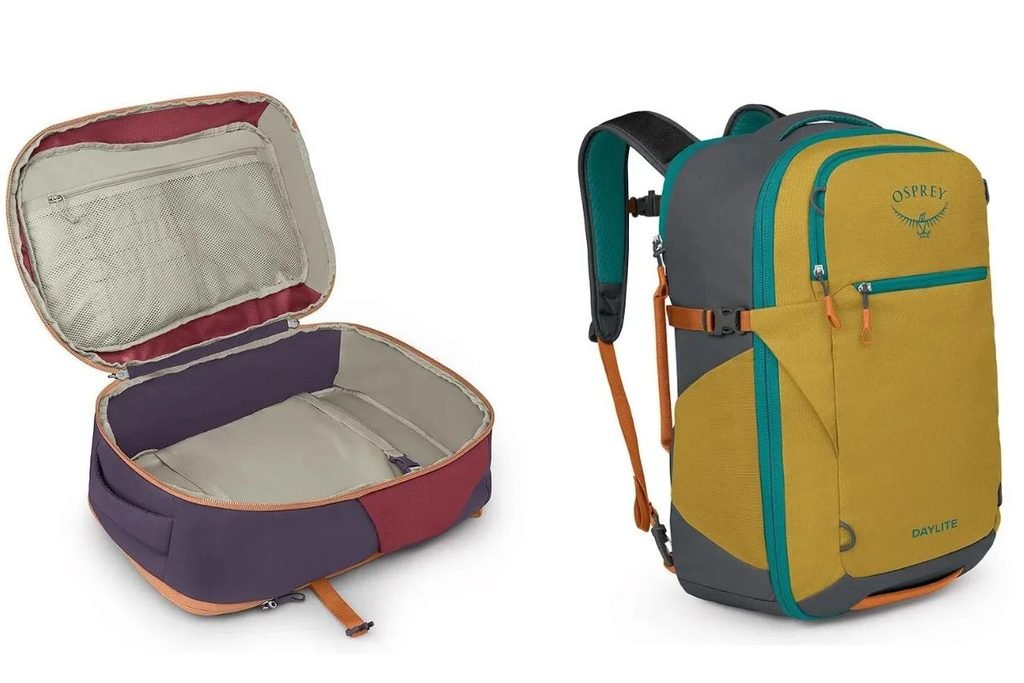
The Osprey Daylite Carry-On Travel Pack 44L is designed to maximize overhead-bin capacity. Osprey lists a 44-liter capacity, 21.5 × 14 × 9-inch dimensions, a 16-inch laptop compartment, tuck-away straps, luggage pass-through, AirScape back panel, and a weight of about 2.33 pounds. The company describes it as the biggest carry-on allowed by most airlines and says it can meet all airline carry-on requirements when compressed to its depth.
Why choose it?
The low weight is attractive when you’re trying to maximize the amount you can carry without starting with a heavy backpack.
The 44-liter capacity can work well for:
- Cold-weather clothing
- Longer vacations
- Family travel
- Travelers who do not want checked luggage
Important warning
A large carry-on is only useful if the airline accepts its dimensions. “Carry-on compliant” is never something to assume globally.
Best for: Travelers who want maximum packing capacity while staying within published carry-on dimensions.
08. Thule Subterra 2 40L: Best for Business Travel
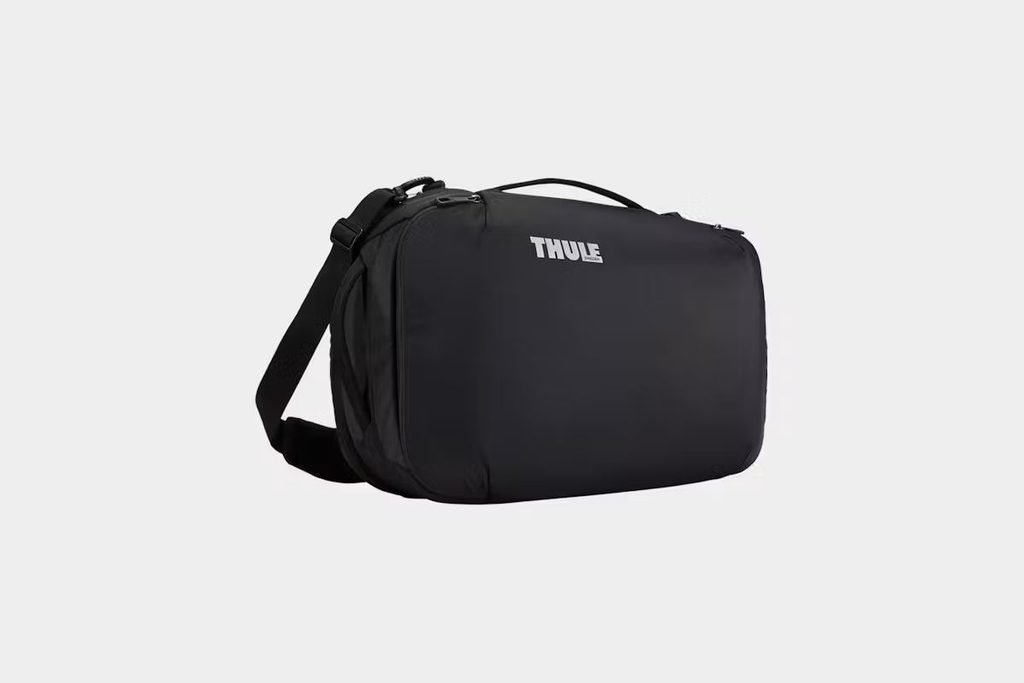
The Thule Subterra 2 40L combines a travel pack with a removable laptop attaché. Thule lists a 40-liter capacity, 21.7 × 13.8 × 8.3-inch dimensions, 3.75-pound weight, water-resistant 800D construction, and carry-on compatibility for most airlines. The removable laptop attaché is designed for a 16-inch laptop and 12.9-inch tablet.
Why choose it?
The removable tech section is useful if you need your computer separately during a meeting or airport security process. The bag can also be carried as a backpack or converted for other carrying configurations.
Best for: Professionals, consultants, frequent flyers, and work-heavy trips.
09. Away Everywhere Zip Backpack: Best Smaller Laptop Travel Backpack
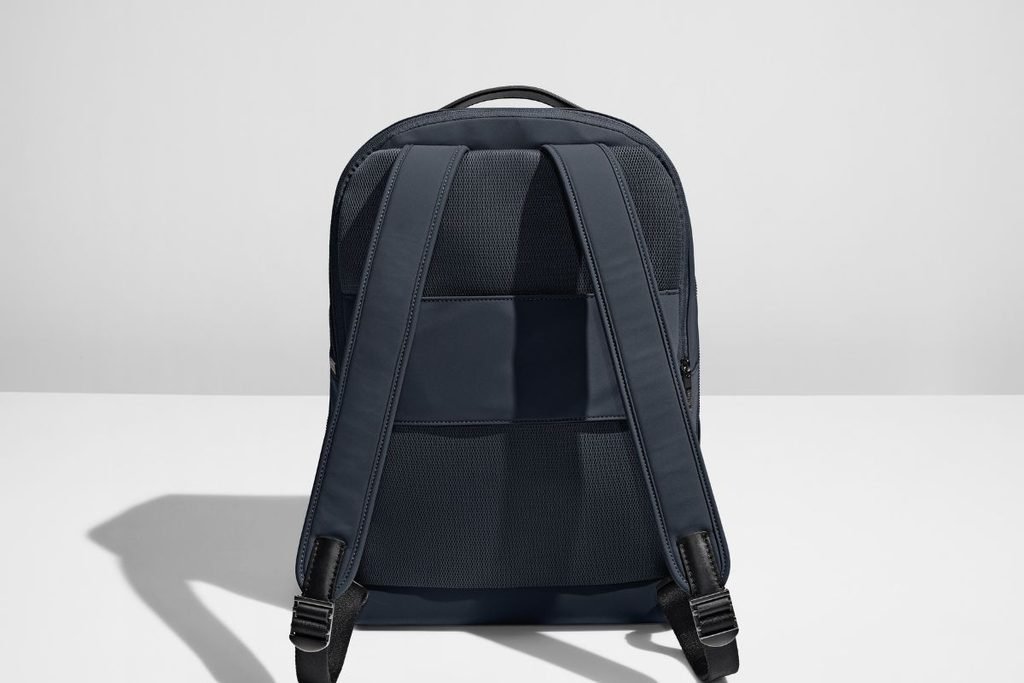
The Away Everywhere Zip Backpack takes a different approach. At 20 liters, it is much smaller than the 35–45-liter travel packs. Away lists a 16-inch padded laptop compartment, water-resistant nylon, trolley sleeve, hidden passport storage, padded straps, and dimensions of 12 × 5.9 × 17.7 inches.
Why choose it?
This is a smart option when you already have a suitcase. Instead of carrying another large piece of luggage, you can use the backpack for:
- Laptop
- Passport
- Headphones
- Chargers
- Snacks
- Water bottle
- Travel documents
- Small personal items
It can also slide over a suitcase handle.
Best for: Business travelers, urban travelers, and people traveling with checked or rolling luggage.
10. REI Co-op Ruckpack 40 Women’s: Best for Travel + Hiking
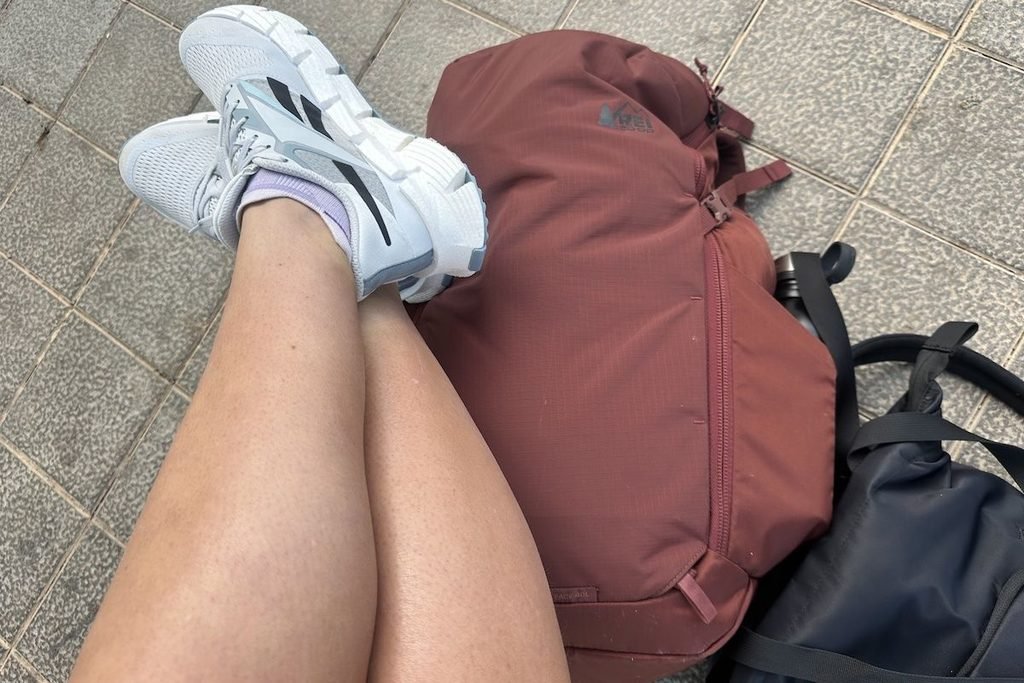
The REI Co-op Ruckpack 40 Women’s is one of the more compelling choices when your trip genuinely mixes city travel and outdoor activity.REI lists a 40-liter capacity, 15-inch laptop compartment, women’s-specific harness and hipbelt shaping, two inclusive sizing ranges, a spring-steel internal frame, a hipbelt, and an included rain cover.
Why choose it?
The women’s-specific fit is not simply about appearance. Harness geometry, torso length, shoulder placement, and hipbelt shaping can affect how a loaded backpack sits. This pack makes sense for trips such as:
Airport → hostel → train → mountain trail → city hotel
That is exactly the kind of itinerary where a conventional office backpack can become uncomfortable.
Best for: Women combining backpack travel, hiking, hostels, and outdoor adventures.
11. Osprey Sojourn Porter 46L: Best for Longer Trips
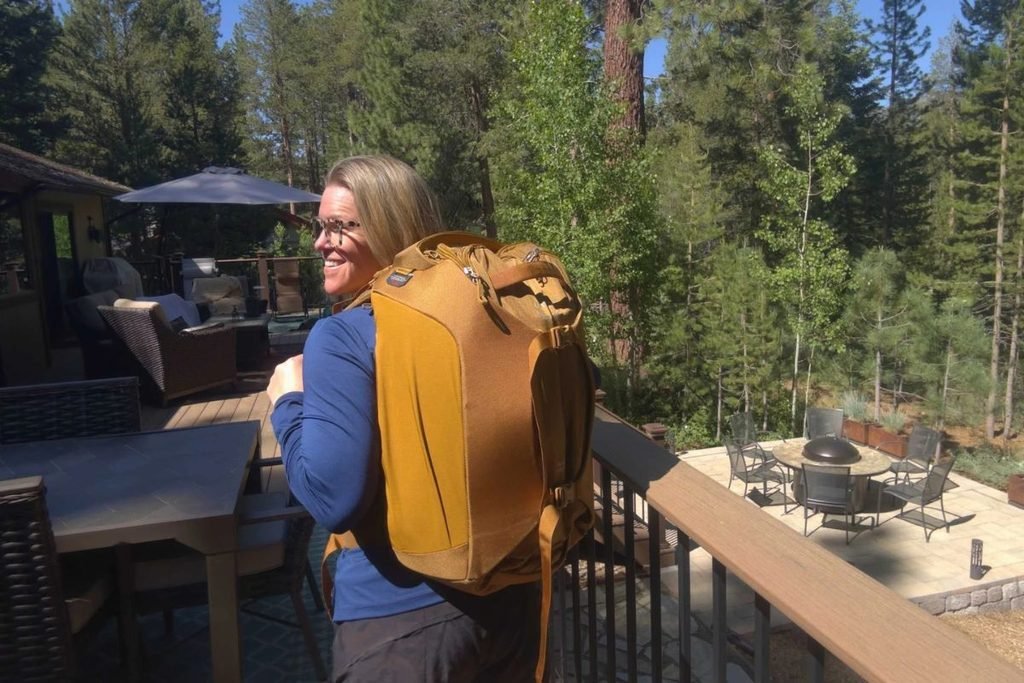
The Osprey Sojourn Porter 46l is aimed at travelers who need substantial packing capacity but still want a backpack-style carry.REI lists 46 liters, a 16-inch laptop compartment, a duffel-style opening, stowaway harness and hipbelt, AirScape back panel, and carry-on positioning for most international airlines. REI also notes that airline restrictions should always be checked.
Why choose it?
The 46-liter capacity can be useful for:
- Extended weekends
- Longer vacations
- Cooler climates
- Travelers carrying bulky layers
- Trips where you want one large bag
Potential limitation
More capacity can encourage overpacking. If you fill 46 liters with dense items, the backpack can become substantially harder to carry.
Best for: Longer trips and travelers who need more space than a typical 30–40L pack.
12. Patagonia Black Hole Pack 25L: Best Everyday Travel-Daypack Hybrid
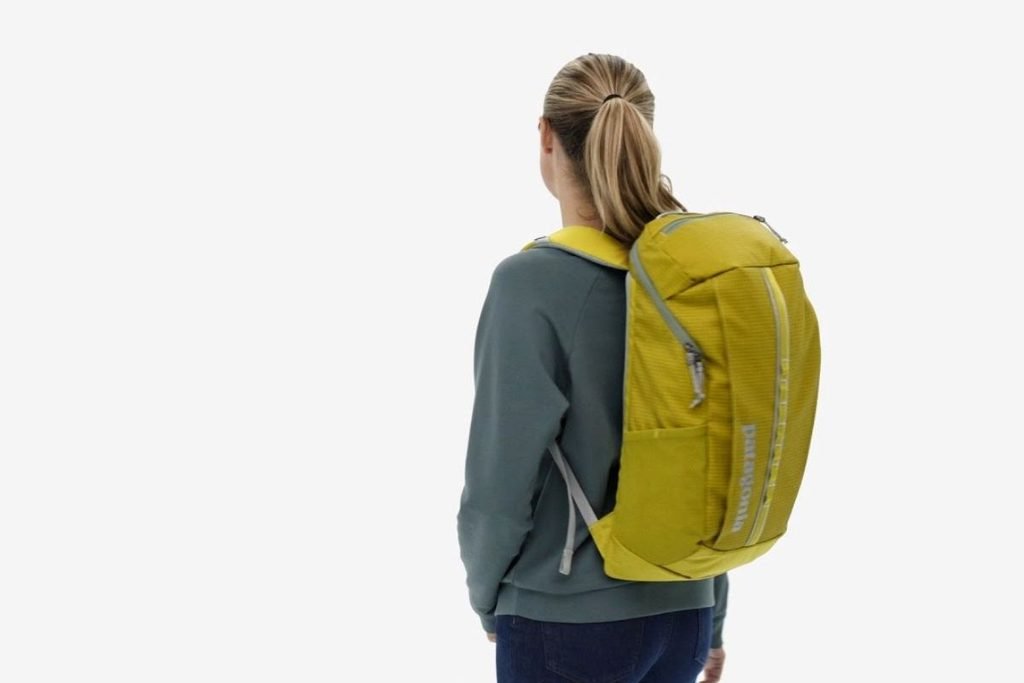
The Patagonia Black Hole Pack 25L is not a traditional one-bag travel pack. Instead, think of it as a travel daypack that can handle everyday life. Patagonia lists a 25-liter capacity, weather-resistant recycled construction, and a padded sleeve designed to hold most 15-inch laptops.
Why choose it?
It works beautifully as the second backpack on a trip.
For example, you could carry your clothes in a suitcase and use this pack for:
- Laptop
- Camera
- Water bottle
- Light jacket
- Travel documents
- Snacks
- Day-hike essentials
Best for: Travelers who want one daypack for commuting, sightseeing, and outdoor use.
13. Patagonia Terravia Pack 28L: Best for Hiking
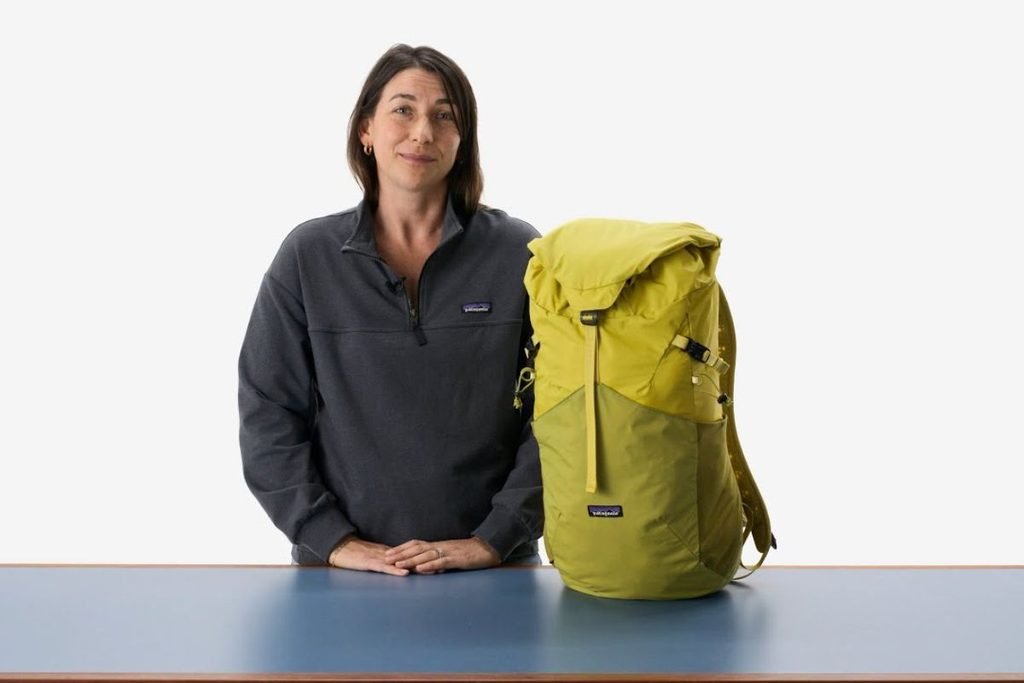
The Patagonia Terravia Pack 28L belongs in a different category from the travel-focused packs above. It is designed for hiking rather than airport organization. Patagonia lists a breathable harness, hipbelt, hydration compatibility, trekking-pole attachment points, rain cover, and 28-liter capacity. It weighs about 726 grams.
Why choose it?
For a trail day, comfort and ventilation are more important than a suitcase-style opening.
A hiking pack should let you:
- Carry water
- Access layers quickly
- Distribute weight around your hips
- Move naturally
- Manage changing weather
That makes the Terravia a better trail companion than many large travel backpacks.
Potential limitation
It is not the first choice for protecting a laptop or organizing business clothing.
Best for: Day hikes, hut trips, active travel, and outdoor-focused vacations.
14. Osprey Fairview Trek 70: Best for Extended Adventure Travel
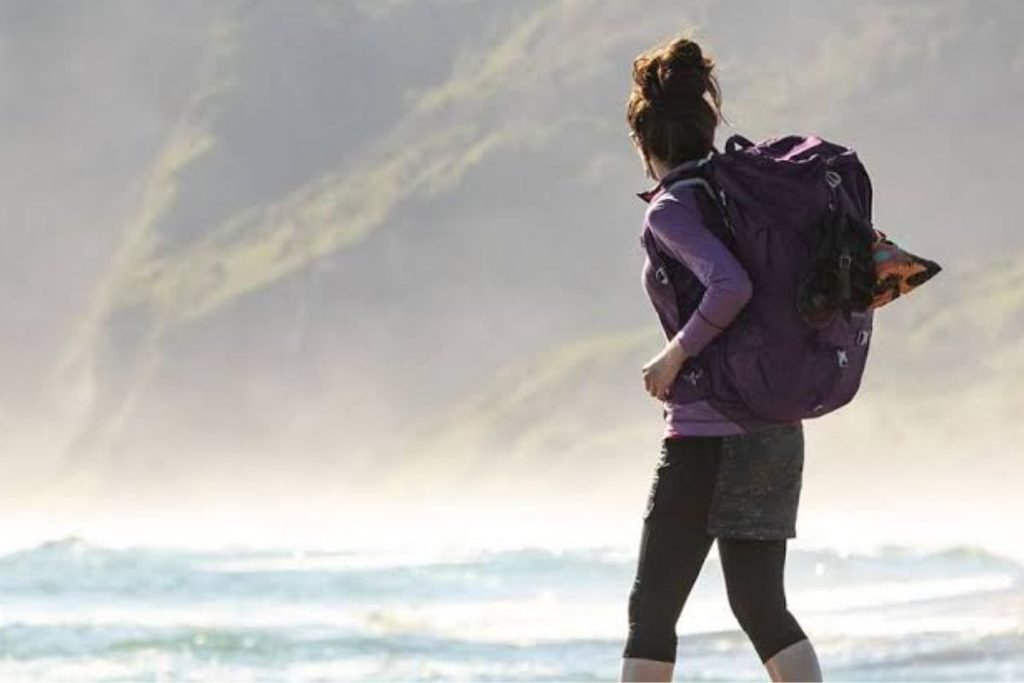
When your trip includes genuine trekking, camping, or extended overland travel, a 30–40L travel backpack may not be enough. The Osprey Fairview Trek 70 is a women’s-fit 70-liter travel and trekking pack. Osprey lists a ventilated AirSpeed back panel, adjustable torso length, hipbelt pockets, a rain cover/pack cover system, front access, and a sleeve that can accommodate a hydration reservoir or tablet/laptop.
Why choose it?
This is the option for travelers who need to carry substantially more equipment.
Think:
- Trekking clothes
- Sleeping equipment
- Outdoor layers
- Food
- Camping accessories
- Larger personal kits
It is not intended to replace a compact carry-on backpack.
Best for: Long trekking trips and adventure travel where carrying equipment is unavoidable.
15. Patagonia Black Hole MLC 45L: Best for Maximum One-Bag Capacity
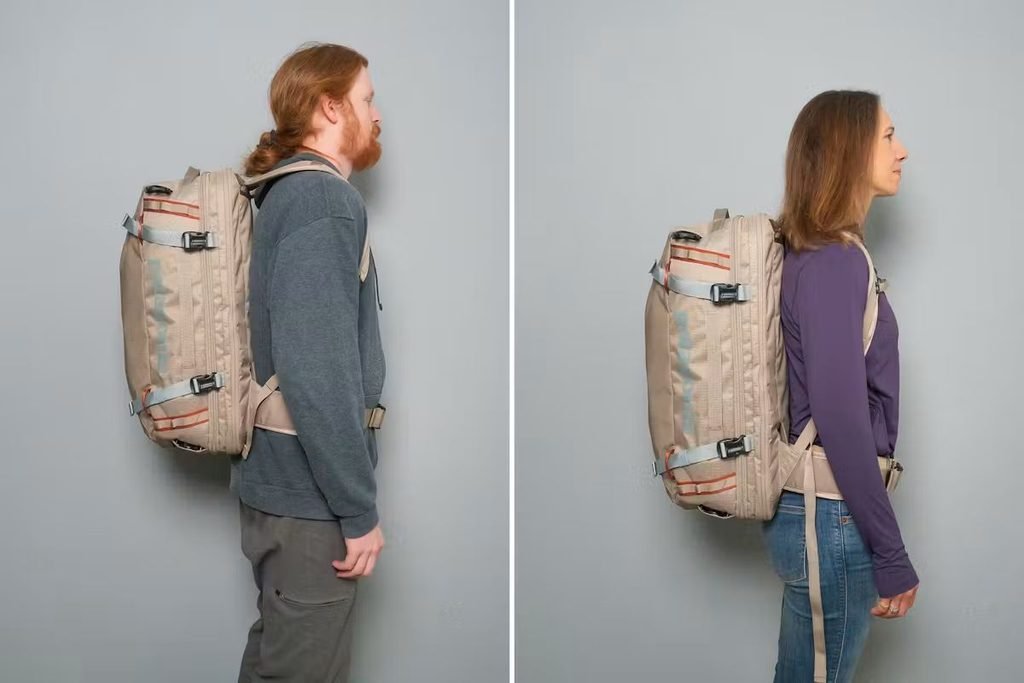
If your priority is fitting a lot into a single travel bag, the Patagonia Black Hole MLC 45L deserves consideration. The MLC family is designed around travel rather than technical hiking. Its larger capacity can make it suitable for longer trips, especially when you want a suitcase-like opening and backpack carrying option.
Why choose it?
A 45-liter travel pack can be useful when you’re traveling in:
- Cold weather
- Multiple climates
- Work and leisure combinations
- Destinations where you need extra footwear
- Longer trips where minimalist packing is unrealistic
The trade-off
A larger bag can become a liability if an airline has strict cabin dimensions or if you load it heavily.
Best for: Travelers who prioritize capacity and organization over ultralight carrying.
Which Travel Backpack Is Best for Your Type of Trip?
There is no meaningful “best” backpack without knowing how you travel.
Best for carry-on-only travel
Choose:
- Osprey Fairview 40
- Patagonia Black Hole Mini MLC 30L
- Cotopaxi Allpa 35L
- Peak Design Travel Backpack 30L
These provide a useful balance of capacity, organization, and travel-focused design.
Best for women who want a women’s-specific fit
Consider:
- Osprey Fairview 40
- REI Backpack 40 Women’s
- Osprey Fairview Trek 70
The Rucksack 40 is particularly interesting because REI provides different size ranges and women’s-specific harness and hipbelt shaping.
Best for hiking
Consider:
- Patagonia Terravia 28L
- REI Backpack 40 Women’s
- Osprey Fairview Trek 70
The important distinction is that hiking packs prioritize suspension, ventilation, hydration, and movement, while travel packs prioritize access and organization.
Best for laptops and remote work
Consider:
- Peak Design Travel Backpack 30L
- Osprey Fairview 40
- Thule Subterra 2
- Away Everywhere Zip
- NOMATIC Travel Bag 40L
Your laptop’s actual dimensions matter more than the screen-size label. A “16-inch laptop compartment” does not automatically mean every 16-inch laptop will fit.
Best for minimalist travelers
Choose a smaller pack such as:
- Patagonia Black Hole Mini MLC 30L
- Peak Design Travel Backpack 30L
- Away Everywhere Zip 20L
The smaller the bag, the easier it becomes to impose a natural packing limit.
When you’re carrying clothing, towels, snacks, and other beach essentials, a travel backpack for women can make it easier to keep everything organized and comfortable during the walk to your bonfire spot.
How to Choose the Right Travel Backpack
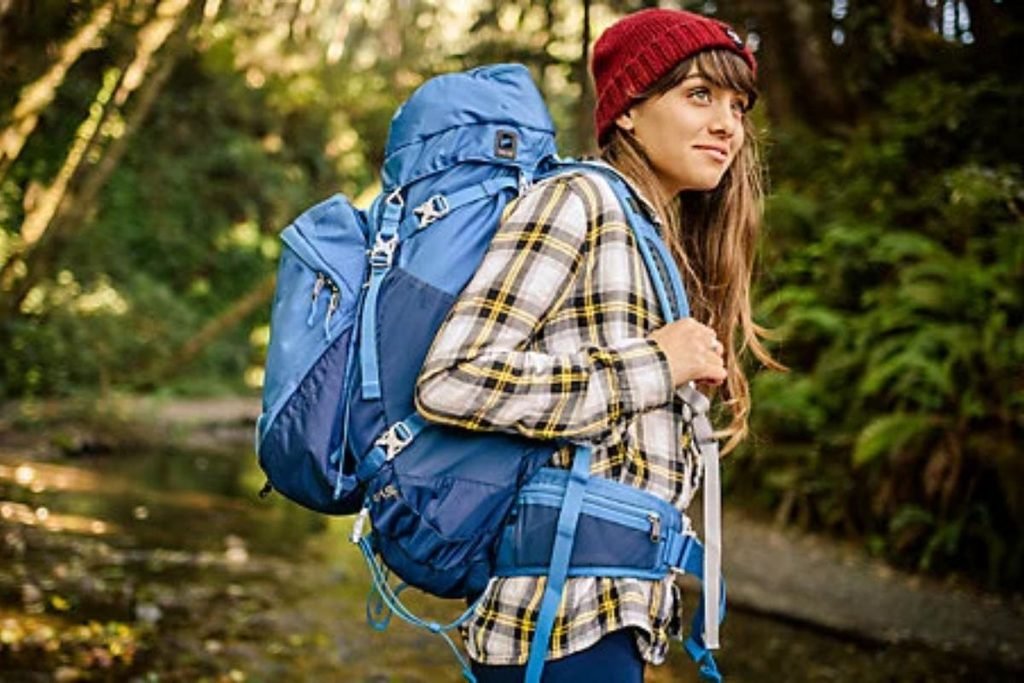
Before buying, work through these seven questions.
01. How many days are you traveling?
A three-day warm-weather trip might require surprisingly little space. A five-day winter trip can require much more because jackets, sweaters, and footwear consume volume quickly. Do not buy a 45-liter bag simply because you travel for seven days. First ask what you actually need to carry.
02. Will you fly with it?
If yes, measure the backpack. Do not rely only on a manufacturer’s phrase such as “carry-on.”Airlines can differ in:
- Maximum dimensions
- Weight limits
- Personal-item rules
- Regional aircraft restrictions
- International versus domestic policies
A backpack can fit one airline’s overhead bin and fail another carrier’s limits.
03. Are you carrying a laptop?
Look beyond the sleeve. A good laptop travel backpack should ideally offer:
- Padding
- A secure closure
- Separation from hard objects
- Easy access
- Protection from water
- Enough room for the charger
Most importantly, place the laptop where it is protected from direct impact.
04. Will you hike?
If hiking is a major part of the trip, prioritize:
- Adjustable torso
- Hipbelt
- Sternum strap
- Ventilated back panel
- Hydration compatibility
- Rain protection
- Accessible side pockets
A suitcase-style travel bag may be fantastic in an airport but uncomfortable on a six-hour trail.
Staying hydrated on the go is important, and travelers looking for better beverage choices can also explore these best gut health sodas for a refreshing option.
05. How important is women’s-specific fit?
Women’s-specific backpacks often alter harness and hipbelt geometry to better accommodate different torso and hip proportions. However, “women’s” does not automatically mean “fits every woman better.” Your actual torso length and body shape matter.
06. Do you prefer organization or flexibility?
Some travelers love ten pockets. Others find ten pockets annoying because they forget where things are. A clamshell pack is excellent for organized packing. A simple top-loading backpack can be better when you want flexible storage.
07. How heavy will it be?
This is frequently overlooked. A backpack’s empty weight matters, but the final loaded weight matters more.
A simple formula is:
Total carrying weight = backpack weight + clothing + electronics + toiletries + water + other equipment
If the final load is uncomfortable during a 20-minute walk, it will not magically become comfortable during a full travel day.
Before choosing the right backpack, it’s also worth deciding where you want to travel—our guide to the best countries to visit can help you find inspiring destinations for your next adventure.
Women’s Travel Backpack Fit: What Actually Matters?
Fit is one of the most important and least understood parts of backpack selection. A backpack should sit close enough to your body that the load does not swing around. The hipbelt should sit securely around your hips rather than floating around your waist. Shoulder straps should feel supportive without digging into your neck.
For larger or smaller body frames, adjustable torso systems can be particularly valuable. This is one reason the Osprey Fairview 40 and REI Backpack 40 Women’s stand out: both provide fit-oriented features rather than simply shrinking or recoloring a generic backpack.
A simple fit test
When trying a backpack:
- Load it with realistic weight.
- Adjust the torso length.
- Tighten the hipbelt.
- Adjust the shoulder straps.
- Add the sternum strap.
- Walk for 10–15 minutes.
- Pay attention to pressure points.
- Try stairs if possible.
Do not judge comfort while the bag is empty.
Before heading out with your travel backpack, it’s worth planning which landmarks and destinations you want to explore by checking our guide to the best tourist attractions.
How to Pack a Travel Backpack Efficiently
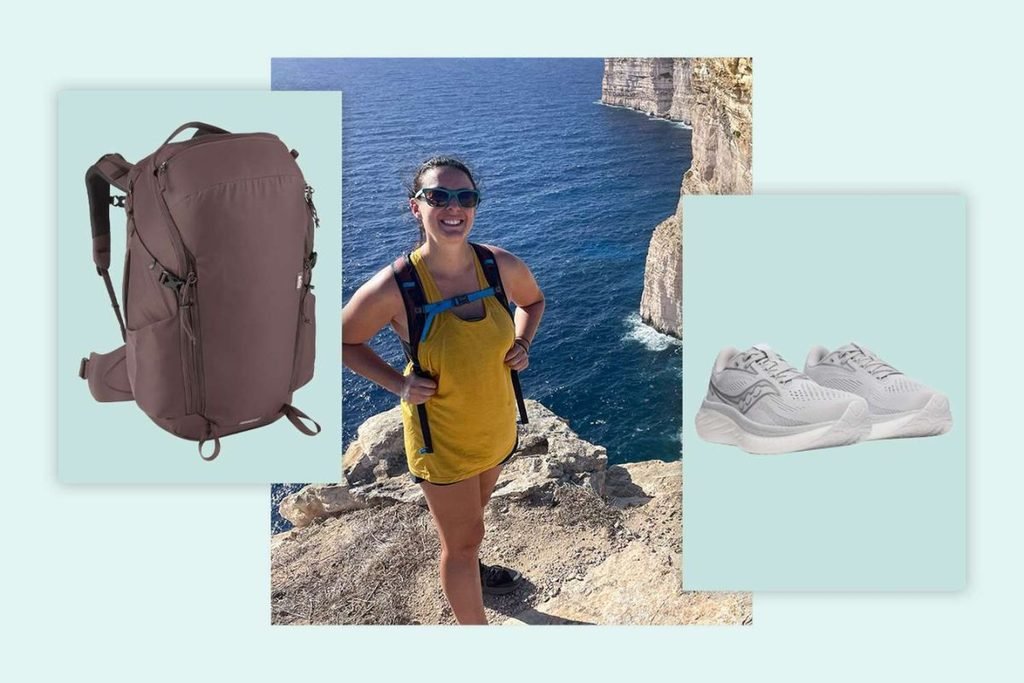
Good packing is almost as important as the backpack itself.
Step 01: Start with your heaviest items
Place dense items close to your back.
For example:
- Shoes
- Camera equipment
- Laptop
- Heavy toiletries
This keeps the center of gravity closer to your body.
Step 02: Use packing cubes selectively
Packing cubes are useful for clothing categories, but you do not need a cube for everything.
A simple setup might be:
- Cube 1: Shirts and tops
- Cube 2: Bottoms
- Cube 3: Underwear and socks
- Small pouch: Electronics
- Toiletry bag: Bathroom items
Step 03: Keep airport essentials accessible
Put your passport, headphones, charger, medication, and other frequently needed items somewhere you can reach without opening the entire main compartment.
Step 04: Protect electronics
Never place a laptop directly beside hard objects such as shoes, bottles, or camera accessories. Use the dedicated padded sleeve when available.
Step 05: Leave some space
A full backpack is harder to organize and may exceed airline size limits once expanded or overstuffed.
Before packing your essentials, take some time to explore the beautiful places in the world that could inspire your next adventure.
Carry-On vs Personal Item: Do Not Confuse Them
This distinction causes a lot of travel problems. A carry-on bag is generally intended for the overhead compartment. A personal item is generally intended to fit under the seat. The exact dimensions vary by airline. A 40-liter backpack may be an excellent carry-on but is almost certainly not appropriate as an under-seat personal item.
The Away Everywhere Zip, at 20 liters and 17.7 inches tall, is much closer to the smaller-backpack category, but even then, you should confirm the airline’s published personal-item dimensions before departure.
When planning your next adventure, explore these top 10 tourist places in the world to find destinations that match your travel style and interests.
Common Travel Backpack Mistakes to Avoid
Buying based only on liters
Capacity tells you how much space exists. It does not tell you how comfortable the bag is.
Ignoring your laptop dimensions
Screen size is only a rough reference. Measure your actual computer.
Choosing the biggest possible carry-on
More capacity can mean more weight.
Using a hiking backpack for business travel
A technical hiking pack may be comfortable but can lack the clean organization needed for suits, documents, and electronics.
Using a travel backpack for serious trekking
A travel bag may have a great laptop compartment but poor ventilation or load transfer.
Overlooking the hipbelt
For heavier loads, a useful hipbelt can make a significant difference.
Assuming “water-resistant” means waterproof.
Water-resistant materials can help with rain, but they do not necessarily make a backpack waterproof.
Forgetting the airline
Always check the airline before departure, especially if you are flying internationally or using smaller regional aircraft.
Travel Backpack vs Suitcase: Which Is Better?
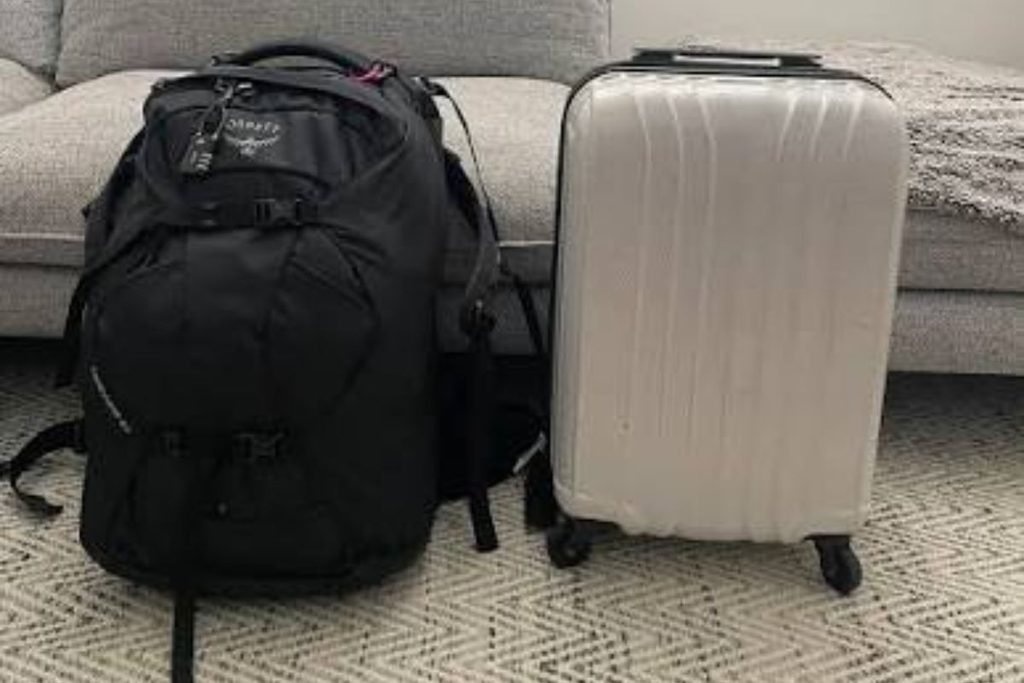
A backpack is usually better when:
- You use public transportation frequently.
- You walk long distances.
- You climb stairs.
- You change hotels often.
- You want your hands free.
- You prefer one-bag travel.
A suitcase is often better when:
- Your destination has smooth sidewalks.
- You carry very heavy items.
- You need formal clothing.
- You have back or shoulder limitations.
- You mostly travel between airports and hotels by car.
There is also a third option: a travel backpack plus a small roller suitcase. For many business travelers, that combination provides a good balance between mobility and capacity.
If you’re planning your next trip, choosing the right travel backpack for women can make it much easier to carry your essentials comfortably and stay organized on the go.
How to Make a Laptop-Friendly Travel Backpack Safer
A padded laptop sleeve is only the beginning.
Use these habits:
- Keep the laptop in its dedicated sleeve.
- Avoid placing heavy objects directly against it.
- Keep liquids in sealed toiletry bags.
- Avoid overstuffing the laptop compartment.
- Use a protective sleeve if the manufacturer’s padding is minimal.
- Keep chargers in a separate pouch.
- Back up important files before travel.
- Keep the computer accessible during security screening when required.
If you’re traveling with expensive equipment, also consider whether the backpack itself can be comfortably kept in front of you in crowded areas.
What Should You Look for in a Hiking Travel Backpack?
For outdoor travel, prioritize function over fashion.
Look for:
- Ventilation: A breathable back panel can help reduce discomfort during warm-weather hikes.
- Hipbelt: Useful for transferring weight away from the shoulders.
- Hydration compatibility: Helpful when carrying a reservoir.
- Rain protection: An integrated or removable rain cover can be valuable in changing weather.
- External access: Side pockets and front storage make it easier to reach water or a layer.
- Torso adjustment: Especially important when buying a larger backpack.
The Patagonia Terravia 28L, for example, includes hydration compatibility, hipbelt storage, trekking-pole attachment points, and a removable rain cover.
Conclusion
The best Travel Backpack is not necessarily the largest, lightest, or most expensive model. It is the one that matches the way you actually travel. For women wanting a dedicated carry-on, the Osprey Fairview 40 is a particularly balanced choice. For organized one-bag trips, the Cotopaxi Allpa 35L is compelling. Tech-heavy travelers may prefer the Peak Design 30L or Thule Subterra 2, while travelers combining city exploration with hiking should look closely at the REI Backpack 40 Women’s.
For genuine trail use, a hiking-first model such as the Patagonia Terravia 28L makes more sense. Before buying, measure your laptop, check the backpack’s actual dimensions, consider your typical load, and verify the airline’s current rules. Most importantly, try the backpack with realistic weight.
A bag that looks perfect online but creates pressure points after 30 minutes of walking is not the right travel companion. For your next trip, choose the bag based on how you move, what you carry, and where you’re going—not simply how many liters the label promises.
Frequently Asked Questions
Q1. What size Travel Backpack is best for women?
Ans: For most short trips, 25–35 liters is a useful starting range. Travelers who want maximum carry-on packing space may prefer around 40–44 liters. However, the ideal size depends on your packing habits, destination climate, and airline restrictions.
Q2: Is a 40L backpack too big for carry-on travel?
Ans: Not necessarily. Many 40L backpacks are designed to fit within carry-on dimensions. However, capacity alone does not determine whether a bag is accepted. Always compare the backpack’s actual dimensions with your airline’s current limits.
Q3.What is the best women’s travel backpack for international travel?
Ans: The Osprey Fairview 40 is a strong all-around choice because it combines a women’s-specific fit, adjustable torso, travel organization, and a laptop compartment, all designed for carry-on travel.
Q4. Can I use a hiking backpack as a travel backpack?
Ans: Yes, particularly if your trip includes substantial hiking. Hiking backpacks generally offer better ventilation, suspension, and trail-focused features. However, they may provide less convenient access and organization for airports and business travel.
Q5. What is the best travel backpack for a laptop?
Ans: Good options include the Peak Design Travel Backpack 30L, Osprey Fairview 40, Thule Subterra 2, NOMATIC Travel Bag 40L, and Away Everywhere Zip. Choose based on your laptop’s actual dimensions rather than its screen size alone.
Q6. Is a 30L backpack enough for a week?
Ans: It can be, especially for warm-weather travel and minimalist packing. A 30L backpack becomes much harder to use for a week-long trip in cold weather because jackets and bulky shoes consume significant space.
Q7. Are women’s travel backpacks different from men’s backpacks?
Ans: Some are. Women’s-specific models may use different shoulder-strap placement, torso proportions, hipbelt shaping, and size ranges. However, fit varies between individuals, so trying a loaded pack is more useful than choosing solely based on the gender label.
Q8. What should I pack in a travel backpack?
Ans: Start with clothing, toiletries, electronics, documents, medications, and destination-specific essentials. Keep heavy items close to your back and frequently accessed items near the top or in exterior pockets.
Q9. Is water-resistant the same as waterproof?
Ans: No. Water-resistant materials can help protect against rain and splashes, but they should not automatically be treated as fully waterproof. For wet destinations, consider a backpack with a rain cover or additional waterproof protection.
Q10. Can I take a backpack and a suitcase on a plane?
Ans: Often, yes, but it depends on whether the backpack is classified as a carry-on or personal item and what your airline allows. Check your ticket’s baggage allowance and the airline’s current size requirements before flying.
Q11. What backpack size is best for a weekend trip?
Ans: Around 25–35 liters is usually a practical range. A 30L pack is particularly versatile because it can work for clothing, toiletries, a laptop, and small travel accessories without becoming excessively large.





4 Comments